February

1

Hello dear friends, Happy February!

Together, we continue building a habit to stay positive.

Whatever you decided 2020 will be for you – just try to vibrate high, so the toxic people or situations have no choice but to fall out of your frequency!

Please enjoy the articles below.

Namaste!


Ananda: Discover the Vedic Way to Happiness and Bliss

By Lissa Coffey

2

I’m sure you’ve heard much about The Law of Attraction – I get e-mail solicitations almost daily about how to make money, have it all, or get rich. But the more I tune into wisdom, the more I learn that what makes life rich is not about abundance, it’s about bliss.

We already have abundance in our lives, including an abundance of stress! The whole world is filled with uncertainty. How can we be happy when so much around us is rapidly changing?

We live in a world of material luxuries, and yet we feel unfulfilled. We are longing for more, but we don’t know what that “more” is. Turns out, the happiness that has eluded us for so long was there all the time, we’ve just been looking in the wrong place. It’s not about “attracting” or “manifesting” – it’s about the tranquility and freedom that comes with knowing who you are.

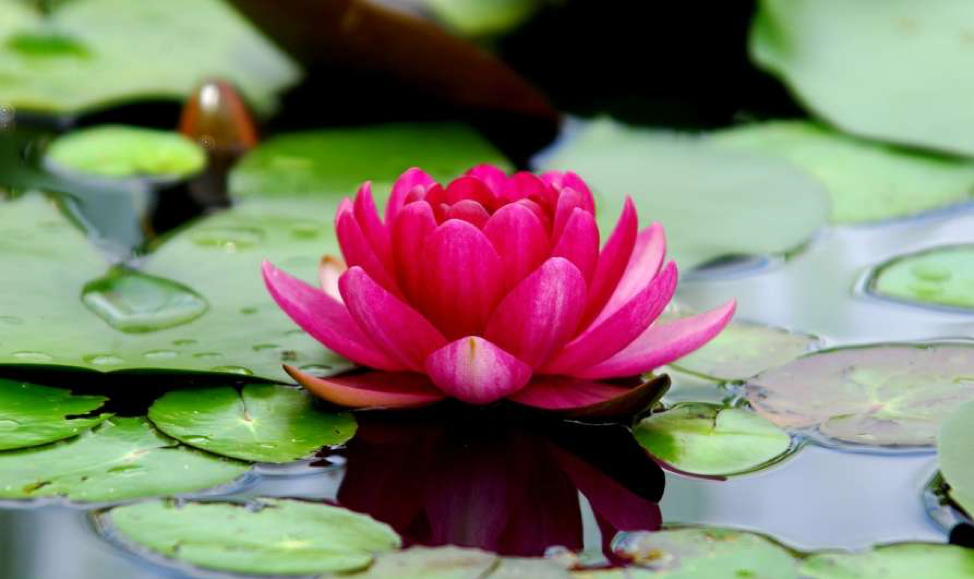
Anandakanda is a Sanskrit word meaning the root of bliss. This is represented as a lotus in the heart center, where we feel bliss, love, and happiness. Nothing material can fill the desire for freedom or happiness. Only the spiritual can do that. We need to know the true Self.

This is why I wrote “Ananda: Discover the Vedic Way to Happiness and Bliss.” The ancient sages left tools for us so that we could figure it out for ourselves. Why not start out this new year feeling good about life, and about who you are?

Restorative Yoga: The Basics + 5 Pose

By Lena Schmid

Restorative yoga, as its name implies, can help relax and ground you. Here you will learn what to expect and some basic poses you can do virtually anywhere to start your gentle yoga practice.

3

There are certain physical movements that are so beneficial to the body, mind, and spirit that they can be practiced daily or weekly. Gentle yoga poses that stretch the body and help to calm the nervous system are wonderful additions to any daily ritual. Incorporating restorative yoga poses such as Child’s Pose, Legs Up the Wall, and gentle spinal twists into your regular exercise routine can aid in general relaxation, injury recovery, and slowing down the endless chatter of the mind.

What Is Restorative Yoga?

Restorative yoga, also called gentle yoga, is a style of yoga designed to relax, restore, and rejuvenate the body, mind, and spirit. Restorative yoga falls under the umbrella of hatha yoga, an ancient form of yoga with origins in India, which is intended to stretch and strengthen the physical body in preparation for seated meditation.

In a restorative yoga class, you will find mellow movements, long-held postures often supported with props such as blankets and blocks, and a general atmosphere of ease and calm. Poses may be held anywhere from two to 20 minutes. Although restorative yoga is sometimes conflated or confused with yin yoga, the practices differ. In the yin yoga practice, the intention is to stretch into deep layers of the body through long-held poses that put a small, deliberate amount of stress on the body.

Restorative Yoga’s Intention

The intention of a restorative yoga class is to create the conditions for calm so as to allow students to drop into a state of deep relaxation and stillness. In a restorative yoga class, you may find soothing music, relaxing pranayama practices, teachers offering optional hands-on adjustments or reiki with consent, heavy use of props, and perhaps mantra chanting. This intentionally calming environment is in stark contrast to the busyness of modern life and can provide a safe place of respite and refuge.

When and Where to Practice Restorative Yoga

The best time to practice restorative yoga is anytime you have the space and time to practice. Restorative yoga can be practiced morning, noon, or night. You may like to practice first thing when you wake up to get your day started on a positive note, gently waking up the body and mind. You may like to practice after an aerobic exercise workout, stretching the muscles after exertion. Or you may like to practice as part of an evening wind-down routine, preparing yourself for a good night’s rest.

You can practice restorative yoga anywhere—such as home, a yoga studio, or the airport as you await your flight. While the poses suggested here use the support of props, one of the best things about yoga is that it can be done anywhere there is a safe ground to stand or sit. Get creative about where and when you practice restorative yoga, and let the intention of restoration guide you.

Restorative Yoga Props

Props can support your restorative yoga practice and make it extra comfortable. When your limbs and body feel supported, you may be able to relax even deeper into the poses. When you are able to relax your body, your nervous system is able to relax. When your nervous system is able to relax, your brain and body can recharge. When you feel recharged, you can show up as the best version of yourself for your family, friends, coworkers, community, and the world.

Here are some props you may enjoy including in your restorative yoga practice. If possible, look for props made from recycled, organic, and eco-conscious materials.

  • Yoga mat: Choose a soft yoga mat for your restorative practice. You may even like to drape a blanket over the entire mat for extra cushioning and warmth.
  • Blankets:Use any blanket that will provide weight, warmth, and cushion for your practice. Mexican blankets are commonly used as props in yoga studios.
  • Yoga blocks: Yoga blocks are often made from wood, cork, or recycled foam. You can also use a stack of books as blocks when practicing at home.
  • Bolsters:Bolsters are big pillows with some stiffness that allows for more support during restorative poses. You can choose from rectangular, round, or an alternative shape.
  • Eye pillow:An eye pillow is a small rectangular pillow usually filled with flax seed or sand. Oftentimes there are also dried lavender flowers inside for some relaxing aromatherapy.

The following restorative yoga poses can be done individually, as a sequence, or in any order that suits your needs. Do these poses as often as possible. Every day would be just fine, but even once a week would be delightful and beneficial.

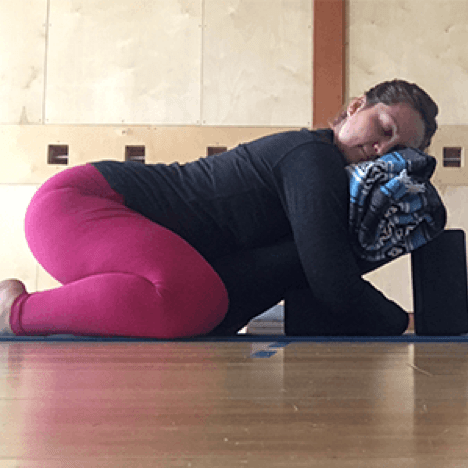
  1. Child’s Pose

4

Benefits: Relaxes the low back, gently stretches the knees, and has an overall grounding effect.

Props needed: Two blankets, one bolster. Optional: Two blocks.

How to:

  • Fold one blanket so that there is extra cushion under your knees.
  • Place your bolster in front of you.
  • Bring your big toes together and widen your knees as much as is comfortable for you. Option: Place a block between your heels and move your hips back toward your heels.
  • Fold your second blanket and place it at the head of the bolster like a pillow.
  • Slide the bolster between your knees and tip forward. Rest your belly, ribs, and chest on the bolster. Option: Place a block under the head of the bolster for a slight incline.
  • Turn your head to one side.
  • Rest your arms along either side of the bolster. Palms can face up or down.
  • Breathe deeply and hold for five to 25 minutes.
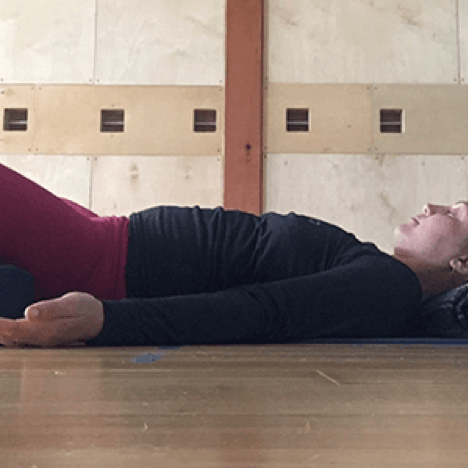
  1. Supta Badha Konasana(Reclining Bound Angle Pose)

5

Benefits: Relaxes the back, gently stretches the hips and groins, and has an overall grounding effect.

Props needed: Two blocks, two blankets. Optional: Eye pillow.

How to:

  • Fold one blanket so that it fits comfortably under your head like a pillow.
  • Set your two blocks to either side of your hips.
  • Recline onto your back.
  • Bend your knees and bring the bottoms of your feet together. Allow your knees to open out like butterfly wings.
  • Slide the blocks underneath your knees or thighs for support. Situate the blocks so that they are comfortably resting under your legs; if the edges of the blocks dig into your legs, turn the blocks to a more sustainable angle.
  • Drape the other blanket over your pelvis and abdomen or unfold it completely and cover your whole body.
  • Rest your arms down by your sides and turn your palms to face up and open.
  • Breathe deeply and hold for five to 25 minutes.


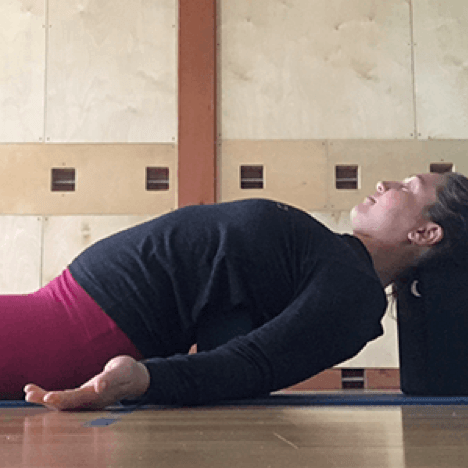
  1. Supported Matsyasana (Fish Pose)

6

Benefits: Opens the chest and shoulders, relaxes the upper back, and has an overall energizing effect.

Props needed: Two blocks. Optional: Bolster, blanket, and eye pillow.

How to:

  • Set up your blocks so that one block is at the lowest height and one block is at the medium height. Option: Rest your bolster on top of the blocks for a more cushioned reclining experience.
  • Fold your blanket as a pillow to be placed underneath your head.
  • Sit down in front of the blocks and recline back. Set one block beneath your upper back and one block beneath your head.
  • Adjust the blocks so that you feel supported and are able to drop all of your body weight onto the blocks.
  • Extend your legs out in front of you and relax your feet.
  • Rest your arms down by your sides with your palms facing up.
  • Breathe deeply and hold for five to 10 minutes.
  • If at some point during the hold of the pose you wish to open up your neck and throat in a different way, turn the block beneath your head to the lower height and tip your head back slightly more.
  • When you release from this pose, rest flat on your back for several breaths.
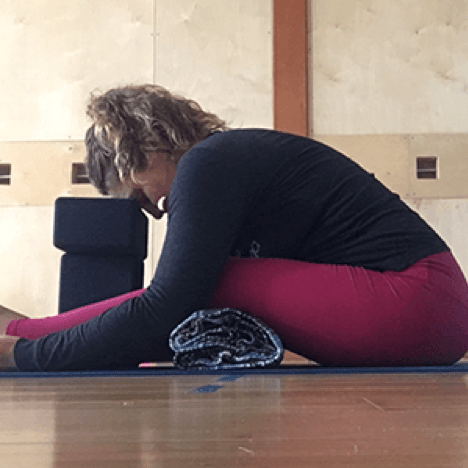
  1. Paschimottanasana (Seated Forward Bend)

7

Benefits: Relaxes the mid-back, stretches the low back and hamstrings, and has an overall meditative effect.

Props needed: One blanket, one or two blocks.

How to:

  • Come down to a seated position.
  • Extend your legs out in front of you with your feet as wide as your hips.
  • Roll up your blanket and place it beneath your knees.
  • If your low back is tight or tender, you may wish to sit up on another blanket, bolster, or block.
  • Begin to fold forward—any amount.
  • Place one or two blocks either right between your shins or on top of your shins.
  • Rest your forehead on your blocks. At some point during your hold, as your body warms and relaxes, you may wish to lower the height of the blocks.
  • Allow your arms to rest down by your sides or next to your legs.
  • Breathe deeply and hold for five to 25 minutes.
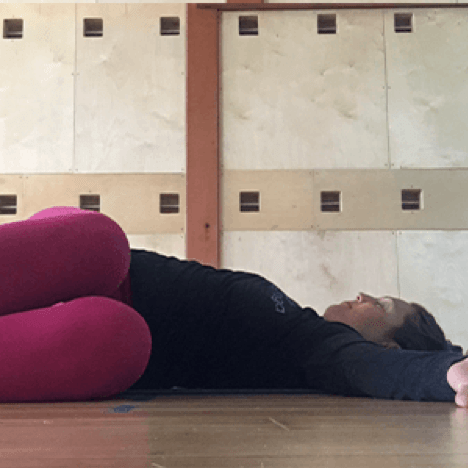
  1. Supine Twist

8


Benefits: Gently stretches the entire back, massages the internal organs in the abdomen, and has an overall unwinding and balancing effect.

Props needed: Two blankets, one bolster. Optional: Eye pillow.

How to:

  • Come down onto your back.
  • Place one blanket under your head as a gentle pillow.
  • Hug your knees into your chest.
  • Stretch your arms out to the sides.
  • Tip your knees over to one side.
  • Place the bolster in between your knees and ankles, or rest it on its side behind your back.
  • Drape the second blanket over your legs and feet.
  • Turn your head gently away from your knees.
  • Breathe deeply and hold for five to 25 minutes.
  • Repeat the twist on the second side.

Restorative yoga can be grounding, balancing, reflective, and even energizing. Remember, when you take time out for yourself, you are better able to show up for your family, community, and the world. Take some time out each week or each day to restore and renew. Your body, mind, spirit, and family will thank you.


Balsamic-Roasted Brussels Sprouts

9

Ingredients

1 1/2 pounds Brussels sprouts, trimmed and cut in half through the core

4 ounces pancetta, 1/4-inch-diced

1/4 cup good olive oil

Kosher salt and freshly ground black pepper

1 tablespoon syrupy balsamic vinegar

Directions

Preheat the oven to 400 degrees. Place the Brussels sprouts on a sheet pan, including some of the loose leaves, which get crispy when they’re roasted. Add the pancetta, olive oil, 1 1/2 teaspoons salt, and 1/2 teaspoon pepper, toss with your hands, and spread out in a single layer. Roast the Brussels sprouts for 20 to 30 minutes, until they’re tender and nicely browned and the pancetta is cooked. Toss once during roasting. Remove from the oven, drizzle immediately with the balsamic vinegar, and toss again. Taste for seasonings, and serve hot.


January

1

Happy 2020! Have a great new beginning of the new decade by expanding yourself into new horizons. The mindful practices which we will continue exploring in this blog will “push” you to reach new territories within and discover new aspects of yourself. It will help you feel the richness of life around you.

Namaste!

Please enjoy the articles below.

10 Tips for Eating Healthy in the New Year

By Rachelle Williams, Vedic Educator

2

What better way to begin the new year on the right foot than by eating well? Don’t panic—you don’t have to do it all perfectly starting on January 1. But these 10 tips for healthy eating can start you on the right path.

It’s easy to indulge during the holiday season, which is why the coming of the new year often brings with it intentions of starting or renewing commitments for a healthier you. While it’s fun and inspiring to make resolutions, keeping them is a different story. Changing food habits can be especially challenging as food is deeply woven into the fabric of life through influences of culture, family, and personal history.

Defaulting to what comes easy or is familiar can be a hindrance when it comes to cultivating health and well-being. Today’s fast-food culture is a perfect example; people are used to getting food quick and easy. However, if you want to maintain a healthy weight and experience long-lasting change, you can expect to explore and move outside of your comfort zone. This type of change will be well worth your effort.

If you have tried and failed to eat healthy in the past, don’t let this deter you from trying again—this time with a refreshed outlook. Use the momentum of the new year to create new habits, rituals, and routines that will enable you to be successful and reap the benefits of a healthier lifestyle. Here are some tips with insight and inspiration to help you get started and try new things to encourage healthy eating habits.

  1. How Do You Want to Feel?

It’s easy to get hyped up on the idea of weight loss, especially with the flood of advertisements that start to appear around the beginning of the year. Instead, try to think about how you want to feel as a result of changing your eating habits. This may require a bit of inquiry. Here are some simple examples:

  • I want to feel
  • I want to feel
  • I want to feel
  • I want to feel

Coming from a place of feeling is a powerful motivator because it is rooted deep within, where your truth resides. Feeling how you want to feel opens up opportunities and propels you into a more inspired state of living and being—leading you to better food choices.

  1. Make Your Plate Colorful

Everyone can benefit from eating more fruits and vegetables. If you’re not used to including them in your diet, you may think your healthy options are limited to boring romaine or broccoli. Instead, think of ways to make your plate more colorful. The more visually appealing your plate looks, the more likely you are to enjoy the healthy food—plus it means you are incorporating a greater variety of vegetables since they come in all colors.

Gets your kids involved by having them choose what colorful fruit or vegetable they want to try for the week.

  1. Set Up a Routine

The human body responds well to routine because it has circadian rhythms—think of them as your internal clock—that impact both physical and mental functioning. Energy, sleep, eating, and digestion are just a few of the processes that are affected. Creating a routine that honors the body’s rhythms is key in maintaining good health.

According to Ayurveda, the middle of the day is when the body is primed to digest; thus, it’s best to have your largest or heaviest meal at this time while keeping your dinner light. Good sleep is also coveted for numerous health-promoting reasons, one of them being the ability to make better food choices. The following are good habits to start incorporating into your daily life:

  • Focus on getting enough sleep.
  • Eat a light dinner.
  • Eat a warm breakfast like oatmeal (especially during the winter season).
  • Stop eating three hours before bedtime.
  • Aim to be in bed by 10:00 p.m.

Try one new routine for one to two weeks before adding another. You will feel the difference when making these shifts toward a healthier lifestyle.

  1. Drink for Your Health

When possible, avoid alcohol as well as caffeine, carbonated soft drinks, and sugary drinks. Instead, drink more water—warm or room temperature is ideal. With so many drink options it’s easy to overlook the most life-giving of beverages. Not only does water hydrate but it helps to facilitate numerous bodily processes. More than half your body is made up of water, which tells you just how much your body depends on it. If the idea of water bores you, try adding lemon or lime. Herbal teas are a good option as well.

  1. Experiment with New Recipes

Healthy food and eating habits can be made enjoyable through great recipes. There are recipes for all types of cooks, so be realistic about the time (and money) you want to spend on cooking. For example, you can search online for “healthy recipes for lazy cooks” and find millions of healthy options at your fingertips. If you are new to cooking, it might be helpful to take a class and learn some of the basics—knife skills will lessen your time in the kitchen. Start with one new recipe a week and see how it goes.

  1. Explore Your Local Grocery Store

You likely go on autopilot when shopping at the grocery store. Next time you go grocery shopping, allow yourself some time to explore. A good rule of thumb is to spend more time shopping the periphery where more of the fresh fruits and vegetables are kept. Find what produce is in season to take advantage of richer flavors. Plus, it’s more cost effective to cook for yourself than to buy processed foods. Healthy meals can be fun when you experiment with new ingredients. Consider picking up an ingredient you have never heard of and find a recipe to cook that uses it. Have fun!

  1. Boost Your Digestion

Having healthy digestion or agni is one of the cornerstones of good health in Ayurveda. Ideally, you are taking in what you need, properly extracting the nutrients, and eliminating the rest. However, this isn’t always the case; you may need help to boost your digestion. The natural world offers many healing remedies that are often underutilized, mostly because of a lack of knowledge or awareness. Here are two natural remedies to strengthen your digestion:

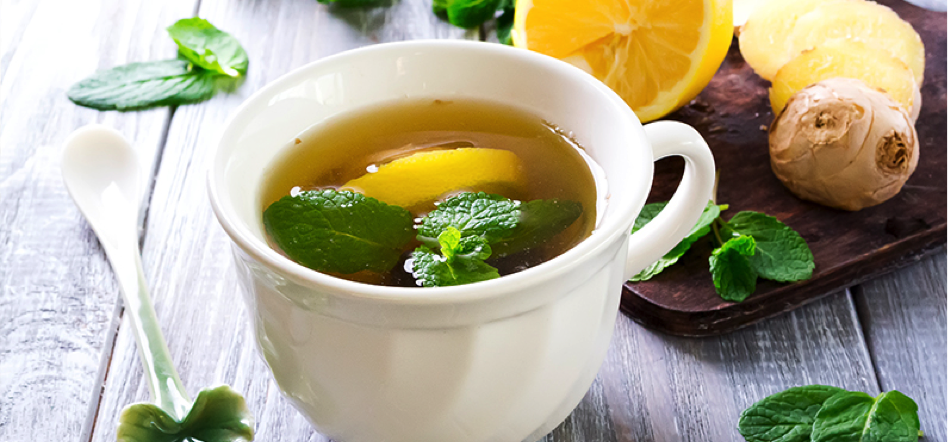
  • Gingeris known in Ayurveda as the “universal remedy” due to its many benefits for the body. It has been used for more than 2,000 years to treat digestive issues. Sip on ginger tea throughout the day, including at meals.

Recipe: Add one teaspoon of grated or sliced fresh ginger root to a cup of hot water. Prepare a larger batch and keep it with you in a thermos bottle to sip throughout the day.

  • Lemonis another important Ayurvedic remedy with many benefits. It’s recommended to sip on warm lemon water in the morning to jumpstart digestion.

Recipe: Add the juice of half a lemon to 8 oz. of warm or hot water. Optional: Add mint, honey, ginger, basil, cucumber, strawberry, or other garnish to taste.

  1. Meal Prep

The idea of meal prepping has become popular as a growing number of health-conscious people look for ways to maintain a healthy diet. Although it requires some time on a Sunday to cook and prep, having a meal plan is worth it. Like with anything new, it takes some getting used to but soon you will become adept, and it will take you less time to have several days or a week’s worth of healthy meals in your reach.

  1. Avoid Stuffing Yourself

When you eat more food than your stomach can accommodate, you cannot properly break it down. Think of a washing machine that has been stuffed with too many clothes, leaving no room for proper washing. This same concept applies to an overly full stomach.

Ayurveda recommends that you leave one-third to one-quarter of your stomach empty to allow space for the body to properly digest. This requires mindful eating and monitoring your portion sizes. You likely eat while doing something else—you might be distracted and eat faster than you realize. Try to eat more slowly and with awareness so you can determine when you have eaten enough. Your body gives little signals—learn to notice what they are.

  1. Be Kind to Yourself

You are probably harder on yourself than anyone in your life. Remember that no one is perfect and focus on encouraging yourself as you would a good friend. Flexibility and self-love are keys to success. There will be times when you revert to old habits, but that’s ok. Those harder times may remind you why you made the choice to eat healthy in the first place.

Making the decision to find ways to eat healthier isn’t a short-term experience but a lifelong journey. It may seem difficult at first, but follow these tips for eating healthy and begin to see how a balanced diet can positively affect your health. Enjoy it as much as possible! You deserve it.

3 Meditations that Cultivate Compassion

By Sara Schairer, Founder and Executive Director of Compassion It

3

Cultivating compassion can help you stay present with the suffering you’re facing each day—without getting overwhelmed. Here are three meditations to help you strengthen your compassion muscles so you’re prepared to meet the suffering you witness.

“How can I help?”

Have you found yourself asking this question a lot more lately? Recent extreme weather events have displaced thousands of people around the world. Tragic violent episodes are plaguing innocent people. Refugees and immigrants face uncertainty, and global diplomacy issues keep tension high.

So, how can you help?

You can take concrete actions to help ease the suffering of those who have been affected by recent tragedies. Your actions could include financial donations for disaster relief, phone calls to your U.S. members of congress  to enact legislation, or taking the time to give blood.

Sometimes you may feel paralyzed and unable to take action, and that is a normal reaction. You might feel that you are unable to bear the load of suffering that is dumped upon you week after week. By practicing compassion cultivation meditation techniques, you can learn to stay present with the suffering you’re facing each day without getting overwhelmed. You can train your mind to express empathy for those outside of your normal circle of compassion, and learn how to practice compassion for yourself.

Here are a few compassion meditation practices to help you strengthen your compassion muscles so that during tough times like these, you’re prepared to meet the suffering you witness.

  1. Loving-Kindness or Metta Meditation

You can use a simple loving-kindness or metta meditation to help you practice compassion for people who are outside of your normal in-group. Generally, metta meditations begin with offering compassion toward yourself and then expanding that outward to friends and loved ones, and, finally, to people you may not know. You can also use this practice to generate compassionate feelings toward someone who frustrates or angers you.

  • Begin by finding a comfortable position that allows you be alert yet relaxed. Take a few deep breaths to settle your mind and ground yourself.
  • Next, repeat the following phrases in your mind: “May I be happy. May I be peaceful. May I be free from suffering.”
  • As you say each phrase in your mind, see if you can imagine breathing warmth and compassion into your heart space and then breathing out warmth and compassion toward yourself, letting the compassion permeate your body.
  • Next, direct those same phrases to someone who is dear to you, saying: “May you be happy. May you be peaceful. May you be free from suffering.”
  • Finally, pick a person or a group you don’t know well. Perhaps, it’s a neighbor who you see but don’t know well. If you’ve uncovered your unconscious biases, you can practice compassion for the people who you may be implicitly judging, like a certain gender, ethnicity, sexual orientation, or body type.
  • Again, repeating the phrases for this person or group: “May you be happy. May you be peaceful. May you be free from suffering.”

This simple practice is used by researchers to generate positive emotions, and also has been shown to reduce implicit bias toward stigmatized outgroups like black people and homeless people.

Unsure about your unconscious biases? Try the free online tests offered by Harvard’s Project Implicit.

  1. Self-Compassion Meditation

There are several types of self-compassion meditations, and I recommend you find one that best suits you. The below practice uses a little bit of trickery to help you generate feelings of compassion for yourself. One big hurdle for many people in this culture is conjuring the feeling of compassion for self. This practice allows you to first connect with the feeling of compassion for someone else, which you can then direct toward yourself.

  • Find a comfortable, upright position. Gently close your eyes and take a few deep breaths, inhaling through the nose and exhaling through the mouth.
  • Return to your normal breathing pace and pay attention to your breath for a few minutes. This will help settle the mind. When you notice your mind wandering, which it will, gently bring it back to the breath.
  • After settling the mind, imagine a loved one standing in front of you. Pay attention to how your body feels when you are with him or her; try to focus on any warm or positive feelings.
  • Imagine sending love, warmth, and light out of your heart to your loved one with each exhale. Saying in your own mind to your loved one, “May you be happy. May you be peaceful. May you live with ease.”
  • Now imagine seeing yourself next to your loved one. Direct that same warmth, light, and love from your heart to that image of you, silently saying, “May you be happy. May you be peaceful. May you live with ease.”
  • You can turn this into a metta practice by extending love, light, and warmth with each exhale, sending it to the members of your community, state, nation, continent, and finally to everyone in the world. Saying silently to each group, “May we all be happy. May we all be peaceful. May we all live with ease.”
  1. Tonglen Meditation

Tonglen is a visualization practice used in Tibetan Buddhism, and it means “giving and taking.”  Simply put, you use your breath to take, or inhale, the suffering of someone, and you give, or exhale, compassion.

  • To begin, find a comfortable position allowing you to feel relaxed yet alert. After taking a few cleansing breaths, follow your breath and settle the mind for five minutes.
  • Next, bring to mind a person who is experiencing suffering, and imagine he/she is standing in front of you. Imagine his/her suffering as a dark cloud surrounding him/her.
  • As you inhale, imagine breathing in the dark cloud. As you breathe it in, the cloud transforms into a bright, warm light of compassion at your heart area.
  • When you exhale, you extend that light of compassion to him/her, alleviating his suffering.
  • Continue breathing in the dark cloud of suffering, allowing the cloud to transform into warm, bright light, and directing your compassionate warmth to your loved one as you exhale.
  • When you are ready to return to the present moment, take a few deep, mindful breaths.

This practice feels overwhelming for some people, so be sure to exercise caution when trying it. If you find it difficult to breathe in a dark cloud, you might want to experiment with imagining the dark cloud as a white or brightly colored cloud or as cool air instead.

Tonglen is my favorite on-the-spot practice, and it’s a great tool to keep in my back pocket. I use it to stay present when I witness or experience suffering. I have visualized a dark cloud of suffering over those affected by natural disasters. I breathe in that cloud and breathe out compassionate light. When I am face-to-face with a person who is suffering, I employ tonglen to help me stay present when I may have otherwise felt overwhelmed.

Notice what happens when you include compassion practices in your repertoire of meditations. My hope is that they bring you and many others peace during difficult times.

Which Foods Are High in Fiber?

By Fran Benedict

4

You’ve heard about the importance of fiber in your diet because of its many benefits—it keeps you regular, creates feelings of satiety, supports the digestive system, and helps in lowering cholesterol. However, do you know some of the other important roles it plays?

Aside from the roughage that sweeps through your digestive tract, pushing remaining contents through the body, how is fiber in its different forms affecting how your body functions? Fiber reduces obesity by slowing down digestion to reducing heart disease and certain types of cancers to serving as the food source for your inner bacterial ecosystem as explained in Digestive Wellness: How to Strengthen the Immune System and Prevent Disease Through Health Digestion by Elizabeth Lipski Ph.D., CCN. Fiber does all this and more! Let’s take a deep dive into the mysterious workings of fiber, shed light on the best sources, and discover ways to tend to your digestive garden within.

What Is Fiber?

First, what is fiber? It’s what some call roughage. It can be described as an indigestible material in the food you eat that passes through your body largely unchanged through the stomach and intestines.

Soluble and Insoluble Fiber

There are two main types of fiber—soluble and insoluble. To create a visual, think of soluble fiber as a gel-like substance that dissolves in water that helps you feel fuller longer. Now, think of insoluble fiber as the rough stuff that doesn’t dissolve in water and stays intact when moving through the colon—it fills up space in your stomach.

Both soluble and insoluble fiber are found in various foods and work as a team to make some serious magic happen. When it comes to ensuring you’re getting enough of both types of fiber, “There’s no need to worry about counting grams of soluble and insoluble fiber,” explains Elizabeth Lipski, Ph.D., CCN. Both types are mixed in many whole foods especially fruits and vegetables, so if you eat a variety of high-fiber foods, you will naturally get both.

Fiber Leads to Better Health

Fiber researchers like surgeon Dr. Denis Burkitt, known as the father of the fiber hypothesis, was the first researcher to connect a high-fiber diet with better health in the 1970s. “He noticed that people eating a traditional African diet in rural areas had almost no diabetes, colon cancer, or heart disease,” says Elizabeth Lipski, Ph.D., in her book Digestive Wellness. The discoveries have continued to expand. For instance, the fiber composition of foods has been linked to reduced risk of cardiovascular disease, obesity, stroke, and metabolic dysfunctions, including prediabetes and type 2 diabetes, and some cancers.

Additionally, we know that fiber feeds the trillions of microbes in the gut, so when fiber content is low, it can result in “waves of extinction” as the varieties of microbes fall dramatically. There is mounting evidence that fiber-poor diets have the ability to disrupt the balance of gut bugs. Gut bugs, also known as microbes, are the oldest and most diverse life forms on earth, and they are everywhere! They are in the food in our fridge, in the air we breathe, and live around and inside us.

They also produce short-chain fatty acids (SFCAs). Research shows that SFCAs act as key sources that impact immune function and inflammation in tissues. Scientists say SFCAs play an influential role behind the increasing rates of diabetes, obesity and psychological conditions like anxiety and depression. A lack of fiber in your diet, however, can drastically curb the production of SFCAs.

Add Back Fiber to Your Diet

Fiber is a key ingredient that is removed from food sources when they go through the refining process. Fiber is removed to change the texture of food and make it taste “better.”

The average daily dietary fiber intake in the U.S. is about 16 grams, with adult females having a slightly higher dietary fiber intake than males, according to the United States Department of Agriculture. Fiber intake recommendations from the Institute of Medicine (IOM) range from 19 grams to 38 grams per day, depending on gender and age. However, most adults still need to boost dietary fiber since only 1 in 20 adults actually eat within the recommended range on a regular basis.

By contrast, your Paleolithic ancestors exceeded 100 grams of fiber per day. Interestingly, there is one small African tribe who exceed this consumption level, taking in a whopping 80–150 grams of fiber each day; they are the Hadza, a small hunter-gatherer tribe in Tanzania. Their intestinal microbial diversity is extensive because of the variety of fiber they consume year-round. The abundance of fiber-rich foods in the Hadza tribe comes from tubers, berries, roots, leaves, and other high-fiber foraged plant foods.

Fiber Feeds Good Bacteria

What’s fascinating is that when you make changes to your diet—like shifting from a low-fiber diet to high-fiber diet—changes in the gut microbes can be detected within days.

Emeran Mayer, a gastroenterologist, neuroscientist, and author of The Mind-Gut Connection, explains in his book that you have trillions of bacteria affecting everything from your mood, mind, and thoughts—even how your brain ages and develops. Justin Sonnenburg, a microbiologist at Stanford University, another leading researcher in the field stated in Environmental Nutrition Health, “There is no aspect of human biology that doesn’t get touched in some way by the microbiota. Most of the microbiota are located in the gut, where they have an incredible impact on the body.” What is the food source of these important bacteria? You guessed it—fiber!

In learning about the immense impact of the little microbial companions on your daily health, and how the prevalence of a variety of fiber impacts diversity and overall health, let’s explore some high-fiber foods you can start adding into your daily regimen to support your body from the inside out.

4 High-Fiber Categories of Foods

Since gut bacteria thrive on what on what they eat—if you feed them real, fresh, whole foods, they will grow. If they are fed junk foods, the bad bacteria will grow and yield toxins. This study showed the toxins from harmful bacteria in the gut promote obesity and insulin resistance. With that said, after learning about the vital role fiber plays in supporting the growth of good bacteria toward keeping the inner ecosystem alive and well, it’s time to give fiber the credit it deserves. Here’s to bringing back high-fiber foods that help you flourish!

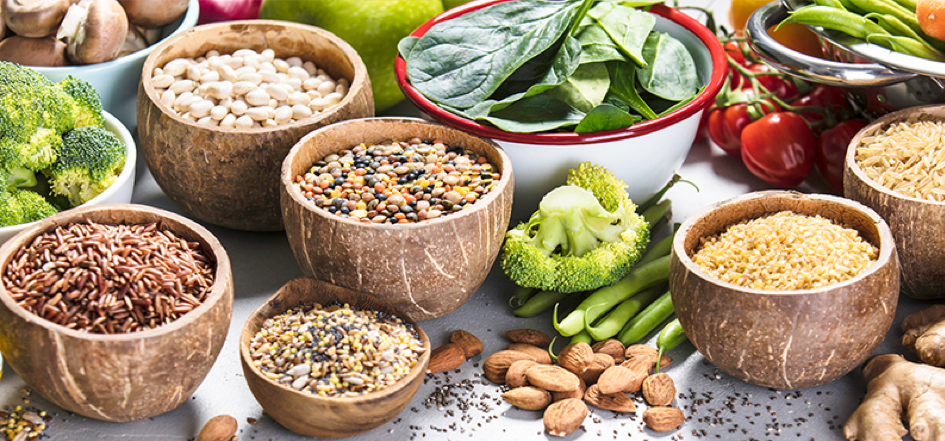
Rich sources of fiber include a wide variety of vegetables, whole grains, fruits, legumes, nuts, and seeds—all supporting the diversity of your gut microbes. Select organically grown when possible.

  1. Vegetables:Each 1/2 cup (cooked or raw) usually provides 2–4 grams of dietary fiber.
  2. Whole grains:Each 1/2 cup (or 1 ounce) serving of whole grains provide 2–4 grams of dietary fiber (examples include brown rice, quinoa, bulgur, millet, buckwheat, barley, spelt, and oats).
  3. Legumes:Dried beans, peas, and lentils are concentrated sources of fiber, with 6–8 grams per half-cup (cooked).
  4. Nuts and seeds:A 1.5 ounce serving of most nuts and seeds provides about 3 grams of fiber.

5 Fiber-Boosting Strategies

Individuals whose diets mainly consist of low-fiber foods like white bread, pizza, and pasta need to be careful when adding more fibrous foods into their diets. A sudden switch will overwhelm their underfed bacterial community, resulting in a symphony of sounds and sensations from down below, according to Dr. Giulia Enders, author of Gut: The Inside Story of Our Body’s Most Underrated Organ. “The sudden change will freak the bacteria out, and they will metabolize everything they can in a fit of euphoria. So the best strategy gradually increases the amount of dietary fiber and not feed your bacteria with massive, unmanageable amounts.”

What are the keys to a successful shift in total fiber intake? Start slowly with some of the simple strategies below.

  1. Mind the bean.Though they are the bomb when it comes to fiber content, they can wreak havoc on your belly. Cook your beans with kombu (edible kelp) to reduce the gas-producing effects beans can have. Add lentils to pasta sauce or soup; they cook quickly without presoaking.
  2. Load up on veggies.Add raw, cooked, or frozen high-fiber vegetables to homemade or prepared soups.
  3. Enjoy fresh fruit. Berries offer the best bang for your buck—they are high in fiber, low in sugar, and loaded with many nutrients and protective powers like helping to delay the decline in memory and other neurogenerative diseases. What is a simple way to increase consumption? Add high-fiber fruits, such as fresh or frozen berries to plain yogurt instead of choosing fruit-flavored yogurts with little fruit content.
  4. Get nutty and seedy.Top salads and mixed dishes with nuts and seeds instead of croutons. Alternatively, add seeds (like chia) to your breakfast cereal or to smoothies.
  5. Pair beans and grains.A veggie burger is a wonderful way to eat beans and grains together, says Jill Nussinow, M.S., R.D., author of Nutrition CHAMPS: The Veggie Queen’s Guide to Eating & Cooking for Optimum Health, Happiness, Energy & Vitality. She suggests cooking brown rice and lentils (or any combination of whole grain and bean). You can also make a veggie burger by adding mushrooms, onion, sun-dried tomato, and a seasoning of choice—Italian, Thai curry, Middle Eastern, or Mexican.

More Fiber for Better Health

Increasing fiber works wonders in how your body functions. Fiber-filled foods are like fertilizer for your internal garden in more ways than one, leaving you feeling better from top to bottom.


December

1

Hello Friends, my December wish to you is simple:

May Peace prevail, Love conquer, Tranquility and Success follow, and Unity and Compassion for Mankind bloom and spread like wildflowers all over the world!

Namaste!

Please enjoy the articles below:

How Shifting Your Energy Can Transform Your Life

By Parita Shah, Reiki Practitioner and Energy Healer

2

While reframing your thoughts and thinking more positively helps with negative thoughts and feelings, coupled with energy healing you can get to the root of your thought patterns, safely and gently release them, and imprint positivity. Here’s how.

If you were ever inspired by The Secret or stumbled upon an Abraham Hicks video, you know that your thoughts create your reality. What you think, leads to your feelings, habits, and reality. You may also realize that reframing your thoughts, and simply thinking positive is incredibly challenging. It is also an ineffective way of manifesting when done by itself. True reconditioning comes from shifting your energy.

What Is Energy Healing?

The human body is a complete energy system, and any imbalance in the body would create an obstruction in the flow of energy, which can result in illness or negative thoughts and feelings. Energy healing is a method to ensure that the energy flow within your body moves unobstructed. Energy healing modalities also take you to the root of your thought pattern, help you safely and gently release it, and imprint positivity. This process creates healing on the physical and spiritual layers as well as the mental and emotional ones.

Here are five reasons why the key to changing your thoughts is shifting your energy field.

  1. The Building Block for Your Thoughts Is Energy

Every notion and belief that you’ve ever held onto is stored as energy in your chakras. Everything that you have experienced, whether you processed it or not, is recorded in the auric field.

By balancing the chakras, releasing stagnant energy, and integrating life-force back into the subtle body, you give yourself new information to base new perspectives with. While repeating affirmations is a part of that new conditioning, energy healing modalities such as Reiki, Integrated Energy Therapy, or Psych-K can support manifestation by connecting to your chakras, subconscious, and cellular memory.

  1. Thinking Positively About Someone Won’t Heal the Karmic Tie

People can unconsciously create energetic cords of attachment that drain your energy. As long as the cord is attached to you, you aren’t fully in your power.

If you can’t stop thinking about someone, feeling depleted, or simply feeling easily triggered in the presence of someone, consider practicing a cord-cutting meditation for at least 21 days. Cord-cutting is a practice in which you call back all of your power through time and space, and release any energy that isn’t yours.

Once you try it, notice if your energy field strengthens. Observe how the people who once triggered you cannot penetrate your peace. While reframing your perspective about this person can help you develop emotional intelligence, energy healing compliments this transformation by tending to the physical, emotional, and spiritual bodies.


  1. Energy Healing Takes the Pressure Off of You and Calls in a Higher Power

Energy healing is based on the idea that there is Divinity within you that brings everyone together. Divinity supports you in your path and guides you to exactly what you need.

In crystal healing, you call in the energy of Mother Earth. In Reiki, you call upon your guides, teachers, and ancestors. Let go of the need to rely on your own strength. Take the pressure off of yourself to manifest your dreams and desires and tap into a higher power.

  1. Energy Healing Takes You to the Root of the Issue

Perhaps you’re trying to feel more supported by your loved ones, but you’re ruminating beliefs such as “I’m not lovable” or “I’m not worthy of their time and money.” Some reflection can surface whether the idea stemmed from an experience such as the time your loved ones accidentally lost you at the mall or the time they chose their job over your soccer game.

Energy healing transports you to the time when you first picked up on a limiting idea and uncovers societal and cultural programming, ancestral trauma, or past life trauma. From there, you acknowledge how that mindset no longer fits your needs. Awareness of the experiences and memories that snowballed your limiting ideas is essential to transforming your thoughts. If you’re working through challenging thoughts, energy healing techniques such as hypnosis or Reiki can reveal the true source of suffering. While affirmations and journaling exercises help you to witness your shadow and reprogram the conscious mind, they can be coupled with energy healing modalities to connect you with deeper layers of your consciousness.

  1. Elevated Frequencies Keep You Aligned

When you are operating on a lower frequency due to old perspectives or disturbing experiences, it’s difficult for you to think positively, release the past, and feel empowered. You then manifest more people and situations from that lower frequency.

Through energy healing modalities, you can break the energetic patterns that have been holding you back. Energy healers repair tears, seal leaks in the aura, and fill the aura with life-force. As your frequency is raised, reaching for more positive thoughts and belief systems becomes easier. You can become centered in your own energy field, rather than other people, places, and events. With that, you feel more creative, inspired, and aware.

If you’ve been battling self-sabotaging thoughts, you may have started an affirmation journal, talk therapy, or simply committed to thinking positive thoughts. While these are incredibly commendable efforts that do work, consider supplementing your practice with an energy healing modality such as Reiki, Chakra Balancing, hypnosis, or Psych-K. Take the pressure off of yourself to cure your thought patterns and welcome in support.

3 Mindfulness Practices to Improve Decision-Making Skills

By Karson McGinley, Yoga Teacher and Life Coach

3

You may think that making a decision starts the moment you are faced with one, but it starts earlier. Practice mindfulness to ensure your mind is clear and still—then you’ll be ready for any decision that comes your way.

In his book, The Way of Zen, Alan Watts famously wrote, “Muddy water is best cleared by leaving it alone.” Continuing to shake a jar full of water and dirt will only make the water cloudier; the only way to find clarity is by letting the jar sit and settle.

So, too, does the mind need stillness for clarity, yet people resist mindfulness and meditation in favor of engaging the mind. People spend a lot of time lost in thought and don’t realize the consequences it can have on good decision-making. What happens then, when the thinking gets you nowhere? What happens when the thoughts get so jumbled, you can hardly see your way out? When you are faced with an issue, what if you stop shaking your jar, and instead, try letting it settle? If you give it a chance, clarity will naturally present itself, offering solutions.

What Is Mindfulness?

How much of your day is spent in mindless rumination? Especially when you are making choices, weighing options, brainstorming, and trying to be productive, an overwhelmed mind can easily pull your focus away from the moment at hand. Mindfulness, however, calms and focuses the mind by asking for full awareness with all the senses.

Anytime you are actively engaged in the moment you are in, you are practicing mindfulness. By being aware of your feelings, thoughts, and physical sensations, you wrangle your mind toward a single-pointed focus. Mindfulness also integrates a sense of acceptance for your current situation—without resistance. So even if you recognize that your mind is spinning and you have not paid attention to what your coworker just said, in that moment you are actually demonstrating mindfulness. There is no judgment in this mental process; it is simply the art of paying attention. And you can use that mindfulness as a way of improving decision-making skills.

Any list of tips for decision-making should start with backing up a step to employ mindfulness before you make important choices.

What Does Mindfulness Do for Your Brain?

Many areas of the brain are affected by mindfulness training. Studies show that the part of the brain that governs emotional regulation is affected when that person practices mindfulness, suggesting that mindfulness can help you be more resilient when things get tough.

Mindfulness also affects the frontal lobe, which governs future planning. The prefrontal cortex actually gets thicker when practicing mindfulness, which means that effective decision-making gets easier and more efficient.

MRI scans also show that mindfulness appears to shrink the amygdala, which is the brain’s fight-or-flight center that governs stress and anxiety. Practicing mindfulness helps practitioners to be less reactive, less panicked, and less overwhelmed by having to make decisions and engage with the major factors in their life.

Generally speaking, mindfulness trains the brain to rely on the higher centers rather than the lower ones. Mindfulness helps people see a situation more clearly and less reactively. It strengthens your ability to respond with calm and alert presence, rather than with mindless haste.

Benefits of Mindfulness

The American Psychological Association defines mindfulness as “moment-to-moment awareness of one’s experience without judgment.” As you contemplate committing to a more dedicated practice, consider the following benefits.

People who practice mindfulness experience:

  • Decreased reactivity
  • Increased empathy
  • Decreased stress and anxiety
  • Greater compassion
  • Decreased negativity and depression
  • Improved memory
  • Increased focus
  • Increased satisfaction in their relationships

Though it might seem too good (and easy) to be true, simply by being aware of the here and now, you have the potential to impact from these profound effects.

Ready to try integrating a more mindful approach to your life and develop your decision-making process? Here are a few effective practices that can help you see through the cloudiness of mental overwhelm and improve your decision-making skills and learn how to best achieve your goals.


  1. Five Senses Practice

This practice can be done anywhere, at any time. Simply stop what you are doing and dedicate five minutes to reset your energy.

  • Begin by closing your eyes and taking a few deep breaths. Just breathing calms your nervous system tremendously, setting the stage for greater clarity and focus.
  • Let the weight of your seat feel heavy and notice the texture of whatever it is you are touching. Notice any bodily sensations of your body parts connecting with external items (like the chair, your clothing, or your feet in your shoes), and also any internal sensations (like your heart beating, your muscles twitching, or your belly rumbling). Use your intuition and decide what is going on without judgment.
  • Then, as you open your eyes, look around as if it were your first time in this space. If you are at your desk or in your living room, let your eyes scan your environment to orient yourself and notice where you are in space.
  • Then, close your eyes again, and listen for 30–60 seconds. What do you hear? Inner sounds? Outer sounds? Are the sounds nearby or far away? Try to notice the sounds without judging or labeling them. Simply acknowledge them as a part of the moment you are living in right now.
  • As you breathe through your nose, can you identify any smells? Can you feel the temperature of the air as it hits your nostrils? What about any tastes in your mouth? Just keep scanning your senses to help anchor you in the moment.

After about five minutes, check back in with your bodily sensations, and evaluate if you feel more grounded and clear.

  1. Simple Walking Meditation

When your mind is stuck on a hamster wheel, try taking a short walk in the name of mindfulness. This walk is not about getting anywhere, it is about moving your body and being aware of the movement itself. You can walk inside or outside, but give yourself the time and space to go slowly.

  • With your hands comfortably behind your back, patiently walk with your eyes cast downward.
  • Step with the heel of your first foot, then shift the weight into the ball of your foot, and push off of your toes to the next step.
  • Keep going for a few minutes, either in a straight line or in a circle.

In this simple process, you are rewiring your system to slow down, pace yourself, and embody the journey. You are shifting the flighty energy in your mind down into your body and your senses. This helps to clear your mind to make room for fresh, rational ideas.

  1. Body Scan

To do a body scan, sit or lay down comfortably.

  • Close your eyes, and starting from the tips of your toes, notice the sensation of each of your body parts.
  • Move from the toes to the ankles, up your legs, and so on, until you reach the crown of your head with your awareness.

Where there is tension or pain, simply become aware. Where there is spaciousness and freedom, identify those factors too. Notice even if you can’t feel a specific area of your body—like your elbow, for example. By moving your mental focus to the different areas of your body, you not only root your attention out to the mind and into the body, but you also dissipate the stress that can accumulate in your mind when trying to make rational decisions. Be in your body, and you will notice your energy start to ground down. The more grounded you are, the more able you will be to develop a prime mental capacity.

The benefits of mindfulness increase the more you practice; however, any amount of mindfulness will still improve your life. To return to the muddy water analogy, the busier you are, the more “dirt” is in your water. Shaking the jar more (read: doing more) will only add to more cloudiness. Remember to let the jar settle regularly, and you will be able to see beyond the mud with clarity and focus.

Healthy Holiday Cookies

By SIDNEY FRY, MS, RD

4

Once you taste these gloriously nutty and just-sweet-enough holiday cookies, with their fluffy middles and golden-crisp edges, you’ll never go back to the original. Whole-wheat flour adds a layer of complexity that the bland, all-purpose version just can’t achieve; the wheatiness of the whole-grain actually enhances the flavor of the butter, vanilla, and oven-toasted goodness. Unlike classic royal icing, which starts with a pound of powdered sugar, we use just half a cup and thicken it with a dollop of Greek yogurt. Looking for festive red and green colors without the chemicals? Try naturally colored sparkling sugars (such as those from India Tree), which use colorants derived from edible plants.

Ingredients

COOKIES:

  • 9 ounces whole-wheat flour (about 2 cups)
  • 1/2 teaspoon salt
  • 1/4 teaspoon baking powder
  • 10 tablespoon butter, softened
  • 1/2 cup granulated sugar
  • 1 ounce 1/3-less-fat cream cheese, softened
  • 1 large egg
  • 1 teaspoon vanilla extract

ICING:

  • 1/2 cup powdered sugar
  • 2 tablespoons plain 2% reduced-fat Greek yogurt
  • 1/4 teaspoon grated lemon rind
  • Naturally colored sparkling sugar (optional)

HOW TO MAKE IT

Step 1

To prepare cookies, weigh or lightly spoon flour into dry measuring cups; level with a knife. Whisk together flour, salt, and baking powder in a medium bowl. Beat butter, granulated sugar, and cream cheese in a large bowl with an electric mixer on high speed until light and fluffy, about 3 minutes. Add egg; beat until well blended. Add vanilla; beat until blended. Reduce mixer speed to low. Gradually add flour mixture to butter mixture; beat just until combined.

Step 2

Flatten dough into a 6-inch disk; wrap with plastic wrap. Chill 1 hour.

Step 3

Preheat oven to 350°F.

Step 4

Roll dough to 1/4-inch thickness on a lightly floured surface. Cut out 32 cookies, using a 2- or 3-inch cutter, rerolling scraps as necessary. Place cookies 1 inch apart on baking sheets lined with parchment paper. Bake 12 minutes or until lightly browned around edges. Cool.

Step 5

To prepare icing, whisk together powdered sugar, yogurt, and rind; drizzle over cookies. Sprinkle with sparkling sugar, if desired. Let stand on a wire rack until icing is set, about 15 minutes.


November

1

Thanksgiving is a holiday centered around family and food. Everyone joins around a dinner table and eats together in thankfulness. Let’s not forget that most important part about Thanksgiving is gratitude and connection!

Please enjoy those healthy recipes and the other articles below.

Namaste!

Healthy Thanksgiving Recipes for the Whole Family

By Lauren Venosta, Clinical Nutritionist & Personal Chef

2

It’s time to enjoy a delicious Thanksgiving feast that leaves you feeling satisfied and happy instead of lethargic and stuffed with too much sugar and fat. With these recipes, you can make a full Thanksgiving meal that’s healthy and full of all the classic flavors you and your family love.

Most Thanksgiving recipes are loaded with fat, sugar, and calories. But you can still have a delicious Thanksgiving dinner that won’t make you feel like you gained 10 pounds the next day. Or even worse, give you a three-day food hangover because your digestive system is doing so much work to digest the food. These healthy Thanksgiving recipes will have your family and guests asking for more and feeling great afterward too.

Cauliflower & Mushroom Stuffing

While most Thanksgiving dishes are usually carbohydrate-heavy, this stuffing recipe will lighten up your plate and still give you all the delicious flavors of traditional stuffing. It’s grain-free, gluten-free, and vegan—terms you may not often hear when it comes to Thanksgiving dishes. This recipe is loaded with flavor and will have your guests rethinking traditional Thanksgiving stuffing for years to come.

Ingredients:

  • 1 head cauliflower, chopped into small florets
  • 1/2 cup olive oil
  • 1/2 tsp. Himalayan pink salt
  • 1/2 tsp. black pepper
  • 4 cups diced portobello mushrooms
  • 1 leek, chopped
  • 3 stalks celery, diced
  • 1 cup walnuts, chopped
  • Juice of 1 lemon
  • 4 cloves garlic, minced
  • 1/2 cup fresh parsley
  • 1 tbsp. fresh thyme
  • 1 tbsp. fresh sage
  • 1 tsp. Himalayan pink salt

Directions:

Preheat your oven to 400 degrees F. Line a large baking sheet with foil and parchment paper. Add cauliflower florets to the baking sheet. Drizzle with 1 tbsp. olive oil, salt, and pepper, and toss to combine so all the cauliflower is coated in the oil and spices. Roast in the oven for about 30 minutes. When finished, remove from the oven and set aside.

Reduce the temperature to 375 degrees F.

In a saucepan over medium heat, add 2 tbsp. olive oil, mushrooms, leeks, and celery. Sauté for about 10 minutes until veggies have softened. Set aside when done.

Using a food processor, add in the walnuts, lemon juice, parsley, thyme, sage, and salt. Then add half of the roasted cauliflower florets. Pour in remaining olive oil. Pulse the mixture until it forms a crumble-like consistency, being careful not to purée the mixture.

In a large baking dish, add in the mixture, sautéed veggies, and the rest of the roasted cauliflower. Mix well to combine and bake in the oven for about 1 hour. Stir the mixture every 15–20 minutes to prevent burning.

Serves 6

Healthy Scalloped Potatoes

Who doesn’t love potatoes? This recipe combines two favorites—mashed potatoes and candied yams—giving you all the potato goodness without the heavy cream of mashed potatoes or the sugar rush of candied yams. It’s also gluten-free and vegan. These Healthy Scalloped Potatoes may soon be your new favorite Thanksgiving side dish.

Ingredients:

  • 2 sweet potatoes, peeled and sliced thin (approximately ⅛ inch)
  • 1/2 yellow onion, sliced thin
  • 2 tbsp. coconut oil
  • 1/4 cup gluten-free flour
  • 1 1/2 cups full-fat coconut milk
  • 2/3 cup pumpkin purée
  • 2 tsp. garlic powder
  • 1 tbsp. fresh thyme leaves
  • 1 tsp. Himalayan pink salt

Directions:

Preheat your oven to 400 degrees F and grease a 9×9 baking dish with a bit of coconut oil.

Create layers in the baking dish with the sweet potato and onions until all the veggies are used up.

In a saucepan over medium heat, melt the coconut oil. Add in the flour and whisk for about 2 minutes. Add in the coconut milk, pumpkin purée, garlic powder, thyme, and salt. Whisk for about 5 minutes until warm.

Pour the sauce mixture over the sweet potato and onion in the baking dish. Bake in the oven for 45–50 minutes until the potatoes are cooked through. Sprinkle with fresh thyme before serving.

Serves 6

Not-Your-Grandma’s Green Bean Casserole

Ditch the cream of mushroom soup in a can and enjoy this recipe at your Thanksgiving dinner. It’s fresh and flavorful and gives you all the flavorful comfort of a classic green bean casserole without the processed canned soup. It’s also gluten-free and vegan.

Ingredients:

  • 2 tbsp. coconut oil
  • 2 shallots, thinly sliced
  • 1/2 head cauliflower, chopped into florets
  • 5 cups green beans, ends trimmed and cut in half
  • 2 cups mushrooms, sliced
  • 5 cloves garlic, minced
  • 1 1/2 cups water
  • 1 tsp. Himalayan pink salt
  • 2 tbsp. nutritional yeast
  • 1/4 cup slivered almonds

Directions:

Preheat your oven to 350 degrees F.

In a large skillet over medium heat, add 1 tbsp. coconut oil. Add in the shallots and cook until they caramelize, about 20–30 minutes. Set aside when done.

As the shallots cook, steam the cauliflower florets until tender and transfer to a blender.

Steam the green beans until they turn bright green, about 5–7 minutes. Transfer to a large casserole dish.

In a skillet over medium heat, add the other 1 tbsp. of coconut oil and sliced mushrooms. Sauté mushrooms until soft. Add half to the casserole dish and half to the blender with the cauliflower. Also add water, salt, and nutritional yeast to your blender with the cauliflower and mushrooms and blend until a creamy consistency is reached. Pour mixture over the green beans in the casserole dish. If you like a creamy casserole, use all the sauce. If you like your casserole to be drier, you won’t need all the sauce. Mix the sauce with the green beans and top the mixture with caramelized shallots.

Cover the casserole dish with tin foil. Bake in the oven for about 15 minutes. Remove foil and continue baking for another 15 minutes. Remove from oven when finished and top with slivered almonds.

Serves 6


Turkey Stuffed Acorn Squash

If you aren’t a fan of cooking a whole turkey, or eating it, this recipe is for you. It calls for ground turkey, which is easier to prepare and more cost-effective. The turkey is deliciously seasoned with a medley of spices and spinach, all packed nicely into an acorn squash bowl. It’s pretty to look at and even better to eat. You’ll be rethinking that big turkey on the table after you make this recipe.

Ingredients:

  • 3 acorn squash
  • 3 tbsp. olive oil
  • 1 1/2 lbs. ground turkey
  • 3 tbsp. chili powder
  • 1 tsp. oregano
  • 1 tsp. cumin
  • 1/2 tsp. Himalayan pink salt
  • 4 cups baby spinach, chopped

Directions:

Preheat your oven to 400 degrees F. Line a large baking sheet with tin foil and parchment paper.

With each acorn squash, slice the pointy tip from the bottom so it sits flat. Slice each squash in half and scoop out the seeds and pulp. Brush the inside with olive oil and sprinkle with a bit of salt and pepper. Roast in the oven for 30–45 minutes until brown.

While the squash cooks, add 1 tbsp. olive oil to a skillet over medium heat. Add in your ground turkey and season with chili powder, oregano, cumin, and salt. Cook the turkey through, breaking it apart as it cooks. Add in chopped spinach and stir until wilted.

Remove the acorn squash from the oven and add the ground turkey mixture to each one.

You can top with your favorite hot sauce if desired.

Serves 6

Mini Pumpkin Pies with Coconut Cream

Pumpkin pie is a classic Thanksgiving component. And what’s a holiday meal without dessert? It’s totally possible to be healthy and eat dessert too. Especially with recipes like this one for mini pumpkin pies that aren’t loaded with sugar and heavy cream. It’s a healthy version of your favorite Thanksgiving dessert and is gluten-free, dairy-free, and 100 percent satisfying.

Ingredients:

  • 1 cup roasted almonds
  • 1 cup roasted cashews
  • 1 egg
  • 1/4 cup coconut oil
  • 1/3 cup maple syrup
  • 1 tsp. vanilla extract
  • 1 tsp. cinnamon
  • 1/2 tsp. Himalayan pink salt
  • 2 1/4 cups pumpkin purée
  • 1/3 cup unsweetened almond milk
  • 2 1/2 tbsp. arrowroot powder
  • 2 tsp. pumpkin pie spice
  • 1 1/2 cups full-fat canned coconut milk, extra cold

Directions:

Preheat your oven to 350 degrees F. Using a mini muffin pan, line each pan with muffin cups or spray with nonstick cooking spray.

Pulse the almonds and cashews in a food processor until broken down. Add in the egg, coconut oil, maple syrup, vanilla, cinnamon, and salt. Pulse again until it forms a crumbly consistency like dough.

Add a small amount of dough to each muffin cup and press down and around the sides to form a cup. It should be thin but firm in the muffin pan.

Make the pumpkin filling by mixing together the pumpkin purée, almond milk, arrowroot powder, and pumpkin pie spice. Spoon the filling into each cup and bake in the oven for about 40–45 minutes.

Let the mini pies cool and then refrigerate for about 6 hours until firm or overnight. Before serving, make the coconut cream. Scoop out the thick cream from the can of coconut milk and add to a bowl. Using a hand mixer, mix on high speed until thick and fluffy. Top each mini pie with coconut cream.

Serves 6 (two mini pies per person)

With these recipes, you can make a full Thanksgiving meal that’s healthy and full of all the classic flavors. Serve Turkey Stuffed Acorn Squash accompanied by Cauliflower and Mushroom Stuffing, Healthy Scalloped Potatoes, Not-Your-Grandma’s Green Bean Casserole, and Mini Pumpkin Pies with Coconut Cream to round it off. Everyone at your table will enjoy these yummy dishes and feel fully satisfied that they are celebrating the Thanksgiving holiday with a bounty of delicious food and blessings.


4 Advanced Meditation Techniques and Tools to Deepen Your Practice

By Adam Brady

3

For thousands of years, meditation has been one of the most reliable tools to access spirit, reconnect with your higher self, and explore the true nature of reality. Despite its surging popularity and the robust research exploring its effects on mind, body, and spirit, the immense potential meditation has for your life is just beginning to be understood.

Types of Meditation Practices

Hundreds, if not thousands, of meditation techniques exist due to the rich diversity of cultures and traditions throughout the world. A few popular types of meditation include:

The most foundational practices taught at the Chopra Center are Primordial Sound Meditation and the So Hum breathing practice.

What Are Advanced Meditation Techniques?

But what about more advanced techniques? If you want to expand your experience by delving into deep meditation practices, where should you begin? This article will describe some more advanced meditation techniques as a guide for your personal exploration. First, let’s look at what is meant by advanced meditation techniques.

  1. Advanceddoes not imply increased difficulty. Advanced meditation techniques aren’t harder—the procedure is just more involved. If you can follow the instructions listed below, you can perform the techniques.
  2. There are no special prerequisites required. If you have an existing meditation practice, great; it’s not a requirement to take these techniques for a test drive.
  3. Essentially, what makes these techniques different is the intention behind the practice. If you’re familiar with Primordial Sound Meditation or the So Hum techniques, you’ll know that the general intention behind those techniques is to allow the mind to settle into stillness. For the techniques below the intentions will vary from practice to practice. Try the ones that you feel drawn to, test them out, and take note of your experiences. Below are some of the most common types of meditation techniques for advanced individuals.
  4. Chakra-Balancing Meditation

Chakras are the psycho-physiological energy centers that reside in the subtle body. Each chakra is said to correspond to a major bodily system as well as a core psychological need. Located along the spinal column, each chakra has its own color as well as a specific mantra that resonates with its energetic frequency. The chakra locations, bodily system, color, and psychological needs are shown in the table below.


Location System Color Need
Base of spine Elimination Red Survival
Sexual organs Reproduction Orange Creativity
Solar plexus Digestion Yellow Will/manifestation
Heart Circulation Green Compassion/love
Throat Endocrine/thyroid Blue Self-expression
Forehead Endocrine/pituitary Indigo Insight/intuition
Crown Nervous system Violet Unification

This type of meditation practice uses attention, intention, and visualization along with each chakra mantra to bring balance and enhance its function.

How to

  • Sit or lie comfortably where you will not be disturbed for 7–10 minutes. Close your eyes and take several deep slow breaths, emphasizing slow exhalations.
  • Now, put your attention on the area at the base of your spine. Visualize a deep red wheel of energy, about the size of a softball. While focusing on the deep red color, silently repeat the mantra LAM. Continue to silently repeat the mantra with your attention in this area for about one minute (the same will apply for the remaining chakras).
  • Moving up, place your attention on the area of your reproductive organs. Visualize a bright orange while silently repeating the mantra VAM.
  • Next, bring your attention to your solar plexus. Imagine a golden yellow ball of energy. Silently repeat the mantra RAM.
  • Move your attention to your heart center. Visualize a bright green color. The mantra is YAM.
  • Draw your awareness into your throat. In your mind’s eye, see a sky blue color. Silently repeat the mantra HAM.
  • Focus on the area between your eyebrows. Imagine a beautiful indigo color. The mantra is SHAM.
  • Guide your awareness to the crown of your head, visualizing a shimmering violet color while you repeat the mantra OM.
  • After repeating each mantra for approximately one minute, repeat them all together one last time, LAM, VAM, RAM, YAM, HAM, SHAM, OM. Following the meditation, just allow yourself to sit quietly and notice any sensations in your mind or body before opening your eyes.
  1. Tonglen Meditation

Tonglen meditation is a Tibetan Buddhist meditation practice that means “giving and receiving.” It is a breathing Buddhist meditation that includes visualizing the taking in of one’s own or another’s suffering and projecting out love, healing, and compassion.

How to

  • Sit or lie comfortably with your eyes closed.
  • Begin by centering yourself with a few full deep breaths.
  • Now, keeping your focus on your breath, inhale and visualize either your own negativity or suffering or that of another person. Imagine sucking up the darkness, negativity, and pain like a spiritual vacuum cleaner.
  • Pause for a moment and see that darkness transformed by the power of pure spirit.
  • Exhale the white light of loving compassion back into your own space or that of the other you were focusing upon. Continue this process for 5–10 minutes or as for long as it feels comfortable.

In case you’re concerned about ‘polluting’ yourself with negativity, remember that the field of spirit is impeccably pure, unblemished, and impossible to contaminate. As long as you remain established in your true essence of pure consciousness, any negativity will be transformed by its healing touch.

  1. The Microcosmic Orbit

This Taoist Qi Gong meditation helps to circulate subtle energy known as Qi (pronounced “chee”) or prana through the mind/body system. This form of meditation helps to energize the eternal organs, eliminate stress from the nervous system, and promote a deep feeling of well-being. This practice is said to embody the concept of “as above, so below” by capturing the essence of universal principles mirrored in your body.

How to

  • This meditation is best performed in a seated position with the eyes closed. Sit comfortably, but with a relatively upright spine.
  • Place the tip of your tongue against the small ridge behind your front top teeth. Take a deep breath and focus your attention on the area between your eyebrows while visualizing a golden light.
  • Exhale slowly, guiding your awareness gently down through your throat area, your heart, solar plexus, and navel.
  • Inhale, filling up with energy from the lower abdomen, and draw the energy up the back of the body from the tailbone, through the kidney area, behind the solar plexus, back of the heart, behind the throat, back of the head, peaking at the crown of the head before exhaling the energy down the front of the body again.
  • Continue this practice for 7–10 minutes.

As you become more comfortable with the cycling of energy, you can visualize its movements like a water wheel that draws the energy up the back and of the body flows it down the front of the body. Upon completing the meditation, sit comfortably for a few moments before returning to activity.

  1. The World Is in Me

This type of meditation is about reframing and shifting your identity from a being “in the universe” to “the universe being in us.” It is a subtle, yet powerful shift in attention that helps you redefine your place in the cosmos.

How to

  • Begin by sitting or lying comfortably. Take a look around your surroundings, taking note of the space. Now close your eyes and take a few full deep breaths.
  • Once you feel settled and relaxed, place your awareness in the area of your head or brain and silently repeat to yourself, “I am not in the mind, the mind is in me.” Visualize a bubble of expanding awareness that grows to envelop your head. Feel yourself as the bubble of awareness as it continues to grow.
  • Now imagine the awareness envelope your physical body. Silently repeat to yourself, “I am not in the body, the body is in me.”
  • Watch your awareness expand to fill the room you are in. Repeat: “I am not in this room, the room is in me.”
  • As your awareness grows, see it absorb the entire building. Again affirm: “I am not in this building, the building is in me.”
  • Growing exponentially, your awareness expands to your town or city. Repeat: “I am not in this city, the city is in me.”
  • Your awareness absorbs your state or province. “I am not in this state, this state is in me.”
  • “Your country is enveloped within your expanding awareness. I am not in this country, the country is in me.”
  • Finally, watch as your awareness embodies the entire planet. “I am not in the world, the world is in me, everything is within.”
  • Feel free to continue this process even further to the solar system, galaxy, and the entire universe.
  • Following the meditation, take a few minutes to allow this expanded sense of awareness to settle in before opening your eyes.

As you can see, there are many benefits of meditation for your daily life. Try integrating these types of meditation techniques as a supplement to your regular meditation practice. Return to them whenever you wish to take your practice and awareness to deeper levels of your mind, body, and soul.

Ayurvedic Home Remedies

by Lisa Coffey

4

Ayurveda is the Science of Life – and it teaches us how-to live-in harmony with nature. It is best used as a preventative medicine, to keep us our healthiest and happiest selves. Yet, sometimes we get out of balance, and it shows up as an ailment in the body. What to do? See your doctor for any severe or chronic conditions, and meanwhile, also look into what you can do at home to help yourself feel better.


Remember these three things:

*80% of disease attributed to an imbalance of the digestive system.

*Stress has a big impact on all three parts of digestion: digestion, assimilation, and elimination.

*FOOD is medicine first and foremost! Many ailments can be cured with the right diet. (See the Ayurvedic Meal Plan System on TulsiSpa.com)


Ayurveda’s 3 Pillars of Health are: Food, Sleep, and Activity (Behavior). So, look at these three areas of your life and assess yourself. Chances are you’ll see some room for improvements.


Ask these 3 questions:

What are you eating? How are you eating?

How are you sleeping? Quality and quantity of sleep?

How are you behaving? What is your daily routine?


Here are some Ayurvedic Home Remedies for some of the most common ailments.


Upset stomach:

Ginger: chew candied ginger, or make fresh ginger tea

1 teaspoon sugar + 1 teaspoon salt: in warm water and sip

Black tea, no sugar: helps with diarrhea

Buttermilk: contains acid that kills diarrhea germs


Constipation:

Grapes: eat to maintain regularity

Warm water + lime juice: drink 1 cup every morning to avoid constipation


Acidity:

Ginger + coriander: in small quantities to control acidity

Orange juice + rock salt + roasted cumin seeds: for quick relief of acidity

Coconut oil: 1 teaspoon to relieve acidity


Indigestion:

Blackberry tea: relieves indigestion

Coriander + ginger + cardamom + clove: helps relieve gas and indigestion

Lemon juice + curry leaves extract + pinch salt: relieves indigestion quickly

October

1

Happy fall everyone!

Autumn is the season for “letting go” and we should follow the wisdom of nature and let go of the things, feelings and relationships we no longer need. As the tree knows when it is time to shed its leaves, imagine the “natural order” whispering in your ears and telling you the things you no longer need. Remember just as the tree doesn’t mourn its fallen leaves, be joyful that there is a space opening for new things and presence in your life.

Enjoy the articles below.

Namaste!

CAN’T SHAKE THE FEELING YOU’RE NOT ENOUGH? HERE’S WHY

By: Melli O’Brien

2

In today’s world, sadly, I think most of us feel that we are not enough. We believe our worth is conditional, so it needs to be constantly earned. When we operate from this paradigm much of our behavior can become driven by feelings of shame.

We get caught in striving to do more, be more, get more and achieve more because secretly we believe we are not measuring up yet. Living like this is tiring, stressful and unfulfilling. I know this firsthand as I lived like this for many years.

Why do we so often struggle to see and know directly that we are already enough?

WHY THE HUMAN MIND IS HARD-WIRED TO SEEK APPROVAL AND FIT IN

Here is the reason…our human minds have evolved over the last 150-200,000 years. Most of the time the human mind has been evolving it has been through our hunter gatherer ancestors and so although we may live in a different world today we still have minds that operate in much the same way as those caveman days.


Now our minds are capable of incredible things, but first and foremost its job is to keep you alive. It operates like a survival machine and in the hunter gatherer days fitting in with the group was also essential to survival—humans survived in groups but we didn’t last long alone. If you ended up getting kicked out of the group it wouldn’t be long before a predator, warring tribe or injury would get you. Our survival depended on having the approval of the rest of the tribe.

Because of this our mind is constantly assessing—am I fitting in, am I doing anything that could get me rejected, am I contributing enough, am I special, am I enough?

HOW APPROVAL-SEEKING HOLDS YOU BACK FROM BEING YOUR TRUE SELF

Our modern mind still constantly compares us to other people and looks for approval. The problem is that now we don’t live in tribes and through technology and media we are now comparing ourselves to a huge amount of people instead of just those in our tribe. When we are constantly scrolling through images of all these people who seem to be smarter than us, better looking, sexier, richer and more successful than us we may quickly conclude we are not enough and not worthy.

For some of us this can crush our self-confidence or trigger anxiety or depression. For others it can be the catalyst for endless striving—pushing our bodies and minds to the limits trying to meet the new impossible standards of what it means to be enough. Instead of being our true selves we try to be liked. Instead of doing what makes us happy we can easily spend our time trying to impress others.

In the words of Will Smith, “We spend money that we don’t have, on things we don’t need, to impress people who don’t care.”

UNDERSTANDING TRUE SELF-WORTH

Think of this aspect of your mind as being like an outdated piece of software. The feeling of not-enoughness is simply a bi-product of ancient conditioning. It’s not personal. It doesn’t have anything to do with your actual worth.

The truth is of course that each human being is inherently worthy. You are inherently worthy.

Before you ever do, get or achieve anything, you are worthy. In other words, you are born worthy. Of course you were. Your worth is not conditional on anything at all. You are an integral, significant part of this living interconnected miracle we call life. You already belong, you are already whole and you are more than enough. Nothing you ever do will add any more worthiness to you.

When you see and understand this mind pattern for what it is, just an old evolutionary mind strategy and not the truth of who you are—you begin to free yourself from its grip.

LETTING GO OF SELF-WORTH SEEKING AND EMBRACING AUTHENTICITY

Knowing this, here’s a question to ponder. What would you do differently with your time and your energy if you weren’t out there hustling for self-worth through people-pleasing, approval seeking and overachieving? How might you speak, act and relate differently if you operate from a place of enoughness?

You truly don’t need to go and earn your worth today. So instead, feel free to focus your energies on what truly brings meaning, purpose, fulfilment, genuine connection and love into your life. You already are, always were, and always will be, more than enough!


5 Ways to Slow Down … in Order

to Speed Up

By Tris Thorp

3

Have you ever wondered what your life could look like if you had more clarity, better focus, reduced stress, and a sense of purpose—all while having success in your career, meaningful relationships, and the time in your day to enjoy the things you love? Have you ever wondered how some people manage to have it all while you’re struggling to keep up and feeling exhausted at the end of your day? The answer is to slow down so that you can speed up.

Examples of Successful Slow Downs

Some of the world’s biggest influencers have shared how they slow down, take time for mindfulness-based practices, and follow a consistent daily routine. Steve Jobs, Barack Obama, and Richard Branson have all been known to hold highly productive walking meetings, where they get moving out in nature while talking through their business dealings. According to a Stanford University study, a person’s creative output increased by around 60 percent when they were walking. Imagine how having access to higher levels of creativity could enhance your performance in whatever area of life you wanted!

  • Tim Ferriss, entrepreneur and author of the 4-Hour Work Week, has a routine of making his bed, meditating, exercising, and spending time journaling each morning before starting his daily work. Having a routine of mindfulness enables you to anchor into a state of awareness that results in higher levels of focus and follow-through. If you see distraction and chaos externally, you are sure to experience the same internally—and vice versa.
  • Phil Jackson, former coach of the Los Angeles Lakers, would meditatewith his team of the NBA’s most elite players to focus the team’s mindset right before stepping onto the court. He knew the key to better focus, greater self-awareness, and more cognitive flexibility is in taking the time to meditate. His teams won 11 NBA championships following his lead—the most in NBA history. He taught his team that connecting more deeply inside enabled them to experience higher levels of productivity and success on the outside.
  • Arianna Huffington, president and editor in chief of Huffington Post Media Group, has a daily practice of yoga, meditation, and contemplation. “Stress-reduction and mindfulness don’t just make us happier and healthier, they’re a proven competitive advantage for any business that wants one,” she wrote. “Happiness and productivity are not only related, they’re practically indistinguishable.”

Conditioned to Go, Go, Go

If so many of today’s icons have shown you the way, why is it so hard for you to follow suit? It begins with your beliefs. You are conditioned to believe that happiness comes from success. Society has taught you that to be successful, you need to be out in the world accomplishing, achieving, and acquiring during every moment of your waking day. Whether you learned it from your parents or your peers, this is likely a pattern you’re familiar with and it’s at the core of today’s epidemic of overwhelm, exhaustion, and burnout.

You’re convinced that there’s not enough time, money, support, or you to go around. In an effort to survive, you push harder, work longer, and take on more. In the end, you’re spinning and spinning yet nothing is being accomplished. When you get going too quickly, mistakes are made, you say things you don’t mean, and you make poor choices in terms of your health and well-being. The fallout from this can result in the loss of important relationships, physical illness, and a sense of being disconnected from yourself and your purpose.

Be Mindful

The American Psychological Association supports the practice of mindfulness meditation through proven benefits such as boosting memory, reduction of stress, and being less reactive. Taking downtime to get restful sleep, spend quality time with loved ones, and do things that bring you joy prove to be highly rewarding practices in business, within your interpersonal relationships, and for your overall health and well-being. Yet, you may believe you could—or should—be spending your time more productively.

When you understand the psychology of success and happiness, it’s clear that in order to be successful in any area of life, you must first tend to a daily routine of mindfulness. You must redirect your energy and attention inward to fuel your energy, mindset, emotions, and physical bodies. You need to slow things down, come back to your center, and become present to what is in this moment—right here, right now.

Here are five practices for helping you to slow down so that you can be more productive, more successful, and more purpose-based in your everyday life.

  1. Get Restful Sleep

You may tend toward burning the midnight oil and waking up the next day feeling just as exhausted as when you passed out. The key to getting restful sleep is to have an evening “wind down” routine to disconnect you from the busyness of your day. Try turning off the television by 8 p.m., dimming the lights and running a hot bath, and doing some light reading or journaling. Using essential oils to calm your mind, playing some chill music, and getting to bed with lights out by 10:30 p.m. will help you ease into a nice slumber.

  1. Rise Early

Set your alarm for somewhere between 5–6 a.m., wash the sleep away, and spend some quiet time setting intentions and steeping yourself in gratitude for all the gifts you have in your life. The early morning hours, before the rest of the world is awake, are some of the most peaceful hours in the day. Spend this time doing contemplative practices like prayer, envisioning your goals, and connecting more deeply with your purpose.

  1. Meditate

Installing a practice of mindfulness meditation for a minimum of 20 minutes each day will help you develop and cultivate a greater level of self-awareness—both during your practice and in your daily life. Awareness is critical for getting out of your mind and into the present moment. Taking time to sit in stillness and silence each day connects you more deeply to who you truly are—outside of your positions and possessions—and shines a light on what’s truly important to you.

  1. Get Physical Exercise

Regular exercise is great for both body and mind. Getting the body moving increases your circulation and does wonders for improving your mood, spiking energy levels, and even combating many common health issues. Getting a solid movement routine into your day also demonstrates to yourself that you are worth investing in and that your mental, emotional, and physical health are of paramount importance.

  1. Spend Time in Nature

Can you remember a time when you just let yourself unplug and enjoy time in nature? Do you remember how it allowed you to settle into a place of total contentment and peace? Time in nature—whether it’s sitting out on your porch, watching a sunset, or taking a stroll through a park—can do wonders for your energy and mindset. Find time each day to connect with nature in whatever way you’re able, and begin to notice the calming effects it has on you throughout the rest of your day.

Remember that when you’re spinning out in life the fastest and most effective way to ground yourself and become present is to anchor into a tangible, physical practice. This will teach you to become a master at self-discipline and—before you know it—you’ll have taken back control of your life and be living in a place of harmony

How to Incorporate More Omega-3s Into Your Daily Diet

By Fran Benedict

4

You’ve probably heard a lot about omega fats and their importance, but what about their unique makeup is so special? Well, it turns out, they are not only special, but they are also essential. Why? Because your body can’t make them on its own so you must get them from the foods you eat. Let’s explore why these particular fats are critical for an optimal body and brain, and then let’s find ways to add more of them into your daily diet.

What Are Omega-3 Fats?

Omega-3 fats are a type of polyunsaturated fat, meaning they have two or more double bonds and rank among the top of healthy fats, especially the following three forms:

  1. ALA or alpha-linolenic acid is found in most nutsand seeds and is especially rich in flaxseedshemp seedschia seeds, and walnuts. And—good news—you can also find omega-3s in vegetables—leafy green vegetables, that is. They are considered short-chain omega-3 fats.
  2. EPA or eicosatetraenoic acid are found in both fresh and saltwater fishand considered long-chain omega-3 fats.
  3. DHA docosahexaenoic acid is found in fish oil and red-brown algaeand is long-chain omega-3 fat as well.

Joel Fuhrman, MD, in his book Super Immunity, explains that the basic building block of omega-3 fats is alpha-linolenic acid (ALA). Researchers have found that people can convert short-chain omega-3 fats (ALA) from plant sources into long-chain omega-3 fats (EPA and DHA)Fish and fish oils are good sources of docosahexaenoic acid (DHA) and eicosatetraenoic acid (EPA). They are important for pregnant women, as they are vital for fetal development, including neuronal, retinal, and immune function states research published in Advances in Nutrition.

Research shows people have varying abilities converting ALA (plant sources of omega-3 fats) into DHA (fish and some algae sources of omega-3 fats). This issue raises the question as to whether you can achieve adequate amounts through a plant-based diet alone. According to a study published in The American Journal of Clinical Nutrition, some individuals who eat omega-3 in the form of ALA from greens, flax, and walnuts can achieve adequate levels of EPA and DHA, while others are not able to manufacture optimal amounts.

Why Are Omega-3 Fats Important?

Essential fatty acids, omega-3 (along with omega-6 polyunsaturated fatty acids), play a critical role in the development and functioning of the brain and central nervous system according to research published in Nutrition in Clinical Practice.

Over the past 150 years, there has been an unprecedented change in fat intake. Americans are consuming more pro-inflammatory refined, omega-6 oils including corn, soy, and safflower oils, which has replaced omega-3 fats from fish, wild game, and plants. This shift has resulted in adults not meeting the recommended levels and proper ratio of omega 6 to omega-3 fatty acid intake.

Mark Hyman, MD, author of The UltraMind Solution, explains the ratio of omega-6 to omega-3 fats has increased from 1:1 to 10:1 or 20:1 in diets, and how the effects of this change have been destructive to health. “A major disease of aging and the epidemic of ‘brain disorders’ is directly associated with this change in our diet.” He further reports that low levels of omega-3 fats are linked to everything from mental health issues such as depression and anxiety to learning disabilities, dementia, and other neurological diseases. “Our brains do not work without omega-3 fats. Period.”

Polyunsaturated omega-3 fatty acid benefits a multitude of health conditions. Below is additional research linked to backing these claims in support of upping the ante toward improving your omega-3 fat consumption. Research shows they affect your brain in the following ways:

They also support the critical body functions by:

What Are the Best Sources of Omega-3s?

Fish oil is an excellent source of omega-3 in the form of DHA and EPA.

With that said, there are plenty of plant-based sources to choose from to get your daily omega-3 supplement. Flaxseeds and hemp seeds have the highest concentration of this essential fat, according to Joel Furhman, MD, in his book Super Immunity. For people worried about mercury contamination from consuming fish, it’s important to note that fish get their omega-3 in the form of EPA and DHA from their source of food—phytoplankton. Additional options for omega-3 fats from the plant sources already mentioned including walnuts, hemp seeds, and chia seeds. And don’t forget that you can find omega-3s in various types of vegetables of the leafy green variety.

A concern about fish consumption is that it can accumulate environmental pollutants. The Environmental Protection Agency (EPA) warns consumers primarily of mercury toxicity and its impact on the central nervous system. The EPA and Food and Drug administration together offer good advice about eating fish if this raises concern. While DHA is a beneficial fat from fish, it’s important to choose fish that are low in mercury. A good rule of thumb: the smaller the size of the fish, the lower the mercury levels. The higher mercury levels are generally found in larger and older predatory fish and marine mammals according to the American Heart Association.

You can see how critical the consumption of omega-3s is for your overall body and brain and how they supplement your health. It’s important to note that you do not need lots of EPA and DHA, but issues can arise when people become deficient in these required fats.

Now, let’s put this information into practical use! Here are some easy ways to get more of these essential fats into your body daily.

Plant-Based Sources of Omega-3s

Flax Meal: Use Homemade Flax Meal on Your Meals/Snacks

Buy whole flaxseeds, keep them in your refrigerator, and grind half a cup at a time—using a coffee grinder or blender. In seed form, little of the omega-3 fat can be absorbed because the intact seed is tough to digest. By grinding the flaxseed, you help improve absorption.

A tablespoon a day will give you a good dose of omega-3s. Add to smoothies (it makes an excellent thickener!), oatmeal, salads, or cooked veggies. Use it as an egg replacement in baking—use one tablespoon of flax meal to 2.5 tablespoons of water. Mix and let rest for five minutes and use in place of one egg. Try flaxseed oil and add to salad dressings or even flax milk to make some delicious smoothies!

Purslane: Use Purslane, a Wild Green That Contains Omega-3 Fats

This slightly tart green is delicious added to soups and mixed into salads or stews.

Hemp Seeds: Add Hemp Seeds to Your Meals

Note: Use as a topping on yogurt, in smoothies, on salads, even sprinkled onto soups. Hemp milk is a great option as well!

Chia Seed: Try Chia Seed for a Change

Enjoy a delicious chia pudding for breakfast. Combine two cups of milk (for example, coconut milk) with 1/2 cup of chia seeds, one tablespoon of maple syrup, and one teaspoon of vanilla extract. Mix well and let sit in your fridge overnight.

Walnuts: Snack on Walnuts

One ounce of walnuts (about 14 shelled walnut halves) meets the 2002 dietary recommendation of the Food and Nutritional Board of National Academies Institute of Medicine for ALA.

Animal-Based Sources of Omega-3s

It’s best to consume fatty fish and other seafood that is wild and sustainably caught. Salmon is readily available fresh, and the others you can find canned as another convenient option too. High-quality fish are especially rich in omega-3 EPA and DHA. You can remember to pick up any of these five fish at the store by the SMASH acronym.

  • Salmon (wild)
  • Mackerel
  • Anchovies
  • Sardines
  • Herring

Though fish is an excellent source for omega-3 fats, sustainable and humanely raised or harvested poultry and meat have higher levels of omega-3 fats as well. Additionally, chicken eggs from chickens consuming flaxseed or fish oil supplementation in their feed will supply you with omega-3 fats.

In Conclusion

The American Heart Association recommends eating fish at least twice a week—that is roughly 3.5 ounces cooked. In general, most health organizations agree 250–500 milligrams of EPA and DHA combined daily to support healthy individuals. However, because individual needs depend on body size, age, and type of omega-3; there is no exact answer. As you move forward in taking steps to increase your omega-3 fats, consult with your physician for quantities specific to you and your body’s needs.


September


Picture1

It is September again and we have reached our one-year anniversary of this blog.

It has been a year of discoveries and growth. I want to thank everyone who loved and shared this blog with others. Mindful living is a multidimensional concept for making the world a better place, starting with changing our personal perspective and expanding our own awareness.

Namaste – I bow to you!

Please enjoy the articles below:

10 Incredible Things That Happen to Your Body When You Relax

By Erin Easterly

2

When most of society is over-scheduled, overstimulated, overworked, and overburdened, you need practical ways to counteract the deleterious health effects of a high-pressure lifestyle. Fortunately, there is a practice that is known to ameliorate stress and tension levels within minutes. This simple practice can be used anywhere—from office to airplane to home. It doesn’t cost anything and it is research verified. What could possibly be that great? Relaxation!

Before you dismiss the idea of relaxation to a simplistic cliché corner, let’s examine what it really is, how to do it right, and the myriad ways that it can impact your physical and mental health.

What Is Relaxation?

Your prehistoric ancestors survived the dangers of the wild through activation of the sympathetic nervous system (SNS). When a physical threat was perceived, a series of neural connections caused the body to boost circulation, heart rate, and glucose while shutting down digestion, immune response, and rational thinking. These short-term physical changes allowed your ancestors to receive a temporary increase in strength, stamina, and focus—thus surviving the immediate peril. Those individuals with a strong SNS lived to procreate, essentially hardwiring a strong fight-or-flight response into human DNA.

The fight-or-flight response is extremely valuable when there is an actual danger. Yet, for most people in modern society, it is not physical—but rather psychological—threats that activate the SNS. In reaction to work deadlines, traffic, challenging relationships, financial burdens, and burgeoning to-do lists the body shuts down self-healing, connectivity, and creativity. Relaxation is the process by which the parasympathetic nervous system (PNS) is turned on and the SNS is turned off, transitioning the body from fight-and-protect mode into calm-and-connect mode. The PNS is only activated when the brain perceives that the environment is secure. Relaxation tells the brain that it is out of harm’s way and it is safe to release its hyper-vigilance.

How Do You Relax?

Learning how to relax the brain isn’t hard. In fact, anything that brings you joy, calms you down, and helps you get centered will do the trick. You may want to try one of the following methods the next time you’re ready to unwind.

Breathing Exercises

Take a deep breath. Hold it for three seconds and then exhale. Do you feel more relaxed? Slow, mindful breathing invokes the relaxation response in the body. The yoga tradition is a veritable treasure trove of breathing exercises, the whole of which is known in Sanskrit as pranayama. All pranayama exercises work well to quiet the mind and relax the body.

Meditation

The goal of meditation is to enter the present moment fully. By simply observing the breath or a mantra, noticing the spaces between each repetition, and witnessing the thoughts as if you were an impartial bystander, your awareness shifts into the present moment. When you leave thoughts of past and future, you find the present moment, which is the only place you can relax.

Exercise

Meditation helps you enter the present moment via the mind while exercise invites you to enter via the body. Exercise dispels muscle tension, relieves anxiety, and burns up stress hormones. Yoga, in particular, integrates breath work with movement, simultaneously relaxing body and mind.

Other Ideas

Some other relaxation ideas include the following:

  • Listen to soothing music.
  • Play in nature.
  • Walk along the beach.
  • Get a massage.
  • Read a book.
  • Soak in a warm bath.

What Are the Benefits of Relaxation?

The benefits of stress reduction are powerful. The benefits of relaxation in mental health and physical arenas are significant. By shutting off the SNS, you open the door to health, wholeness, creativity, and ALL of the following.

  1. Happier Outlook

Research has shown that relaxation has a protective effect against depression and anxiety. In older adults, the effect has been reported to be even more pronounced. In another study, group-based relaxation skills training reduced anxious and depressive symptoms. With reported rates of depression on the rise, isn’t it nice to know that simply learning how to relax can be a protective shield against what researchers call the disease of modernity?

  1. Upgraded Memory

Scientists at Cedars-Sinai Medical Center and the California Institute of Technology found that stronger and more lasting memories are created when the brain is influenced by theta waves. These brain waves are associated with relaxation. “Our research shows that when memory-related neurons are well coordinated to theta waves during the learning process, memories are stronger,” said Adam Mamelak, a neurosurgeon at Cedars-Sinai Medical Center in Los Angeles.

  1. Stronger Immune System

Researchers in the field of psychoneuroimmunology concluded that your state of mind has the power to enhance or degenerate the immune system. A meta-analysis of over 300 studies revealed that chronic stress degraded all aspects of immunity, from fighting the common cold to warding off cancer. Practicing relaxation keeps the immune system operating at full capacity.

  1. Reduced Risk of Heart Disease

According to research published in the Journal of the American Heart Association, relaxation via meditation may play a valuable role in preventing or reversing heart disease. Dozens of studies performed over the past two decades have shown that relaxation simultaneously reduces heart disease cofactors such as stress, anxiety, depression, high blood pressure, and poor sleep quality.


  1. Improved Relationships

Judy Ford, a licensed clinical social worker and author of Every Day Love: The Delicate Art of Caring for Each Other says, “Stress impacts our love relationships more than we are aware of or acknowledge.” Ford compares stress to a game of ping-pong where tension is the ball that bounces back and forth between partners. “Stressed-out couples quarrel and fight more often, withdraw from each other, feel disconnected, sad, frustrated, angry.” The antidote to stress is relaxation. By engaging in activities that calm the fight-or-flight response, you are better able to connect to a partner. In a state of relaxation that you are able to give and receive love.

  1. Better Sleep

The body cannot enter into sleep when it is in survival mode. Relaxation slows down the busy mind by helping you to process the day’s events prior to sleep. There are specific relaxation routines that can be used prior to sleep to facilitate deep rest. Researchers have suggested that relaxation may help address insomnia and help you have a better night’s sleep.

  1. Increased Energy

Stress naturally uses more energy than relaxation. When you practice stress management and take frequent relaxation breaks, you can conserve energy throughout the day. Instead of leaving work drained and worn out, working in a state of relaxation allows you to leave work with energy left for leisure, family, and exercise! Relaxation breaks also carry over into your work, allowing you to access the mind-boosting benefits of a calm and centered awareness.

  1. Enhanced Creativity

The daydreamers always have been creative types. Now we know why. According to research in neuroscience, creativity occurs in moments of rest rather than while working or thinking. People who are constantly engaging their minds may actually hamper their creative impulses. Current research points to why meditation, which is a type of integrated mind-body relaxation, has been shown to enhance creativity.

  1. Decreased Pain

Everyone experiences pain sometimes. But before reaching for a bottle of pain relievers the next time you have a headache, try turning inward to the inner pharmacy. Relaxation in the form of mindfulness meditation has been found to be an effective and powerful pain reliever.

  1. Expanded Motivation

Have you ever felt motivated to work on your personal goals or dreams when you’re feeling stressed out about work, finances, or relationships? Most likely not. Motivation stems from inspiration, which in turn flows out of relaxation. If you want to enhance your motivation, start by carving out some time to relax your mind and enjoy life. When you are calm and connected, you will find the motivation to pursue all your worthwhile goals.

The benefits of relaxation are clear. Each type of relaxation can help someone—play around to find the combination that feels right for you.


An Ancient Philosophy to Help You Live a Better Life

By Liz Resnick

3

Is Stoicism mindfulness for highly rational people? The philosophy that dates back to 301 BC is re-emerging as a pathway to personal happiness, emotional resiliency, and overall well-being.


Understanding the Philosophy of Stoicism

How do you lead a good life? Stoicism arose in 301 BC as one of many philosophies of ancient Greece and Rome that sought to answer this question. The Stoics proposed that the ultimate goal of life is to live in accordance with nature. This can be understood as “the responsibility of excelling by bringing our own nature to perfection,” as psychotherapist and Stoic scholar Donald Robertson explains in his book Stoicism and the Art of Happiness. Above all, the Stoics valued the uniquely human trait of reason and believed that living rationally was the ultimate way to honor nature’s laws. Doing so also comes with the added promise of reaching eudaimonia, a smoothly flowing life of enlightened happiness and emotional resilience—a Hellenistic nirvana.

Marcus Aurelius, one of the last Roman Stoics, wrote, “Nature has not willed that my unhappiness should depend on another.” In other words, it is unnatural to draw happiness from our surroundings, though most people do. Stoicism recognizes that by removing the labels of “good” and “bad” interactions, “desirable” and “undesirable” events, we can release ourselves from the emotional burden of attachment. In its place, we can cultivate an unshakeable happiness within ourselves, independent of any external influence. Stoics consider common values such as health, wealth, and reputation to be preferred states of being, but of ultimate insignificance to our happiness.

So how exactly do we train ourselves to let go of these attachments?

The ancient Stoics prescribed a series of intellectual exercises to discipline desire and attachment. A few examples you can try include cultivating self-awareness in the “here and now;” in the morning, mentally rehearsing the day ahead and preparing to meet all outcomes with indifference and equanimity; in the evening, reviewing and reflecting upon your actions of the day; projecting affectionate feelings toward all human beings; and periodically imagining potential catastrophes that could befall you—including your own death—and how to deal with them according to Stoic principles.

If you find that some of these exercises sound strikingly similar to mindfulness practice, you are not alone. Robertson said, “I think there are actually more similarities between Stoic prosoche (“attention” in Greek) and the modern literature on mindfulness [as opposed to older schools of Buddhism]. Stoicism is appealing to a surprisingly diverse group of people: academics, therapists, military personnel, businessmen, people coping with illness…[those] interested in Buddhism and yoga. They might say, ‘It’s like a Western form of Buddhism, Hinduism, or yoga,’ or ‘It’s like a form of mysticism but more rational and philosophical.’”

Patrick Ussher, a scholar at the University of Exeter agrees. He compares Stoicism to the secularized mindfulness practice developed by teachers like Stephen Batchelor and Jack Kornfield that has gained such a strong following in the West. Western Buddhism, as he calls it, still remains true to foundational Buddhist texts but has shifted its focus away from reincarnation and mysticism, preferring to emphasize practices for daily life. Thich Nhat Hanh advocates a similar approach called “engaged Buddhism,” the path of the bodhisattva who actively addresses injustice in the world.

Ussher writes that beyond the shared focus on awareness and mental space, Western Buddhism and Roman Stoicism share a common belief that humans are inherently disposed toward goodness and wisdom. The two also share an ultimate goal of living ethically in the present in order to positively influence the future, taking responsibility for our own happiness, and disciplining our “passions” (the Stoic term for material desires).

Greg Lopez, the founder of the New York City Stoics Meetup, adds that the two philosophies also share the practice of repeating axioms that remind us to be present. “The universe is change, life is opinion.” “Be free from passion, but full of love.” While they may sound like something your yoga teacher would say, these quotes come directly from Marcus Aurelius’ daily practice. Buddhist mindfulness mantras such as “Let go” convey similar a similar reminder to find joyful imperturbability in the present.

Lopez, however, is quick to point out that despite these similarities, the two philosophies differ in significant ways. He and Ussher both note that Western Buddhism tends to focus on awareness of the present mind to turn down the volume on discursive thinking. Stoicism, however, focuses on cultivating an awareness of the present in order to channel the mind into reflecting actively on events in the past or future.

Stoicism as a Modern Practice

Buddhism and secular mindfulness have secured a strong foothold in the West over the past half-century, but the ancient Stoics are becoming increasingly popular among those seeking to perfect the art of living. Well-known practitioners range from life hacker Tim Ferriss to former president Bill Clinton, and Stoic writings have greatly influenced psychotherapeutic techniques like Cognitive Behavioral Therapy.

Scientific research on mindfulness meditation indicates that the practice can have profound effects on conditions ranging from depression to chronic pain. In 2012, Ussher designed an informal pilot study at the University of Exeter called Stoic Week to determine if Stoicism offers similarly quantifiable benefits. After just one week of living a Stoic lifestyle, participants reported a 10% increase in psychological well-being and a 10% decrease in negative emotions. Stoic Week is now an annual online event attracting more than 3,200 participants. While further research is required, the positive effects of Stoicism are clearly apparent.

Stoic principles helped me positively manage the loss of my hard drive, and as I type these final words from a public library computer, I continue to feel grateful. Not having a laptop this week has paradoxically made me happier in many ways, encouraging me to sign up for a library card and to finally start playing the guitar that’s been gathering dust in the corner of my bedroom. I’ll be glad to have my laptop back, but more aware that my happiness is not dependent on the health of my hard drive.

Papaya Fruit: 3 Health Benefits and 5 Recipes

By Lauren Venosta
4

Papaya is a sweet, tropical fruit that has so much flavor, but even more health benefits. It’s a unique looking fruit that’s large in size and has an inside full of small round black seeds. When it’s sliced in half lengthwise it looks like a boat! The inside is bright orange and the outside is green when it’s unripe but turns yellow as it ripens. It’s juicy and sweet and everything but the skin is edible! Even the seeds, although they are pretty bitter in flavor. Papayas can get up to 20 inches long and they are shaped similar to a pear. Now that you know the physical appearance of the papaya, let’s get into some of the health benefits of papaya.

  1. Vitamin C Powerhouse

Papaya is a great source of vitamin C. It’s impressive. One large papaya contains 391 percent of the daily requirement for vitamin C. Wow! Now it’s not likely that you will eat a large papaya in one sitting, so putting it into perspective, one cup of papaya still contains 144 percent of the daily requirement for vitamin C. Still just as amazing!

Vitamin C is beneficial for immunity as you may already know, but it’s also helpful for reducing the frequency of heart disease and lowering blood pressure. Bonus: vitamin C also helps the body absorb iron better. In one study, vitamin C supplementation was shown to help children control their anemia.

So whether you’re looking to boost your immune system, reduce heart disease, control blood pressure, or manage low iron, papaya is the way to go with its high levels of vitamin C.

  1. Kick Those Free Radicals

Papayas have antioxidant properties that help to neutralize free radicals in the body. Free radicals induce oxidative stress, which can lead to illness and disease. The antioxidants found in papayas, known as carotenoids—and specifically lycopene—have been shown to be bioavailable in papayas. That means the body can absorb them better from papaya than other fruits and vegetables that contain them like tomatoes and carrots. Papaya fruit benefits for the win!

Interestingly enough, fermented papaya is even more beneficial when it comes to kicking those free radicals. One study showed that fermented papaya powder significantly reduced oxidative damage in Alzheimer’s patients. Fermented papaya has also been shown to have those same effects in older adults to slow the aging process. Fresh papaya or fermented papaya are both great sources of antioxidants to fight the free radicals to keep the body strong against illness and disease.

  1. Digestion Booster

Is there anyone who wouldn’t want better digestion? A happy belly is always good. And papaya works wonders on the digestive system. Papaya contains an enzyme known as papain. Papain helps the body to digest meat because it breaks the proteins down into smaller fragments known as amino acids. This aids the body’s digestion process when consuming tough meat proteins. It’s actually a common ingredient in meat tenderizers because of its effects! So cool. Anytime you can help aid your body’s ability to digest food, it will streamline the process.

Not only does papaya help with the digestion of proteins, but it’s also great for the digestive system as a whole. Specifically, with IBS (irritable bowel syndrome) symptoms like bloating and constipation. One study showed that papaya had positive effects on heartburn, constipation, and overall symptoms of IBS. And in animal studies, the little black papaya seeds found inside the fruit have been shown to treat ulcers. It’s a powerful fruit in every way! Next time you think about what you can do to improve your digestive system, grab a ripe papaya and eat away.

What to Look for in a Papaya

The most common types of papaya that you find in grocery stores are Mexican and Hawaiian. The Mexican varieties can weigh up to 10 pounds! They have both red and yellow flesh, but red is the most common. They aren’t as sweet as Hawaiian papayas but still pack all the benefits. The most common papayas from Hawaii are the sunrise and sunset papayas. These are the sweetest varieties and have a red-orange flesh color.

When purchasing papaya, look for the skin to be mostly yellow with a little bit of green. It will finish ripening once you bring it home. Nobody likes an unripe papaya, so avoid papayas that are completely green in color because they won’t fully ripen—they were picked too early. Once you start looking for papayas and purchasing them, you’ll soon discover which are your favorites and how to find the perfect one.

They ripen quickly once they are yellow; they need to be eaten as soon as they are fully ripe. They can mold quickly, so if you have a ripe papaya that you aren’t ready to eat, remove the skin and seeds, then chop it up and freeze it. You can use the frozen papaya in smoothies or smoothie bowls! Or you can let it defrost and use it in fresh preparations.

Speaking of eating, below are a few recipes that you can use to incorporate and eat papaya in your daily life. It’s so sweet and delicious, don’t be surprised if you want to eat it every day!

Papaya Fruit Boats

This is a quick and easy way to eat papaya for breakfast or a refreshing snack. It’s simple to prepare and lets the fruit bask in its unadulterated glory.

Ingredients:

  • 1 papaya, sliced in half lengthwise
  • 1/2 cup raspberries
  • 1/2 cup blueberries
  • 1 banana, sliced
  • 1 lemon

Directions:

Use a spoon to remove all the black seeds from the papaya. Divide the rest of the ingredients among both halves of the papaya.

Juice half a lemon over each papaya boat. Grab a spoon and enjoy!

Serves 2

Anti-Bloat Smoothie

Talk about a refreshing smoothie! And one that helps reduce bloating, too? That’s a double win. You can enjoy this for breakfast or a midday snack and reap all the digestive benefits of the fresh papaya.

Ingredients:

  • 1 cup coconut water
  • Handful of spinach
  • 1/2 cup papaya
  • 1/2 cup pineapple
  • 1/4 cup mint leaves
  • 1 tablespoon chia seeds

Directions:

Add all your ingredients to a blender and blend on high until smooth. Drink up and enjoy!

Serves 1

Healing Smoothie Bowl

Who said you have to drink your smoothies? This smoothie bowl is sweet and decadent like you’re eating a bowl of fruity ice cream. It’s the perfect way to sneak more papaya into your diet.

Ingredients:

  • 1/3 cup water
  • Handful of cilantro
  • 1/2 frozen banana
  • 1 cup frozen papaya
  • 3 frozen strawberries
  • 1 teaspoon Manuka honey

Directions:

Add all ingredients to a blender and blend until smooth. It will be thick and that’s exactly what you want!

Top with hemp seed, shredded coconut, more honey, or fresh fruit. Make it your own.


Chicken and Papaya Salad

Papaya in a salad? With chicken? Yes! It’s the perfect sweet component to a savory dish like a salad. Just think of salads that have strawberries or fruits like apples and pears. Why not papaya in a salad? And with the papain to help break down the proteins in the chicken, it’s a boost to your taste buds and your digestion!

Ingredients—Chicken:

  • 2 boneless skinless chicken breasts
  • 2 teaspoons extra virgin olive oil
  • 1/4 teaspoon Himalayan pink salt
  • 1/8 teaspoon garlic powder
  • 1/8 teaspoon dried thyme
  • 1/8 teaspoon dried oregano

Ingredients—Salad:

  • 4 cups mixed greens
  • 1 Persian cucumber, sliced thin
  • 1 avocado, skin and seed removed and sliced
  • 1/2 papaya, skin and seeds removed and sliced

Ingredients—Dressing:

  • 1/2 cup extra virgin olive oil
  • 1/4 cup apple cider vinegar
  • 2 teaspoons Dijon mustard
  • 2 teaspoons dried oregano
  • 1 teaspoon Himalayan pink salt
  • 1/2 teaspoon black pepper

Directions:

Preheat your oven to 425 degrees. Add your chicken breasts to a baking sheet lined with parchment paper. Drizzle the olive oil and spices to coat both sides of the chicken. Roast the chicken in the oven for 30 minutes.

Meanwhile, whisk together your dressing ingredients in a small bowl and set aside.

In a large bowl add in your salad ingredients.

When the chicken is done, remove from the oven and let cool. Slice each breast and add to the salad.

Toss the dressing with the salad and serve!

Serves 2

Sweet and Spicy Roasted Papaya

Fruit for dessert? There’s nothing better than using nature’s sweet fruits to satisfy your sweet tooth. And this recipe is extremely easy to prepare. It’s a dessert that requires no flour or dough or mixing. Easy peasy!

Ingredients:

  • 1 papaya, sliced in half lengthwise and seeds removed
  • 1 tablespoon coconut sugar
  • 1/8 teaspoon ground ginger
  • 1/8 teaspoon cayenne pepper

Directions:

Preheat your oven to 450 degrees. Mix together the coconut sugar, ground ginger, and cayenne pepper. Sprinkle the mixture over both halves of the papaya and bake in the oven for about 30 minutes until the papaya begins to caramelize from the sugar.

You can serve the papaya with a lemon or lime wedge to give it a kick of citrus.

Between the delicious flavor of the papaya fruit and the numerous health benefits, it’s a food you don’t want to ignore! Most grocery stores carry a small inventory of papayas, so keep your eye out next time you’re grocery shopping and grab one or two to take full advantage of the benefits of eating papaya!




August

1

Here we are in August, enjoying the summer, trying to stay positive and react mindfully to the “craziness of everyday life”, right? 😊

Please find yourself some downtime, besides vacations and other summer activities and explorations.

In these three articles below, you will find good suggestions to

support you in having a Mindful Summer!

Enjoy!

6 Nighttime Routines for Total Relaxation

By Erin Easterly

2

Would you like to elevate your healthproductivity, and mood? It is not as difficult as you might think. In fact, this task could be as simple as incorporating a few specific habits into your nighttime routine. The way in which you spend your evening hours can significantly influence the quality—and quantity—of your night’s sleep, which in turn has the potential to affect nearly every area of your life.

Ayurveda offers lifestyle tools that prepare the body for deep and revitalizing rest. The following simple practices are powerful methods of aligning your body and mind with the natural flow of intelligent energy within and around you. By regularly integrating these steps into your evening routine, you will unwind, relax, and become receptive to the deeply restorative energy of your resting hours.

  1. Stop Eating 2–3 Hours Prior to Bed

According to Ayurveda, the Kapha energies of earth and water become increasingly prominent between the hours of 6 p.m. and 10 p.m. These dense energies will naturally slow the digestive process. Eating a large meal within two to three hours of bedtime can keep the body engaged in its “daytime” work of breaking down, assimilating, and disseminating nutrients. When the digestive process is still active, the production of sleep-inducing hormones (such as melatonin and somatotropin) may be delayed or diminished. By completing your evening meal two to three hours prior to bedtime, the body has time to shift from alert mode to rest mode, thus maximizing the repair-and-rejuvenation window.

If the urge to snack strikes between dinner and bedtime, opt for a cup of herbal tea instead. Unlike evening snacking, a cup of herbal tea can facilitate the release of sleep-inducing hormones without activating the digestive fire (or agni). Chamomilepassionflower, and lemon balm teas have all been shown to promote relaxation and restorative rest.

  1. Prepare for the Next Day

A peaceful morning begins the night before. It is hard to unwind and rest once it’s time to sleep if your mind is brooding over the following morning’s to-do list. With a little preparation, you can allay concerns for tomorrow and set yourself up for a productive, peaceful day. Before turning in for the night, spend a few minutes in preparation for tomorrow.

  • Set out your clothes.
  • Fill up your water bottle.
  • Prepare breakfast and lunch.
  • Organize your personal space(s).
  • Pack up your purse, backpack, or briefcase.

You may be surprised at how much better you rest by simply shifting a few morning tasks to the night before.

To set yourself up for maximum productivity the following day, you might try the 100-year-old Ivy Lee method.

  • Each night, write down the six most important tasks that you need to accomplish the following day. Limit yourself to no more than six.
  • Then prioritize those tasks in order of importance.
  • When tomorrow arrives, start at the top of your list and get to work completing one task at a time.

As simple as this method sounds, it has a remarkable capacity to eliminate decision fatigue and invoke clarity. The Ivy Lee method will allow you to experience a restful sleep knowing that you are prepared to enter the next day with purpose and intention.

  1. Shut Down Electronics and Turn Down the Lights an Hour Before Bed

Until the advent of artificial lighting, the sun was the major source of light. People spent their evenings in relative darkness. The body’s circadian rhythm evolved to respond to nature’s cyclical patterns of light and darkness. The sleep-signaling hormone melatonin, for example, is suppressed in the presence of light.

While light of any kind can hinder the secretion of melatonin, blue light from electronic devices does so more powerfully. Harvard researchers compared the effects of 6.5 hours of exposure to blue light to exposure to green light of comparable brightness. The blue light suppressed melatonin for about twice as long as the green light and shifted circadian rhythms by twice as much (3 hours vs. 1.5 hours). To synchronize your body with nature’s infinite intelligence, get plenty of sunshine during the day, then turn down the lights and power down devices an hour before bedtime. Use that pre-bedtime hour to read, reflect, meditate, and spend time with loved ones. Taking the time to incorporate relaxing activities before bedtime will help you to de-compress before you fall asleep.


  1. Enjoy a Bath or Foot Soak with Essential Oils

Ancient healing traditions have long used water as a means of cleansing the consciousness. From a Hindu’s dip in the holy waters of the Ganges River to a Christian’s baptismal immersion, water is a universal symbol of purification. In Ayurveda, water is one of the five Ayurvedic elements, known to soothe, calm, and settle both body and mind. To take advantage of water’s healing properties, take a warm bath and let it wash away any stress from the day. If there isn’t time in your evening routine for a bath, simply soak your feet in warm water for five to ten minutes.

To enhance the soothing properties of water, try adding essential oils. The essential oil lavender, for example, is known to rapidly penetrate into the bloodstream where it delivers its powerful packages of cellular information. Essential oils such as lavender, rose, and sandalwood have been used traditionally in Ayurveda for their relaxation properties.

  1. Review Your Day

Whether you realize it or not, you are creating the narrative of your life. Each day provides content for your story. The lens through which you view that content will color your life story in either positive or negative hues. By spending less time reviewing the challenges, problems, and uncertainties of your day and more time reflecting on the beauty, blessings, and serendipities, you will craft an inspiring and uplifting story.

Take time to inventory your day, pausing to relive your positive moments. Give thanks for the good, letting your heart be permeated with gratitude. On the flip side, acknowledge challenges or conflicts, asking yourself what can be learned from them. Visualize your challenges, including the individuals in them, surrounded in white light. Then let your mind ruminate on the good that can come from the situation.

  1. Repeat a Positive Affirmation

What you think about before you fall asleep influences your subconscious mind. In sleep, the conscious mind becomes secondary and the subconscious mind becomes primary. This is how unexpressed fears, hopes, and fantasies make their way into your dreams. While the subconscious mind can seem a bit elusive, it is actually quite easy to access. The period just before drifting off to sleep and again upon awakening, when the conscious mind is quiet, offers an open door to the subconscious mind. During this time you can change the programing of your subconscious mind by repeating affirmations. Use an affirmation like a mantra, repeating it gently over and over. Allow the gentle repetition to continue as you drift off to sleep. Below are a few affirmations to get you started:

  • “Nothing can disturb the calm peace of my soul.” –Jiddu Krishnamurti, Indian philosopher
  • “I release resistance to what is. I am light and free.”
  • “I am full of love, grace, and forgiveness.”
  • “I radiate love, kindness, and compassion to all those who cross my path.”
  • “I accept with calm impartiality whatever comes my way. Free in my heart, I am not conditioned by any outward circumstance.” –Paramahansa Yogananda, Indian yogi

These steps are simple and easy ways to transform your night time routine into a relaxation ritual. Other ideas and habits to practice for evening relaxation may include a bedtime yoga routine or meditation practice. Don’t be deceived by the ease of these ideas. As author Leo Tolstoy once said, “There is no greatness where there is not simplicity.”

The In’s and Out’s of Intermittent Fasting

By Nicole Leatherman

3

Intermittent fasting (IF) continues to have its moment. Click around the internet and you’ll find that it lands in nearly every top diet trends round-up. Albeit popular, it isn’t new.

Fasting is one of the oldest dietary interventions and healing traditions known to us. It’s been part of human culture and religion for thousands of years.

Today, intermittent fasting has arguably helped people lose weight, gain muscle, improve heart health, combat brain fog, and feel healthier overall. Before you try it out, get to know the intermittent fasting basics. Find out what exactly it is, how the various methods differ, if the benefits of intermittent fasting are backed by research, and, most importantly, if it’s right for you.

What Is Intermittent Fasting?

Put simply, IF is strategic occasional starvation. Intermittent fasting calls for cycling through periods of regular eating and fasting. During fasting periods, you either drastically restrict your calorie intake or don’t eat at all.

What Are the Various Types of Intermittent Fasting?

People approach IF in a variety of ways. Think of the following as your intermittent fasting guide.

  1. The 16/8 Method

This method is also known as the Leangains method, which was popularized by fitness expert Martin Berkhan—and actor Hugh Jackman reportedly used this method to get in shape for his role as Wolverine in the X-Men films.

Essentially, the 16/8 method involves time-restricted eating: fasting every day for 14 to 16 hours and limiting your daily eating window to 8 to 10 hours. Some people do this by not eating anything after dinner and then skipping breakfast. However, some will still drink water, coffee, and other low-caloric beverages during the fast to stay hydrated and to help mitigate hunger. Some find this method to be the simplest to adopt, especially those who aren’t naturally hungry in the morning and prefer to skip breakfast.

  1. The 5:2 Method

British journalist and doctor Michael Mosley is known for using the 5:2 method, aka Fast Diet, which calls for eating normally five days of the week and restricting calories to 500 (for women) and 600 (for men) two days a week. For example, a woman might eat her regular diet every day except Tuesdays and Fridays, when she eats two, small 250-calorie meals.

  1. The 24-Hour Method

Fitness expert Brad Pilon developed this method, which is sometimes called Eat-Stop-Eat. It involves a 24-hour fast, either once or twice a week. Whether it’s done from breakfast to breakfast, lunch to lunch, or dinner to dinner, the end game is the same: you don’t eat for a total of 24 hours. Water, coffee, and other non-alcoholic, low-caloric beverages are allowed during the fast. Solid food is not.

  1. The Alternate-Day Method

Just as the name implies, alternate-day fasting means alternating fast days and feed days. Some versions allow 500 calories on fasting days; others don’t. Experts warn that this one isn’t for first-time fasters because some find it difficult to stick to the extremes—one day you’re eating either nothing or next to nothing and the next day you’re eating more than normal amounts.

  1. The Warrior Method

Fitness expert and author Ori Hofmekler popularized the Warrior Diet. Essentially, during the day fast, you can eat small amounts of raw fruits and vegetables. At night during a four-hour period, you feast on one large meal that consists of whole, unprocessed foods—similar to those eaten on a paleo diet.

5 Intermittent Fasting Benefits

  1. Weight Loss

Because calories are restricted during IF periods, fewer calories are consumed overall, which can cause you to lose weight. Intermittent fasting benefits may include lowering insulin levels, which may propel weight loss. Insulin is a hormone that allows cells to take in glucose. The body breaks down carbohydrates into glucose, which cells either use for energy right away or convert to body fat and store for future use. When you don’t eat, insulin levels drop and that causes cells to release their glucose stores as energy. Regular repetition of this process may result in weight loss.

One clinical trial compared intermittent fasting and a traditional calorie-restriction diet, and the effects both had on weight loss over one year. The result? It was a tie. Researchers determined that both fasting methods were similarly effective in helping participants shed pounds. There also weren’t tremendous differences in other health markers, such as blood pressure and heart rate.


  1. Reduced Risk of Type 2 Diabetes

More than 30 million people in the U.S. have diabetes, and 90 percent to 95 percent of them have type 2 diabetes, according to the Centers for Disease Control and Prevention.

Being overweight or obese is a primary risk factor for developing type 2 diabetes. People with type 2 diabetes experience insulin resistance. In other words, their bodies still produce insulin, but they’re unable to use it effectively.

One study examined whether intermittent fasting can lower insulin levels and blood glucose levels. The researchers found that the evidence was inconclusive and that further research is needed.

Another study looked at three men between the ages of 40 and 67 with type 2 diabetes who tried IF for approximately 10 months. Two of the men fasted every second day for 24 hours. The other fasted for three days a week. On days when the men fasted, they were allowed to drink water and low-calorie drinks such as teacoffee, and broth. They could also eat a low-calorie meal at night.

All of the men were able to stop insulin treatment within a month. One was able to stop insulin treatment after five days. Dr. Jason Fung, the author of the study and director of the Intensive Dietary Management Program, acknowledged that his study was small and that more research would be needed.

  1. Brain Health

Some animal studies show that intermittent fasting improves brain health. One study found that memory and learning were improved in mice that were on brief intermittent fasting diets vs. those that were given unlimited access to food. Other animal studies showed that IF can suppress brain inflammation, which has links to neurological conditions.

Dr. Mark Mattson, a professor of neuroscience at the Johns Hopkins School of Medicine, and his colleagues found that IF may help the brain ward off neurodegenerative diseases like Alzheimer’s and Parkinson’s while also improving memory and mood. How? After glycogen is used up, your body burns fat, which is converted to ketones that are used by neurons as energy. Ketones promote positive changes in the structure of synapses—or connecting points—that affect learning, memory, and overall brain health. However, if you eat three meals a day with snacks between, your body never gets the chance to deplete the glycogen stores and, therefore, ketones aren’t produced. Exercise also influences your body to lower its glycogen levels and has been shown to have the same positive effects on the brain as fasting.

  1. Reduced Cancer Risk

JAMA Oncology study examined the relationship between 2,413 women who were diagnosed with early-stage breast cancer and nightly fasting. Researchers found that women who fasted for fewer than 13 hours a night had a greater risk of breast cancer reoccurring. The researchers acknowledged that fasting for more than 13 hours has benefits because of a correlation between caloric intake and tumor growth. Lower blood sugar levels and reduced inflammation are associated with slowing the growth of some types of tumors.

Because studies have also found a link between obesity and a higher risk for different types of cancers, weight loss that can be associated with IF could help to reduce this risk.

  1. Heart Health

Heart disease remains the leading cause of death for men and women in the U.S., according to the Centers for Disease Control and Prevention. The four major risk factors in heart disease are high blood pressure, cholesterol, diabetes, and weight. Fasting can lower blood pressure, heart rate, cholesterol, and triglycerides, which are a kind of fat in the blood that is linked to heart disease.

However, health care practitioners caution that fasting can also lead to an electrolyte imbalance, which can make the heart unstable and prone to arrhythmias, also known as an irregular heartbeat.

Is Intermittent Fasting Healthy for You?

A lot more research needs to be done to determine if intermittent fasting is any healthier than other eating and health practices.

When it comes to weight loss, some people find intermittent fasting easier than other forms of calorie restriction, while others don’t. However, because IF typically focuses on when and how much rather than what to eat, some nutrition experts aren’t on board. After all, not all calories are created equal, and what you eat can also have a significant impact on overall health.

The bottom line: One health regimen does not fit all. If you’re curious about trying IF, ask your health care practitioner to help you design an individualized intermittent fasting plan for you that adds the right foods to both your fasting and non-fasting days to ensure you stay in good health.

6 Holistic Ways to Fight Sugar Cravings

By Amy Pamensky

4

How many times have you told yourself that you are not going to eat any more sugar and then found yourself digging into the next cupcake or candy bar in sight? If you experience cravings for sugar (like many people) you might feel like you have no “willpower” when it comes to sweets, and may even feel like you’re addicted to sugar. You might even feel pretty guilty after you eat something sweet. Well, you’re not alone.

While it’s common knowledge that increased sugar consumption has a negative impact on your health, including increased risk for cardiovascular disease and diabetes, it can still be difficult to stay away from sweet flavors. As research suggests, the sweet tooth is universal in cultures around the world and has even played a vital role in human evolution. The problem with sugar arises with overconsumption.

Now that sugar is so readily available at gas stations, work, and social events, it makes it harder to just say “no” every time. The good news is that with holistic strategies, you can still have your cake and eat it too. Gone are the days where you need to strictly control and restrict your sugar intake. Instead, focus on these six tools to help reduce your intense sugar cravings and find healthier alternatives to give you that sweet and sugary fix you are looking for.

  1. Balance Your Blood Sugar Levels

If your blood sugar is swinging from high to low throughout the day, it’s likely that you are going to crave sugar. When your blood sugar is low, it’s common to experience low energy levels along with carbohydrate or sugar cravings to help get your blood sugar back up.

A few strategies to prevent blood sugar spikes and drops include:

  • Eat your breakfast within one hour of waking up. When you wake up in the morning, your blood sugar is lower because you have been fasting all night. If you eat within one hour of waking up, it helps to stabilize your blood sugar and insulin levels.
  • Include protein and healthy fats (i.e., avocado, nuts and seeds, olive oil, wild salmon) with each meal to help stabilize your blood sugar
  • Avoid skipping meals. Your blood sugar will start dropping, which can lead to overeating or sugar cravings
  1. Find Healthy Upgrades

Make sure to have healthy sugar alternatives on hand wherever you go. Again, getting rid of sugar cravings doesn’t mean that you have to cut out the sweet flavors all together. When everyone is passing around brownies and cookies at your office, you can go to your own secret stash and grab a healthy upgrade. This could be a homemade treat that is made with natural sweeteners or it could be some dark chocolate.

Here are some healthy recipes that you can try at home to get you started.

  1. Incorporate Sweet Vegetables into Your Diet

Adding sweet vegetables into your diet will help give your taste buds some satisfaction by incorporating sweet flavors throughout the day. Some vegetables to try include:

  • Roasted sweet potatoes
  • Beets
  • Carrots
  • Butternut squash


  1. Notice Your Emotions

It’s no surprise that there is a link between your emotions and eating high-fat, high-sugar foods. If you get stressed or sad and go straight for the tub of ice cream, you might be an emotional sugar eater. There are ways to combat this.

Start by bringing awareness to what emotions you are experiencing when you have your cravings. Then, write a list down of tools that can help you to address the emotion that you are experiencing. For example:

  • Feeling stressed:try adding some breathing or meditation into your life
  • Feeling bored:read an article or watch a funny YouTube video on your phone
  • Feeling lonely:call a friend or family member, write in your journal, or read a book

In these cases, sugar is a temporary relief to soothe unwanted feelings, but it doesn’t actually fix the problem. If you really want to change your relationship with sugar and reduce cravings, you will have to dig a little deeper to support your emotions.

  1. Get Enough Sleep

A 2016 study showed that participants who got five hours of sleep or less at night showed a 21-percent increase in sugared beverage consumption. Another study showed that the appetite-regulating hormone ghrelin increased when the participants got less sleep, and this elevated ghrelin was associated with a higher intake of carbohydrates and sweets.

If you have unhealthy sleep habits such as going to bed too late or watching TV before bed (which can stimulate your mind instead of calming it), it’s time for a change. Experiment with one or two weeks of getting more sleep and notice the difference in your sugar cravings.

  1. Identify the Root Cause

If you have tried steps 1 to 5 and haven’t noticed a significant reduction in your sugar cravings, there might be something else contributing to your sugar cravings. One common gut imbalance that contributes to increased sugar cravings is a Candida Albicans, also known as a yeast overgrowth. Consult with your doctor or with an alternative medicine practitioner to see if Candida overgrowth is contributing to your sugar cravings.

As you can see, there are many holistic steps that you can take to address and curb your sugar cravings. Once you implement these changes, you will see that sugar cravings are not all about willpower. By addressing your blood sugar stability and emotional state and giving yourself healthy alternatives, you will find that sugar cravings are no longer your enemy.


July

1

Enjoy your summer, but don’t forget to avoid the harmful effects of the sun!

  • Always wear sunscreen, preferably mineral based.
  • Avoid sun in the middle of the day, from about 10 a.m. to 3 p.m. The ultraviolet rays, which cause sunburn, are strongest during this time.
  • Wear protective clothing.
  • Wear sunglasses that filter UV light.
  • Eat lots of apples, cocoa and green tea- antioxidant foods high in catechins which also protect the skin from UV damage.


Enjoy the articles below!

Embracing Feminine Energy in an Overtly Masculine World

2

It’s not your fault if you’re feeling out of balance. And by balance, think of your propensity to experience more masculine energy then its sister, the feminine.

Here’s why. Society is set and founded on the patriarchy. Even the Declaration of Independence, the foundation of the United States, is based on your “forefathers,” not mothers. History books highlight brilliant men who made incredible discoveries and changed the world, yet often miss women who also added incredible value. Religious texts are similar; it’s hard to find any women of power mentioned.

Words and phrases are predominantly masculine. You’re commended when you “have balls,” but if you are being a coward or overbearing, you might be called a “pussy.”

Incorporate the Masculine and the Feminine

There is nothing inherently wrong with the masculine. The truth is that human beings are designed to have both masculine and feminine qualities and attributes. You need and crave them both. When in balance, both of these energies create an alchemy of divine connection, abundance, health, and joy that is otherworldly.

Women and businesswomen, in particular, are conditioned to do life from an overly pronounced masculine focus. American culture is set up to emphasize and celebrate a masculine way of life—productivity, achievement, action, and doing.

Before going into what it means to embrace and add the feminine back for a restoration of balance and well-being, first you need to understand what the masculine represents.

Understand Masculine Energy

Masculine energy in its pure form is associated with taking action, doing, accomplishing, making things happen, being productive and efficient, setting and achieving goals, having purpose and power, using sexual energy as fuel to create, and actively manifesting from a place of action. The energetic area, or chakra, associated with the masculine is the solar plexus (located by your belly button).

When the masculine is in overdrive, which is how much of the culture operates today, the focus shifts to hyper-competition, avoiding emotions, winning at all costs, stepping over others to accomplish goals, putting others down to look better, power struggles, degrading the feminine and women in general, ego, and a mindset of “me” vs. “them.”

Can you relate? Maybe you’re a male reading this who was taught to not express and feel emotions, yet rather to be logical and push down anything that could get in the way of feeling too much. If that describes you, you were taught to detach from and neglect the feminine.

Perhaps you are a female in the corporate world who has had to navigate the confusing and often turbulent waters of a predominantly masculine culture, such as making sure you are not overtly emotional at work or dressed too sexually permissive, or too focused on your children and family and their needs.

Now that you have had a chance to get the feeling flavor of the masculine, let’s take a voyage over to the land of the feminine.

Understand Feminine Energy

Assuming that you have the potential and need to experience both of these energies, see how you might be able to take some of these ideas and incorporate them into your life. It’s time to wake up and come out of the overly focused patriarchal slumber and remember that you are a whole being meant to experience the feminine as well as the masculine—a full balance of your energy, peace, and well-being.

Here are the top 10 things to know about the feminine side of your being:

  1. The feminine is about community, connection, companionship, and co-creating. For example, as you shine, you allow others to shine. There is room for all to shine and radiate, and by uplifting one another you co-create a world that works for everyone. Notice the lens you are using your relationships, be it with a spouse, sibling, parent or colleague. Are you collaborative? Not needing to be right or wrong? Open without being controlling?
  2. Power is created from going within—take advantage of stillness, intuition, listening, feeling, inspiration, being with emotions, sensual movement, having faith, and allowing yourself to be guided. Authority is found from within and through a deep connection to your highest self.
  3. The feminine is about a state of being, not doing. Most people “do” life from a place of forced action. In this realm, it’s about getting into a state of being and from that place you create a magical life. For example, you meditate in the morning and decide to be connected to love, kindness, and compassion. This way of being will guide you throughout your day and help you to manifest positive interactions, opportunities, and authentic connections.
  4. The feminine energy is about receiving, allowing, going within, tapping into your divine wisdom, and empowering others.
  5. You are encouraged to move through all emotions, meaning physically moving through them and allowing yourself to feel, reveal, heal, and turn in and on to your own power.
  6. This energy is about being present in a very grounded way to the moment, to the gifts and lessons that have brought you to the present, finding grace and wisdom in the silence, deep listening and being receptive.
  7. The feminine is also about pleasure being a birthright. You don’t have to earn it; all are worthy of sensual pleasure. This is not necessarily just about sexual pleasure, although it can encompass that, too. Rather it’s about finding pleasure through your senses of smell, touch, taste, hearing, and sight. The challenge is to value this experience and prioritize it just as you would setting goals or answering emails.
  8. Beauty of all forms is cherished in the feminine—appreciation of beauty, be it a flower, tree, humanity, art, material goods, and the natural world lives in the feminine domain.
  9. Prosperity and abundance are a human right for all beings. The feminine is about sharing abundance and knowing there is always enough for everyone.
  10. Self-loveleads to more love for others. The feminine is about loving your true essence and seeing that divine spark in others. For example, for those who practice yoga or meditate might use the word namasteNamaste in Sanskrit means, “The divine spark in I, honors the divine spark in you.”

How to Connect to Your Feminine Energy

Let’s make this practical. Here’s how to unleash the energy within you and connect to the feminine:

  • Connect with nature: Make it a practice to connect with nature, be it a walk through a garden, sitting by flowers, standing barefoot on the grass, or reading by a tree.
  • Decision-making: When making decisions, connect first to the feminine energy of being; use your intuition and inspiration to tap into the wisdom within. What part of your body do you resonate with and connect with when making a decision? Start learning the wisdom of your own body and where you feel different emotions and decisions.
  • Community: Don’t go it alone. Join or become part of a community where there is mutual support of one another (this can be an online or virtual community, support group, mastermind, on the phone, or in person).
  • Rituals: Create a sacred space, altar, or special place to get quiet and go within. Spend time with yourself daily in the morning or evening where you can meditate or perhaps pray, journal, reflect, move, and dance.
  • Water: Using water for healing and renewal has been used in many ancient communities, religions, and practices. All human beings start out engulfed in the healing waters in utero within their mother’s womb. Connect to this feminine healing quality by taking luxurious baths, longer showers with beautiful scents, floating pods, or in a pool or hot tub where you can relax and rejuvenate.
  • Sensuality and sexuality: The feminine is about experiencing pleasure, receiving, taking time to be in the moment, and forming deep connections.
  • Appreciation and gratitude: Pay attention to your bounty, to all that you can appreciate from something as small as the food on your table, your heart that is beating on your behalf, or the car that drove you to work. What you appreciate, appreciates. Gratitudebegets more opportunities for deeper gratitude. Watch your life be filled with more ease, calm, peace, and sweetness.

The energy area, or chakra, associated with the feminine is the second sacral chakra located in your womb area. This is the place of creation, sensuality, birthing new possibilities, and receiving pleasure.

To experience more feminine energy, you can start with a 30-day feminine energy challenge where you ask yourself these questions;

  1. How can I honor both my feminine and masculine energy in this situation or event?
  2. What are ways to tap deeper into my feminine energy resources?

Consciously add more feminine energy to your life and experience the totality of wholeness that comes from the balance of including both the feminine and masculine.

By Julie Reisler


Ayurveda’s Skincare Secrets that Will Change Your Beauty Routine

3

Ayurveda has been talking about the concept of beauty from within for 5,000 years. It’s message in a nutshell: How you nourish yourself on the inside is what will be reflected on the outside. In light of this, it makes sense that the way Ayurveda approaches skincare is rooted in good overall health. In fact, some of the modern skincare practices that we see today are derived from this ancient science.

Skin, according to Ayurveda, plays a crucial role for two main reasons. It’s very important that we experience the world through all five senses, and skin is the largest sense organ in the body. Even though it is not used as extensively as the eyes or the tongue, it is still the largest. If the skin isn’t properly cared for, then your understanding of your surroundings you will not be complete.

Skin is also an organ that excretes waste material, i.e., sweat. Perspiration happens when toxins need to be eliminated in a timely fashion from the body, and the skin is responsible for that. For both of these reasons it’s crucial to place special attention into caring for your skin.

How Your Dosha Impacts Your Skin

 You may already be familiar with the idea that there are three forces in the body, vata (wind), pitta (fire), and kapha (water). You may also remember that each person has a dominant dosha, or body type, that can be seen in a person’s skin appearance. Of course, this can vary, but when someone is at their healthiest, this is, generally, what their skin will be like depending on their body type.

Vatas tend to have dry, rough skin.
Pittas tend to have redder, delicate, and oily skin.
Kaphas tend to have normal skin that’s well-nourished and moist.

Vata regulates the gut on the inside, and is also seen in the skin on the outside. Because of this, skin is used as one of the organs that indicates how vata is working in the body. If the skin is dry, cracked, or discolored, then vata is increased and health can be compromised. This is important because vata controls every part of the body, including the other doshas, pitta and kapha. If vata can be controlled, then the rest of the body can automatically reach homeostasis.

Skin sensation is made possible by vata, but pitta is responsible for generating and secreting sweat. Pitta is also responsible for healthy color and complexion. In order to control vata and pitta in the body, Ayurveda uses the skin, so treatments meant to influence vata and pitta may be applied directly to the skin.

The Best Foods for Clear Skin


Diet, undoubtedly, plays a role in skin health. The word twak means “skin” in Sanskrit, and is the derivative of a specific action called twachya. Twachya is anything that you do or ingest that’s beneficial for the skin. Following general Ayurvedic diet principles is a good method of boosting skin health. Also, here are some specific foods and herbs that your outer layer will love:

  • Astringent and bitter foods, like mung beans and amalaki (Indian gooseberries), turmeric, and cumin seeds are thought to firm and tighten the skin.
  • Anything that’s moist, either with water or oil, is considered to be great for the skin because of its lubricating qualities. Examples include ghee, grapes, almonds, flax, and hemp seeds.
  • Shatavari is a rejuvenative Ayurvedic herb is commonly used to boost skin health.
  • Sprinkling food with Himalayan salt can be beneficial for the skin.
  • Drinking licorice tea is recommended from time to time to promote skin health.

Try these All-Natural Topical Treatments

These days, face masks are a common cosmetic treatment. It might surprise you to know that Ayurveda has been using them for thousands of years. All those years ago, people knew that the skin is a surface for absorption. It’s only recently that this has been accepted into Western medicine.

Thirty years ago, when I would tell people that the skin absorbs everything, they would laugh at me because it was considered to be just a barrier. But now we know that it’s a living organ that absorbs and processes everything. In Ayurveda, we use all kinds of pastes and oils to reduce pain, redness, numbness, and more.

When it comes to beauty purposes, there is a completely dedicated category of treatments for healthy skin. Oils, pastes, and scrubs are used to smooth, clarify, lighten, and darken skin. That’s right, Ayurveda introduced the world to self-tanning.

If you’re interested in getting started with Ayurvedic skincare, one of the best things you can do is incorporate an oil into your daily beauty routine. Some of the most popular oils are:

  • Almond oil is recommended for all skin types.
  • Saffron oil, also known as kumkumadi, is recommended for all skin types.
  • Sesame oil is recommended for vata
  • Coconut oil is recommended for pitta

The next step would be to introduce a face mask. Here’s a homemade Ayurvedic skin treatment that you can try on your own, using everyday household ingredients.

A Homemade Ayurvedic Face Mask

Ingredients

  • 1 tablespoon rice flour
  • ¼ teaspoon nutmeg
  • A pinch of turmeric
  • A pinch of cloves
  • 1 ½ teaspoon honey
  • Enough water or rosewater (for aroma) to make the mixture into a thick paste
  • ½ inch of lemon or orange peel, grated (optional)

Directions

  1. Mix the following together, then apply as a mask on the face and allow to dry for 30 to 60 minutes.
    2. Rinse with water. This gentle nourishing mask rejuvenates the skin and helps to neutralize the irritants that harm the skin.

By Dr. Jayagopal Parla


Can Money Buy You Happiness?

4

Have you ever thought: If only I had (fill in blank), then I would be happy. Whether it’s a bigger house, nicer car or heftier paycheck, it’s easy to think that something or more of something will make you happier once you obtain it. But can money really buy you happiness?

Researchers have been asking this question for decades. Fortunately, their findings provide a great amount of insight on the subject, even though they’ve yet to agree on a single answer to this age-old money and happiness question.

In 2010, researchers at Princeton University surveyed 1,000 people and found that self-reported emotional well-being increased with a higher salary—but only up to $75,000 per year. No further effects on happiness were found past that amount. Other studies, however, suggest it isn’t the income or dollar amount that boosts happiness, but rather how the money is spent. Here are three ways you can spend your money to help increase your happiness.

Buy Life Experiences versus Material Items

Purchasing life experiences, rather than material things, can increase your satisfaction and happiness. Experiences can meet many of your psychological needs and contribute to your well-being, more than, say, a designer purse or the latest iPhone. Experiences shape your identity, help you grow and develop, and connect you to others with something you can’t buy—time.

People sometimes underestimate the value of experiences, missing out on opportunities that could enhance their well-being. Of those who already think experiences are more important than things, many continue to purchase material goods over experiences. A 2014 study at San Francisco State University found that participants who made a material purchase thought the purchase was the best use of their money, yet still rated life experiences with friends and family as making them happier.

So why are people quicker to buy an item rather than an experience?

Material purchases are tangible. You may think material possessions and purchases last longer. Material things leave tangible reminders of the purchase, while experiences simply leave memories. However, when you really think about it, memories may leave a more lasting impact than a collection of things.

You may feel momentary euphoria. While you may experience a sense of satisfaction and pleasure after spending money on tangible things, those euphoric feelings are pretty fleeting. Spending habits for material items fail to provide lasting satisfaction is because you are quick to adapt to them, eventually becoming bored and finding yourself fixated on something bigger and better. For example, consumers will excitedly wait in line for hours, sometimes even days, to purchase Apple’s newest technological device. However, enjoyment is often short lived as newer models are consistently released, deeming their original purchases outdated. Note: Researchers believe you may be less likely to quickly adapt to new things if you practice gratitude—e.g., keep a gratitude journal or express feelings of gratitude to others.

You want to impress others. Wanting to keep up with the Joneses can lead to unnecessary purchases and ultimately hinder your happiness. Consumer culture says you need to have whatever your neighbor has (only bigger and better) if you truly want to be successful and happy. As most can attest to, the comparison game never fails to bring about feelings of defeat, insecurity, and general unhappiness.

Interestingly, spending money on an experience solely to impress others produces a similar effect. The motivation behind why people spend money on a life experience is just as important as the experience itself, according to research published in the Journal of Happiness Studies in 2014. The study surveyed 241 participants to determine whether the motivation for choosing to buy life experience predicted psychological well-being. They found that those who opted to buy a life experience because it aligned with their interests and values reported a greater sense of well-being and fulfillment, while those who chose life experience to impress others felt less competent and connected to others.

Buy For Others

While society promotes the notion that personal purchases equate satisfaction and well-being, research indicates the opposite to be true: Spending money on others, instead of yourself, appears to boost happiness.

In a 2008 study published in Science, researchers had participants rate their level of happiness before giving them an envelope of cash. Half of the participants were told to spend the money on themselves, while the other half were instructed to donate the money or purchase a gift for someone else. Those who spent the money on others reported higher levels of satisfaction, while those who bought for themselves weren’t any happier than they were when the study began.

Researchers note the importance of consistently giving to others. Happiness felt after spending cash on others once or twice is temporary, but when you make it a habit, the positive feelings that follow are more likely to stay.

Seek Financial Security and Reduce Debt

One thing most researchers can agree on is that basic needs should be met above all else. It’s also important to obtain financial security, or, in other words, live within your means. According to a 2014 article in the Wall Street Journal, spending more money than you bring in is a recipe for unhappiness, regardless of what you spend it on.

Financial security is important to establish, particularly for when challenging situations arise. A 2015 study published in Social Psychological and Personality Science found that while money doesn’t necessarily increase happiness, it does decrease sadness. The authors suspect that when faced with a problem, wealthier people feel more in control than poorer people since they are better equipped financially to handle adversity.

Another challenge many consumers face is paying off debts. Whether it’s student loans, credit card debt, or unpaid medical bills, debt can hinder your ability to be happy. While building up savings is important, researchers believe paying off debts should be the first and foremost priority. They arguethat while life experiences are important, people shouldn’t max out credit cards to make it happen, as the stress that inevitably ensues will be greater than any enjoyment from the experience itself. On the bright side, however, paying off a massive debt can bring happiness, improve health, and spark numerous psychological benefits.

By Emily Holland


Bitter Melon Potato Curry

5

Ingredients


Instructions (8 servings)


  1. Wash bitter melon, cut in half, discard seeds and soft tissues, then chop into small pieces. Add salt and set aside for 5 minutes(this helps remove bitterness). Rinse bitter melon pieces, drain and set aside.
  2. Heat oil in a large saucepan. Saute onion and garlic until onion is soft, about 4 minutes. Add Curry powder or turmeric, coriander, cumin, cardamom. Stir in bitter melon pieces, potatoes and stir to coat.

Add coconut milk, water, thyme, bring to a boil. Reduce to a simmer and cover saucepan, cook for 20 minutes or until potatoes are tender. Stir in sea salt and remove from heat. Garnish with cilantro

June

1

Our theme for June is the ancient practice of Yoga!

June 22ndis the International Yoga’s Dayand it is looks like the perfect month to start practicing any form of yoga. I encourage you to try it and soon you will feel the difference in your body and mind.

Here is what Sadguru said about Yoga: “Yogic practices of all sorts are essentially to make one’s energies come awake. Hence raising the human beings to higher possibility of perception and function.”

Please enjoy the articles bellow,

…and enjoy your summer!

😊

How Yoga Changes Your Body

By: Sonia Ribas

2


There are lots of reasons why we practice yoga. Some of us first came to yoga to reduce stress, some wanted to lose weight, tone our muscles or get more flexible. Yoga offers wide-ranging physical health benefits that get constantly proven by scientific research. Those benefits are both short and long term, which makes yoga an all-round beneficial practice.

“Here’s what happens to your body after days, months and years of yoga”

After Class:

  • Lower Stress Levels. Yoga calms body and mind, reducing your stress levels. According to research, yoga’s stress-busting powers may come from its ability to lessen the activity of proteins that are known to play a role in inflammation.
  • Increased Flexibility. No rocket science: the more you stretch your muscles, the more flexible to become.
  • Improved Brain Function. Just 20 minutes of yoga can improve cognitive function, boosting focus and working memory.
  • Alter Gene Expression. Studies suggest yoga’s ability to alter gene expression in immune cells, strengthening the immune system.
  • 3

After A Few Months:

  • Weight Loss. Just a few months of yoga can help decrease body mass index, even with no diet changes.
  • Anxiety Relief. A 2010 Boston University study showed that 12 weeks of yoga could help to reduce anxiety and increase gamma-aminobutyric (GABA) levels in the brain (low levels of GABA have been linked with depression and anxiety disorders).
  • Lower Blood Pressure. Research confirms that yoga can help to lower blood pressure levels in a more effective way than walking/nutrition/weight counseling.
  • Reduced Chronic Pain. Different studies have proven the reduction of various kinds of pain after a few weeks of yoga that stresses proper alignment. In some cases, yoga can reduce pain more effectively than an standard medical treatment
  • Improved Lung Capacity. After a few months, yoga can increase vital lung capacity (one of the components of lung capacity), which is the maximum amount of air exhaled after taking a deep breath.
  • Improved Sexual Function. A 2009 Harvard study showed that yoga could boost arousal, desire, orgasm and general sexual satisfaction for women.
  • Steady Blood Sugar Levels in People with Diabetes. Adding yoga to a typical diabetes care regimen could result in steady blood sugar levels, according to a 2011 Diabetes Care study.
  • 4

After Years:

  • Healthy Weight. Research backs the fact that there’s an association between a regular yoga practice and decreased (or at least maintained) weight.
  • Stronger Bones. Studies show that practicing yoga can improve bone density among older adults.
  • Lower Risk Of Heart Disease. As part of a healthy lifestyle, yoga may lower cardiovascular risk factors such as high blood pressure, cholesterol and blood sugar, according to Harvard Health Publications.

So… what are you waiting for?  Pick a video from our online studio and jump on the mat!

5 Techniques That Declutter and Simplify From Marie Kondo

By Brittany Wright

5

Spring/summer is a time of cleansing and renewal. Nature reveals itself in its simplest slate—the snow melts, while the plants are not yet sprung. The ground seems to swell with potential but restrain from bursting into life until the weather warms.

People, too, tend to ritualistically simplify during this time. Spring cleaning of your home is a common practice, while you may simplify your diet to shed winter layers and prepare for “swimsuit season.”

This tendency to disburden has been made popular recently by Marie Kondo, author of The Life-Changing Magic of Tidying Up, and host of a popular television show which holds people accountable to simplifying their belongings. While Kondo sites Japanese tradition for her principles, several other philosophies share the same sentiment.

Karma

You’ve no doubt heard discussion of “karma” in your yoga classes. However, this idea stems from tradition far beyond the yoga mat. In both Hinduism and Buddhism, the term karma is used to describe the sum of your actions in this and previous lifetimes. The sum total of accumulated karma is thought to decide your fate in future existences.

In Jainism, karma is believed to be an actual sticky substance that attaches to a person. Karma particles are attracted to you based on your actions. Quite literally, karma becomes the “stuff” that binds you.

Kriya

While karma accumulates day to day, it can also be shed. One way to burn karma, Jainists believe, is through performing focused work, or kriya. The word “kriya” is derived from the Sanskrit root “kri,” meaning “to do.” Kriya can be any action or ritual that is performed consciously. Repetitive action, or kriya, not only burns through heavy karma, but also helps to develop tapas (self-discipline) which limits the future accumulation of karma.

How to Burn Karma

Have you ever noticed the way clutter makes you feel, compared to simplicity and order? Imagine the way you feel coming home to a house that is cluttered with laundry on the floor and dirty dishes in the sink. Maybe the air in your home smells stale. Now, compare this feeling to the way you feel when opening your door to a clean home: the floors are clear for walking, the sink is empty and ready for washing, and the air smells crisp and clean.

You probably notice the difference, both now—in imagination—and in real time. This clutter is a very real manifestation of karma. It becomes sticky, heavy, and dispiriting. It is nearly impossible to access your true spirit—light and free—when surrounded by the karma of clutter.

So, what to do? You guessed it: utilize a little kriya! If kriya, or focused attention, helps to burn karma, then the choice is easy. Focused and conscientious cleaning helps cut through the muddy karma of accumulated “stuff”—both dirt and possessions.

What’s Karma and Kriya Got to Do with Marie Kondo?

So now that the relationship between karma and kriya has been established, what does that have to do with Marie Kondo?

Marie Kondo utilizes this principle, whether calling it kriya or just “decluttering.” In her television show, she coaches individuals to not only “clean out,” but to do so with attention and gratitude. Rather than hastily folding a pile of clothes, she shows them how to carefully fold each item into a perfect shape, all the while giving thanks for the opportunity to fold your possessions. When it comes to clearing out clutter, she again encourages individuals to touch each item and give it thanks for the purpose that it served, prior to placing it into the “to-dispose-of” bin. Through teaching both attention as well as work, she is coaching others through the practice of kriya.

Here are five techniques to burn karma through kriya.

  1. Limit Your Possessions

Set aside a day to clear out your drawers, pantry, dishes, refrigerator, closet, shoes … you get the idea. Be honest with yourself about whether or not your current volume of possessions serves you and let go of the excess.

  1. Stick to a Schedule

The fine-tuning tasks of dusting, vacuuming, mopping, folding, etc., can quickly become overwhelming. Draw up a weekly schedule to assign these tasks to each individual day of the week. Then hold yourself accountable! Three to four daily chores are much more enjoyable than a catchup day of 20 chores.

  1. Simplify Where You Can

One of my most recent revelations came from my husband. He buys only the same black, crew-cut socks, over and over. Why? Because this saves him the chore of pairing socks. When all his socks are the same, he can grab any two he desires. This idea at first seemed absurd to me, and then genius. This can be applied to so many areas—do you really need all those dishes? Both china and daily wear? An entire drawer of Tupperware? Simplify, simplify, simplify.

  1. Commit to Doing Dishes and Laundry Daily

Often times, it may seem like you need those extra dishes and clothes because you only do the wash once or twice weekly. This creates excess—you have to buy more due to washing everything less. You also have excess clutter! Rather than washing and putting away items daily for reuse, they sit around, dirty—in the sink or in a hamper. Commit to washing dishes and a load of laundry daily—you will see that you probably need fewer clothes and dishes than you think!

  1. Reframe Your Perspective

I read an article a while back from a woman whose young husband passed away unexpectedly. She wrote a testimonial to others reminding them to acknowledge the opportunity they have, each day, to do simple tasks for loved ones. In her honest recollection, she stated that she regretted each of the days that she begrudgingly picked up clutter from her husband, and admitted that, following his passing, she would give almost anything for the chance to have him around again, making clutter—for her to be able to touch his laundry each day and fold it.

This is not to say that decluttering is a woman’s job—absolutely not! Kriya is for everyone, as karma does not discriminate by gender. The job of simplifying and decluttering belongs to everybody in the home. However, this is a great example of how reframing—seeing the same chore in a different light—can create an attitude of opportunity and gratefulness, rather than despair.

Live Light

If karma is all about accumulating experiences and goods that weigh you down, then kriya is all about how to shed the muck and remain buoyant. Life provides unlimited opportunities for both accumulation and subsequent shedding. Your home is maybe one of the easiest opportunities to hone the principle of staying “light,” as this is the place in which you spend the most time and therefore tend to accumulate.

This summer take an honest look at the clutter—the karma—residing in your home. Using the five tips above, start the process of shedding and simplifying. Your inner light—and your home—will be shining more brightly by fall!


9 Healing Foods to Boost Your Immune System

By Lauren Venosta

6

Imagine having an immune system so strong that you can be around those who are sick, but not get their sickness. Wouldn’t that be amazing? You wouldn’t have to miss work or lie in bed all day, but you could power through the common cold and flu season untouched. The key to this is a strong immune system. How can you boost your immune system when you’re sick? Better yet, how can you boost your immune system naturally?

The first thing you need to know is that the immune system is complex. It’s composed of molecules, cells, and organisms that all work together in an organized system to create the body’s defense system—aka, immunity!

Think of your immune system as a paint palette. Different color paints combined together create new colors that you need to paint specific elements in your picture. That’s how the immune system works. Your immune system combines different proteins to create antibodies that fight off infection. It’s not a simple system, but a complex one that is constantly changing and evolving to create what is needed for protection. Your body is extremely smart and resilient. It knows how to take care of itself! However, your immune system needs your help to stay strong and resilient.

One of the ways you can help your immune system is with what you eat. Many foods and herbs have properties that boost your body’s natural immune response. Here are 10 foods that improve the immune system and keep it functioning like a well-oiled machine!

  1. Bone Broth

Bone broth is exactly what it sounds like—broth made from bones. Whether it’s chicken, turkey, or beef, the bones are simmered for a long time to extract nutrients. From the bones being simmered, the broth is created. It’s nutrient-dense and powerful for the immune system. The reason it’s powerful for the immune system is because of the amino acids it contains.

Bone broth contains the amino acid arginine, which has been shown to be helpful for regulating the immune response and controlling inflammation. Another amino acid in bone broth, glycine, has been shown to be helpful with controlling inflammation in the Achilles tendon by restructuring collagen molecules faster to heal the tendon. Amino acids, like glycine mentioned above, improve immunity by helping the body to rebuild proteins faster and lower the inflammatory response.

How to useBone broth can be used in a few different ways. It can be used as the base for soups, it can be used in cooking instead of oil, or it can be drunk like a cup of tea!

  1. Garlic

Garlic has a long-time reputation for keeping vampires away, but did you know that it’s also powerful for your immune system? The cool thing about garlic is that it boosts your body’s natural immune function. It does this by stimulating the cells in your immune system, including your natural killer cells and other white blood cells. Natural killer cells are a type of white blood cell in your body, known as lymphocytes, that are responsible for your body’s initial immune response of killing off a virus or pathogen. The body is more susceptible to illness and disease when immune function is low, so consuming garlic is a food-based way to keep the body’s immune system strong.

How to use: Raw garlic has the most potent immune-boosting properties, but cooked packs a lot of power, too! Garlic can be used in many different recipes. It adds lots of flavor to cooked dishes and even salad dressings. You can also eat raw garlic cloves or crush them up in water as a way to quickly consume them. But garlic is so flavorful when it’s cooked that you may enjoy it more in your cooking!

  1. Raw Honey

Raw honey is not only sweet and tasty but it’s medicinal. Honey has high levels of antioxidants. This is important because free radicals contribute to illness, disease, and aging in the body. The antioxidants in raw honey help fight the free radicals that harm the immune system. One study compared corn syrup with honey as a sweetener. This study showed that honey increases the antioxidant activity in blood plasma in healthy adults. The study concluded that replacing corn syrup with honey combats oxidative stress and has a positive effect on the immune system.

Honey has also been reported to have high levels of antibacterial properties, which was shown to be an alternative therapy for urinary tract infections in pregnant women.

How to use: The good thing about honey is it tastes delicious! You can add it to hot tea, drizzle it over a bowl of berries, use it in salad dressings, or even just have a spoonful a day! Be sure to buy raw honey and if you can find raw honey that is local to your area, that’s even better.

  1. Ginger

Ginger has natural anti-inflammatory properties due to its raw constituents gingerol, shogoal, and paradol. These give ginger the benefit of inhibiting pro-inflammatory cytokines in the body. These cytokines are responsible for creating more inflammation in the body. Since ginger can reduce these cytokines, inflammation will naturally decrease. Ginger has also been shown to be effective as an antibacterial in clinical application. Since ginger can kill bacteria in the body, that will naturally protect the immune system!

How to use: You can use ginger in the raw root form by grating it or you can also se ground ginger. There are ginger capsules and also ginger tea! The more ways you can incorporate ginger, the better.

  1. Coconut Water

Hydration is one of the most important things for the body. The lymphatic system, which is responsible for producing, storing, and transporting white blood cells, regulates the immune system by detoxing and removing waste matter. Staying hydrated keeps the lymphatic system flushing itself to continuously detoxify. Coconut water is hydration on a powerful level. In contrast with plain water, coconut water contains electrolytes that help your cells absorb the water. Electrolytes are the key to hydration, which is why coconut water is so helpful. Staying hydrated keeps the lymphatic system from becoming stagnant so the immune system can function at an optimal level. Research also strongly suggests that coconut water  has anti-inflammatory properties!

How to use: This one is easy! Drink it up or use as a base for your smoothie.

  1. Leafy Greens

There’s no question that dark leafy greens are healthy, but they aren’t just healthy in an overall sense, they are powerful for the immune system specifically. Leafy greens like Swiss chard, kale, and spinach contain immune-boosting vitamins, such as vitamin C. Vitamin C supports the immune system by having antioxidant properties and protecting against oxidative stress. It fights pathogens and promotes cellular functions of the immune system as well. Leafy greens also contain fiber, which is helpful for keeping the digestive system regular. Toxins are eliminated through the digestive tract, so the more often you can eliminate toxins, the less work your immune system has to do! Greens also contain important vitamins and minerals like immune-boosting folate, blood-building iron, and vitamin E.

How to useLeafy greens can be eaten in a salad, sauteed with garlic (for extra immune power), added to a sandwich, used in smoothies, and tossed in stir-frys. They are a versatile ingredient and there are many varieties to choose from.


  1. Berries

Berries pack a nutritious punch! They are known for their high antioxidant levels that combat oxidative stress and, in turn, boost the immune system. But berries also contain important phytochemicals and vitamins like vitamin C, which have been shown to help with immune-related illnesses. Not only that, but berries are also beneficial for the digestive system, which is important because a large part of the immune system resides in the gut! Berries have been shown to have positive effects on the gut microbiome, which naturally increases immunity because 80 percent of your immune system resides in the gut. The different colors of berries represent different antioxidants and phytochemicals, so eat as many different varieties as possible!

How to use: Snack on berries in their raw form, add to smoothies, in salads, or blend them up with a frozen banana to make berry “ice cream”!

  1. Turmeric

Turmeric and anti-inflammatory properties go hand in hand. The anti-inflammatory properties of turmeric come from the fact that curcumin ( a component of turmeric) has the potential to block molecules that play a role in increasing inflammation. Specifically, curcumin inhibits transcription factor NF-kB, which is associated with promoting acute inflammatory conditions. Since curcumin has the potential to disrupt harmful processes in the body, it’s very beneficial for immunity.

How to useTurmeric is a spice that can be added to nearly any recipe. Fresh turmeric root can be made into a juice shot or a warm tea. But note that you should consume turmeric with black pepper because it research shows that the piperine in black pepper increases the absorption of curcumin by 2,000 percent.

  1. Elderberries

Elderberries, specifically black elderberry extract, has been shown to be helpful against the flu virus because it contains antiviral properties. Researchers found it to be effective against 10 different influenza strains, and to reduce the flu symptoms in three to four days. These tiny dark berries are not only beneficial because of the antiviral properties they contain, but also because they naturally stimulate the immune response to fight against pathogens.

How to use: Consume elderberries in the form of elderberry syrup or elderberry extract. You can buy the berries dried and make the syrup yourself, or find it in the immunity section at your local health food store.

Additional Ways to Boost Your Immune System

With the nine immunity-boosting foods listed above, you can protect your immune system in a lot of ways. But there are ways besides food to boost your immune system and provide your body with the health benefits it needs.

  • Sleep: You can feel how your body reacts when you don’t get enough sleep at night. You’re tired, irritable, and it even seems that your brain slows down doesn’t it? So if that’s how you feel on a physical level, imagine what’s happening physiologically inside your body. Sleep is important for regenerating the body. Think of it as your body’s way of recharging itself. Getting good quality and plenty of sleep each night is helpful for the body as a whole—including the immune system.
  • Minimize stress:Stress creates inflammation and inflammation is at the root of many diseases. It’s as simple as that! Find ways to relax each day and focus on what brings you joy. Thoughts are powerful!
  • Sweat: The skin is the body’s largest organ. And detoxification is how the body eliminates toxins. So if you think about how to eliminate the most toxins, it would only make sense to do it through the skin right? Sweating is essential for the body so get moving or get in a sauna as often as you can!

There are so many ways to help the immune system besides relying on pharmaceutical drugs or over-the-counter medications . The key with the immune system is to keep it strong before you get sick. Preventive measures are the best way to keep the body healthy. There are many foods that naturally keep the immune system strong, as well as lifestyle habits you can build that will also benefit the immune system. Your health is in your hands!


Chickpeas with dates, turmeric, cinnamon and almonds

7

  • plum tomatoes 400g tin
  • pitted dates 100g, halved
  • olive oil 2 tbsp, plus extra to serve
  • garlic 4 cloves, finely chopped
  • ginger finely grated to make 1 tbsp
  • coriander a small bunch, stalks and leaves separated and roughly chopped
  • ground cumin 1 tsp
  • ground coriander 1 tsp
  • ground turmeric 1 tsp
  • cinnamon stick 1
  • lemon ½, juiced, plus 2 strips of the zest with pith removed
  • large chickpeas 660g jar, rinsed and drained (or use 2 x 400g tins)
  • flaked almonds 40g, toasted
  • orange 1 small, cut into wedges to serve
  • couscous to serve

Method

  • STEP 1

Heat the slow cooker to high or low, depending on desired cooking time.

  • STEP 2

Put ½ the tomatoes and ½ the dates into a blender. Whizz to a purée, then tip into the slow cooker with the remaining tomatoes.

  • STEP 3

Add the oil, garlic, ginger, coriander stalks, spices, the lemon zest and 100ml water to the slow cooker. Season and cook for 1-2 hours on high or 4-6 hours on low until the sauce is thick and rich-tasting.

  • STEP 4

Stir in the chickpeas and the remaining dates, and cook for 30 minutes more to warm through. Add the lemon juice and check the seasoning once again, adding more if necessary. Remove the lemon zest.

  • STEP 5

Serve the chickpeas with a drizzle more olive oil, the toasted almonds and chopped coriander, with the orange wedges and couscous on the side.


May

1

This month’s theme is “Rediscover the Beauty around You”! Lets teach ourselves to feel satisfaction for the small things in life. When we achieve that, we will notice how Life starts loving us back!

Please enjoy the three articles below. They are about Emotional Intelligence; How to learn to Meditate; and some Yoga postures called “Sun Salutations” – they are the most complete mental and physical exercise available, since they include the three major components of balanced fitness: flexibility, strength, and cardiovascular conditioning.


10 Tips for Improving Your Emotional Intelligence

By Tamara Lechner

2

Emotional intelligence (EI) was first referenced way back in 1964 but it didn’t become mainstream until science journalist Daniel Goleman wrote Emotional Intelligence: Why It Can Matter More Than IQ in 1995. It’s a “soft” skill. Human resource professionals look for those with a high EQ and positive psychology research shows that positive social connection is a powerful tool to increase well-being. Although it may seem easier to provide training for the so-called hard skills, improvement to emotional intelligence also happens with practice.

What Is Emotional Intelligence?

“Emotional intelligence is the ability to sense, understand, and effectively apply the power and acumen of emotions as a source of human energy, information, connection, and influence.” – Robert K. Cooper, leadership expert, with an emotional intelligence definition

Emotional intelligence refers to your ability to recognize what emotion you are feeling and to manage that emotion in a way that allows you to use the emotion rather than becoming overwhelmed by it. It also includes your ability to accurately interpret and respond appropriately to the emotions of other people. Understanding the strengths of your own EI and being able to convey these strengths to others will also help you in achieving success in your relationships and your personal goals.

Like any new habit, developing greater emotional intelligence takes conscientious, consistent effort. Below you will find a list of 10 ways to get started.

Get Fluent in the Language of Emotions

It’s fairly common to grow up correctly showing and interpreting the six basic emotions:

  • Happiness
  • Sadness
  • Fear
  • Anger
  • Surprise
  • Disgust

Often, as a child matures, these six are discouraged. Children are taught “big girls don’t cry” or told to “man up,” giving them an implicit idea that suppressing their feelings in various situations is a mature way to behave. The problem with stuffing emotions down is they eventually need to come out; otherwise, they become negative emotions. If not expressed verbally nor given proper attention, they may manifest in physical symptoms or psychological challenges.

Worse than suppression is something psychologists call emotional avoidance; this is where rather than feeling an emotion, it is replaced with an unhealthy habit like binge eating, self-medicating with drugs and alcohol, or even over-exercising. To combat this, practice feeling, then naming your emotions in a nuanced way.

Expand past the six emotions, trying to differentiate anger from disappointment and frustration and joy from happiness and excitement. Languages other than English have many words for a single emotion like love. In Greek, storge is the word for love between family, philia is love for a close friend, eros is romantic love, and agape is the love felt on the level of collective consciousness where the feeling “we are all one” exists within. Aspire to be as clear about your emotions as the Greek are about love.

Put Space Between Stimulus and Response

Part of emotional intelligence is understanding your emotions—search your memory for emotional intelligence examples. It is part of popular culture to believe that something can trigger emotion. A speaker will say, “This may be triggering to some audience members,” before discussing a tragic event. A more empowering way to think of emotions is the way of Viktor Frankl, Austrian neurologist and Holocaust survivor, who made famous the theory that between stimulus and response there is a space that the individual controls—their belief. Emotionally intelligent people know that emotions don’t happen to them, they are a response created by them.

As you start to recognize this, examining why you believe what you believe and where this belief began, you become better equipped to recognize the emotional patterns and reactions that no longer serve you. When stressful situations occur, or a powerful emotion happens, take time after the emotion has subsided to ask yourself why you felt that way. A question to use when you get stuck or feel like you don’t know is, “What do I think would happen if I didn’t feel__________?”

Practice Mindful Reflection

Mindfulness is a wonderful tool for decreasing rumination. In fact, mindfulness, meditation, and emotional intelligence have been regularly linked in scientific literature. Meditation allows you to slow down and stay present in a way that calms your physiology and sets the stage for emotional intelligence. How? Mindfulness has been shown to help you learn how to recognize the emotions of other people around you thereby increasing empathy and improve a person’s ability to use their emotions to regulate stress.

Want to increase your EI? Start a daily practice or start a 21-day meditation with Deepak and Oprah.

How You Talk About Emotional Response Matters

It is common to hear someone ask, “How did that make you feel?” Or you may say, “You make me so mad.” Taking ownership over your emotions begins by speaking about them in a way that doesn’t send yourself a disempowering message; this will help you to become more emotionally savvy. Your thoughts become reality, so put your energy toward speaking about emotions in a way that plants you firmly in the driver’s seat rather than being the passenger just along for the ride.

What Gets Measured Matters

Things like EI can seem abstract or theoretical, but in fact, there are ways to measure. Try taking this EI quizon the Greater Good Science Center website or try the Global Emotional Intelligence Test (GEIT) based on Daniel Goleman’s work.

Flex Your Social Muscle

When you socialize and communicate with others you get to practice reading the emotional signals of others. Put yourself out there. Go to a new book club, introduce yourself to new people at a conference, or go out for a sports team. If you are already quite social but need to learn to read people better, you might try EQ for Success, a card game from Play Therapy Supply. You don’t get fit from one trip to the gym—your EQ (another abbreviation for emotional intelligence) muscle is similar to all your other muscles, it needs regular flexing.

Practice Both Compassion and Self-Compassion

Compassion is kindness, caring, and a willingness to help. Feeling empathy and being able to empathize is your ability to put yourself in someone else’s shoes while compassion is the reaction and action that stems from that experience. Self-compassion, according to researcher Kristin Neff’s work, involves mindfulness instead of over-identification, common humanity versus isolation, and self-kindness instead of self-judgment. It takes EI to see that compassion and self-compassion are strengths of a confident and self-assured person. To develop both traits, focus on assuming good intention where others are concerned, and being kind and patient with yourself.

Manage Stressors and Emotions in Healthy Ways

Life comes with stress. Things go wrong. You fail a test, you crash a car, you forget a birthday, you lose a job, you make a mistake—the list goes on and on. If you spend your time trying to control the waves in the ocean rather than learning to surf them, you will get tired. When people manage stress and emotions poorly they often self-medicate or withdraw socially. Instead, try an affirmation like:

I can accept feedback from others without becoming angry.
I control urges to overindulge.
I maintain my composure, even during stressful times.

Express Yourself

Not all expression is verbal. Paint, dance, sculpt, surf. Think of action like a release valve. Emotions are like shaking a bottle of soda. If you shake a bottle then open it, you get an explosion. But if you let a little air squeeze out occasionally, you can shake it without ever causing an explosion. When you feel something, name it aloud. Notice it. Name it. And then encourage it to stay or move on depending on how it helps you or hinders you. Think of how a little anger can propel you to be more aggressive in a tennis match—under the control of an emotionally intelligent purpose, your emotions can be harnessed to help.

Pastor Joel Olsteen asked, “Are you a thermostat or a thermometer?” It’s a good thing to ask yourself. Are you taking your emotional temperature or are you controlling your emotional temperature? This refers to self-regulation, which is not the same as suppression. By turning your thermostat up and down as needed, you can develop your EI and become less volatile or rigid.


Learn to Meditate in 6 Easy Steps

By Wendy Koreyva

3


You’ve heard that meditation and mindfulness can benefit your health and wellbeing, so you’ve decided to give it a try. But you’re not sure where to begin … how do you “quiet the mind?”

The key to learning how to meditate and developing a successful meditation practice is finding the right fit for you. In order to figure out what form of meditation works best for you, you’ll have to put a few types of meditation to the test and try several tools so you can choose the practice that feels the most comfortable. Follow these six simple steps to begin one type of meditation technique called mantra meditation.

Mantra Meditation Technique

  1. Choose your mantra. A mantra is a word or phrase that you silently repeat to yourself during meditation. The purpose of the mantra is to give you something to put your attention on other than your thoughts. You may use any phrase you like. Some people like to use words like “Peace” or “Love”. You may wish to use the So Hummantra. This is a commonly used Sanskrit mantra, which literally translates to “I am.” It is often referred to as the mantra of manifestation. I like using the So Hummantra because it is not in my native English language and does not trigger any additional thoughts.
  2. Find a comfortable place to sit. It’s best to find a quiet location where you won’t be disturbed. There is no need to sit cross-legged on the floor unless that is comfortable for you. You can sit on a chair or sofa or on the floor with your back against a wall. You may support yourself with cushions, pillows, or blankets. The goal is to sit as upright as possible while still remaining comfortable. We all have different anatomies and you want your meditation experience to be enjoyable, so make your comfort a priority. Lying on your back is usually not recommended because most people fall asleep in this position, but you can try it if sitting is uncomfortable for you. The most important rule is that meditation can be practiced anywhere, as long as you’re comfortable.
  3. Gently close your eyes and begin by taking some deep breaths. Try taking a few “cleansing breaths” by inhaling slowly through your nose and then exhaling out your mouth. After a few cleansing breaths, continue breathing at a normal relaxed pace through your nose with your lips gently closed.
  4. Begin repeating your mantra silently to yourself without moving your tongue or lips. The repetition of your mantra is soft, gentle, and relaxed. There is no need to force it. The mantra does not need to correlate with the breath, though some people prefer to do so. For example, if using So Humas your mantra, you could silently repeat Soon your inhalation and Humon your exhalation. If you choose to correlate your mantra with your breath, do not become overly fixated on this. As your meditation continues, allow the breath to fall away into its own rhythm. The repetition of your mantra should be almost effortless. Sometimes it is helpful to imagine that rather than repeating the mantra to yourself, you are actually listening to it being whispered in your ear.
  5. Do not try and stop your thoughts or empty your mind.As you continue with this meditative process, you will inevitably find that you drift away from the mantra. It is human nature and normal for the mind to wander. Do not try and stop your thoughts or “empty your mind.” Whenever you become aware that your attention has drifted away from your mantra to thoughts or any other distractions while meditating, simply return to silently repeating the mantra.
  6. Stop repeating the mantra. After approximately 20 to 30 minutes, you may stop repeating your mantra and continue sitting with your eyes closed. Be sure to spend a few minutes relaxing with your eyes closed before resuming activity. You may use a timer with a very gentle, low-volume sound. Many people use their cell phones as meditation timers. You can download a meditation timer app on your smart phone or choose a soothing sound on your phone’s built-in timer. Be sure to turn the volume down very low as you don’t want to be startled out of your meditation.

If you find that 20 to 30 minutes is too long for you, start with whatever amount of time you can, and slowly build your way to 20 to 30 minutes. Even a few minutes of daily meditation is beneficial.

The benefits of meditation are greatest when practiced daily. Ideally, meditation can be done first thing in the morning upon rising and then again at the end of the day, preferably prior to dinner. I like to start my day feeling centered and balanced after my morning meditation. And I often think of my evening meditation as a “release valve,” allowing any stress or tension from my day to simply drift away.


Celebrating Life through Sun Salutations

By Teresa Long

4


Our body posture can be an indicator of how we are feeling. We sit with our backs straight when we are alert; we slouch when we are tired, and so on. As we bring awareness into our bodies, we tend to change postures so we can get more comfortable. In turn, as we change postures it results in a spontaneous shift in our awareness. This feedback loop between body awareness and body positioning is part of the practice of yoga.

Yoga can revitalize your mind as well as your body. In general, yoga practice includes two of the major components of balanced fitness: flexibility and strength. If you add Sun Salutations to the mix, you incorporate the third major component of balanced fitness: cardiovascular conditioning.

Sun Salutations, known in Sanskrit as Surya Namaskar  (pronounced Sir-yah- Namah-skar), are a series of movements that flow with the breath. The movements accompany your breathing to help strengthen the heart, improve circulation, and lengthen and strengthen all major muscles in the body. Sun Salutations have been described as the most complete mental and physical exercise available.

Radiate Your Essential Self

Even if you do not have time to work out on a regular basis, performing Sun Salutations every day will bring vitality and aliveness into your life. The twelve yoga postures included in the Sun Salutation series are designed to awaken the connection between the sun and your agni, or inner fire. As you kindle your inner fire, you can radiate your innate love and happiness out into the world.

As we perform Sun Salutations to celebrate the sun, we also celebrate life in general as well as our inner life and our connection with the universe. We celebrate life because the poses in the Sun Salutation series represent the full experience of life, with all its highs and lows, and beginnings and endings. We celebrate our inner life because we are ultimately beings of light, like the sun, and performing Sun Salutations rejoices in this aspect of our being. We celebrate our connection with the universe because the sun is the source of all life on this planet.

For more information on Sun Salutations, refer to The Seven Spiritual Laws of Yoga book.

To increase your level of energy, nurture your connection with mind-body-spirit, and enhance your liveliness, try the following Sun Salutation yoga sequence.

5


9 Natural Remedies for an Upset Stomach

By Nicole Leatherman

6


No matter what the root cause—a bug, food sensitivity, stomach flu, stress, food allergies, constipation, morning sickness, or something else that’s ailing you—when you have an upset stomach, you want it to stop hurting and fast. Although there’s no silver bullet to soothe a stomachache, there are a handful of foods and natural remedies for an upset stomach that may help.

All nine of these are inexpensive and, chances are, you either keep most of these items stocked in your kitchen, or you can easily employ these techniques as soon as you need them.

  1. Shoot Apple Cider Vinegar Mixed with Water

Apple cider vinegar (ACV) is one of the great neutralizers. Made by fermenting the sugar from apples, ACV promotes alkalinity, and, in turn, alleviates nausea. It can also reduce gas and bloating, and mitigate heartburn.

Mix a tablespoon of ACV into room-temperature water. If you can’t tolerate the sour flavor, use less water, hold your nose so you can’t taste it, and shoot the mixture back in a few seconds. If you enjoy the flavor, use more water and sip it at your leisure.

  1. Drink Aloe Vera Juice

Aloe vera juice helps with acid indigestion, heartburnconstipation, and other stomach issues. Unless you’re challenged with the latter, try drinking 2 ounces at a time—up to 8 ounces in a day—and see how your body reacts. Because aloe vera juice is a natural laxative, drinking too much may cause you to go to the bathroom more.

  1. Sip Ginger or Peppermint Tea

Ginger and peppermint are some of the best foods for upset stomach and can help relieve nausea, morning sickness, and abdominal discomfort. A review of six studies of 500 pregnant women found that ingesting 1 gram of ginger daily was linked with five times less nausea and vomiting during pregnancy. Researchers have found that peppermint relaxes the muscles in the digestive tract and therefore reduces the severity of intestinal muscle spasms that can cause pain and diarrhea, particularly in people with irritable bowel syndrome, which is a chronic gut disorder that can cause stomach pain, bloating, diarrhea, and constipation.

You can add ginger or mint to a variety of recipes, or you can drink it in herbal tea. Purchase premade tea bags and dunk them in hot water. Or, to make homemade tea with fresh herbs, steep a few chunks of ginger root, or a few mint sprigs, in 8 ounces of boiling water for two to five minutes. If you want to unlock additional oils from the herbs while the tea steeps, press them with a muddler, which is a tool that’s used to release flavors.

  1. Apply Heat or Take a Warm Bath

Applying heat to your stomach or immersing yourself in warm water (also known as hydrotherapy) can increase circulation and relax the muscles to reduce tightness or cramps. Use a warm towel or a microwaveable compress—either store bought or make your own by filling a clean sock or pillowcase with uncooked rice—and microwave it on high for a minute or two. If you’re taking a warm bath, add 1 to 2 cups of Epsom salt to the water and stay in the bath for 15 to 20 minutes to help draw out any inflammation.

  1. Eat Fennel 

Not sure what to eat with an upset stomach? Fennel, a flowering plant species in the carrot family, supports digestion, and reduces gas, bloating, cramping, and nausea from an upset stomach. The vegetable has a sweet anise or licorice flavor. It’s indigenous to the shores of the Mediterranean, but it’s grown around the world and you can find it in most grocery stores. Eat it raw, roast it in the oven, steep it in boiling water to make a tea, or crunch on fennel seeds.

  1. Be Sure You’re Hydrated    

Dehydration impairs digestion, making it more difficult and less effective, which can cause stomach cramping and nausea. Hydration is important for overall health. If you experience an upset stomach during or following exercise, or you have an illness that’s causing you to vomit, it’s especially important to drink more water or beverages that contain electrolytes—sodium, potassium, chloride, calcium, magnesium, and phosphate.

Coconut water, a natural alternative to manmade electrolyte drinks, is high in potassium, and also contains sodium, magnesium, phosphorus, and vitamin C. You can also make your own rehydration drink at home by adding 1 teaspoon of sea salt and 4 teaspoons of organic cane sugar to 1 liter of water. Sea salt is rich in electrolytes and trace minerals, and sugar is a simple carbohydrate that helps with quick electrolyte absorption.

Although some say you should drink eight 8-ounce glasses of water per day, there really isn’t a one-size-fits-all rule when it comes to hydration. People who are more active may need to drink more. People with thyroid disease or kidney, liver, or heart problems may need to drink less. It’s important to work with your health care practitioner to understand how much water you need each day.

  1. Massage Your Stomach While Taking Deep Breaths  

Muscle constriction and constipation may cause stomach cramps. Gently massaging your abdomen can increase circulation and encourage elimination. While massaging, focus on the parts of your stomach that feel sore, and take care to not push or rub too hard. Breathe in through your nose and out through your mouth to help relax your muscles and guide your mind away from the pain. A studypublished in the American Journal of Gastroenterology revealed that deep breathing can alleviate acid reflux.

  1. Drink Baking Soda in Water   

The primary ingredient in many over-the-counter antacids is sodium bicarbonate, which is more commonly known as baking soda. If you have indigestion or feel nauseated, it’s easy and inexpensive to make your own antacid remedy at home to neutralize pH balance in the body. Simply stir 1/2 teaspoon of baking soda into 4 ounces of warm water, and slowly drink the solution as a natural remedy for an upset stomach.

  1. Practice Stress-Reduction Techniques    

The biochemical and hormonal changes that result from emotional stress can negatively impact digestive health. When you’re under mild, anxiety-induced stress, you might report feeling like you have a “pit in your gut” or “butterflies in your stomach.” With more severe stress, you might experience indigestion, constipation, bloating, gas, diarrhea, nausea, and vomiting. Chronic stress may contribute to the onset or worsening of more severe digestive issues, such as inflammatory bowel diseases like Crohn’s disease and ulcerative colitis, gastroesophageal reflux disease, irritable bowel syndrome, and stomach ulcers.

To help relieve or even prevent stomach challenges, do your best to manage stress through whatever stress-reduction technique works best for you—exercising, stretching, meditating, spending time outdoors, doing something creative, or breathing deeply.

Next time you need upset stomach relief, try one or several of these natural home remedies to soothe your digestive tract and alleviate the pain. If the pain persists, visit your health care practitioner so they can help determine if other stomachache remedies are needed to get you back to feeling your best.