

Our theme for June is the ancient practice of Yoga!
June 22ndis the International Yoga’s Dayand it is looks like the perfect month to start practicing any form of yoga. I encourage you to try it and soon you will feel the difference in your body and mind.
Here is what Sadguru said about Yoga: “Yogic practices of all sorts are essentially to make one’s energies come awake. Hence raising the human beings to higher possibility of perception and function.”
Please enjoy the articles bellow,
…and enjoy your summer!
😊
How Yoga Changes Your Body
By: Sonia Ribas

There are lots of reasons why we practice yoga. Some of us first came to yoga to reduce stress, some wanted to lose weight, tone our muscles or get more flexible. Yoga offers wide-ranging physical health benefits that get constantly proven by scientific research. Those benefits are both short and long term, which makes yoga an all-round beneficial practice.
“Here’s what happens to your body after days, months and years of yoga”
After Class:
- Lower Stress Levels. Yoga calms body and mind, reducing your stress levels. According to research, yoga’s stress-busting powers may come from its ability to lessen the activity of proteins that are known to play a role in inflammation.
- Increased Flexibility. No rocket science: the more you stretch your muscles, the more flexible to become.
- Improved Brain Function. Just 20 minutes of yoga can improve cognitive function, boosting focus and working memory.
- Alter Gene Expression. Studies suggest yoga’s ability to alter gene expression in immune cells, strengthening the immune system.

After A Few Months:
- Weight Loss. Just a few months of yoga can help decrease body mass index, even with no diet changes.
- Anxiety Relief. A 2010 Boston University study showed that 12 weeks of yoga could help to reduce anxiety and increase gamma-aminobutyric (GABA) levels in the brain (low levels of GABA have been linked with depression and anxiety disorders).
- Lower Blood Pressure. Research confirms that yoga can help to lower blood pressure levels in a more effective way than walking/nutrition/weight counseling.
- Reduced Chronic Pain. Different studies have proven the reduction of various kinds of pain after a few weeks of yoga that stresses proper alignment. In some cases, yoga can reduce pain more effectively than an standard medical treatment
- Improved Lung Capacity. After a few months, yoga can increase vital lung capacity (one of the components of lung capacity), which is the maximum amount of air exhaled after taking a deep breath.
- Improved Sexual Function. A 2009 Harvard study showed that yoga could boost arousal, desire, orgasm and general sexual satisfaction for women.
- Steady Blood Sugar Levels in People with Diabetes. Adding yoga to a typical diabetes care regimen could result in steady blood sugar levels, according to a 2011 Diabetes Care study.

After Years:
- Healthy Weight. Research backs the fact that there’s an association between a regular yoga practice and decreased (or at least maintained) weight.
- Stronger Bones. Studies show that practicing yoga can improve bone density among older adults.
- Lower Risk Of Heart Disease. As part of a healthy lifestyle, yoga may lower cardiovascular risk factors such as high blood pressure, cholesterol and blood sugar, according to Harvard Health Publications.
So… what are you waiting for? Pick a video from our online studio and jump on the mat!
5 Techniques That Declutter and Simplify From Marie Kondo

Spring/summer is a time of cleansing and renewal. Nature reveals itself in its simplest slate—the snow melts, while the plants are not yet sprung. The ground seems to swell with potential but restrain from bursting into life until the weather warms.
People, too, tend to ritualistically simplify during this time. Spring cleaning of your home is a common practice, while you may simplify your diet to shed winter layers and prepare for “swimsuit season.”
This tendency to disburden has been made popular recently by Marie Kondo, author of The Life-Changing Magic of Tidying Up, and host of a popular television show which holds people accountable to simplifying their belongings. While Kondo sites Japanese tradition for her principles, several other philosophies share the same sentiment.
Karma
You’ve no doubt heard discussion of “karma” in your yoga classes. However, this idea stems from tradition far beyond the yoga mat. In both Hinduism and Buddhism, the term karma is used to describe the sum of your actions in this and previous lifetimes. The sum total of accumulated karma is thought to decide your fate in future existences.
In Jainism, karma is believed to be an actual sticky substance that attaches to a person. Karma particles are attracted to you based on your actions. Quite literally, karma becomes the “stuff” that binds you.
Kriya
While karma accumulates day to day, it can also be shed. One way to burn karma, Jainists believe, is through performing focused work, or kriya. The word “kriya” is derived from the Sanskrit root “kri,” meaning “to do.” Kriya can be any action or ritual that is performed consciously. Repetitive action, or kriya, not only burns through heavy karma, but also helps to develop tapas (self-discipline) which limits the future accumulation of karma.
How to Burn Karma
Have you ever noticed the way clutter makes you feel, compared to simplicity and order? Imagine the way you feel coming home to a house that is cluttered with laundry on the floor and dirty dishes in the sink. Maybe the air in your home smells stale. Now, compare this feeling to the way you feel when opening your door to a clean home: the floors are clear for walking, the sink is empty and ready for washing, and the air smells crisp and clean.
You probably notice the difference, both now—in imagination—and in real time. This clutter is a very real manifestation of karma. It becomes sticky, heavy, and dispiriting. It is nearly impossible to access your true spirit—light and free—when surrounded by the karma of clutter.
So, what to do? You guessed it: utilize a little kriya! If kriya, or focused attention, helps to burn karma, then the choice is easy. Focused and conscientious cleaning helps cut through the muddy karma of accumulated “stuff”—both dirt and possessions.
What’s Karma and Kriya Got to Do with Marie Kondo?
So now that the relationship between karma and kriya has been established, what does that have to do with Marie Kondo?
Marie Kondo utilizes this principle, whether calling it kriya or just “decluttering.” In her television show, she coaches individuals to not only “clean out,” but to do so with attention and gratitude. Rather than hastily folding a pile of clothes, she shows them how to carefully fold each item into a perfect shape, all the while giving thanks for the opportunity to fold your possessions. When it comes to clearing out clutter, she again encourages individuals to touch each item and give it thanks for the purpose that it served, prior to placing it into the “to-dispose-of” bin. Through teaching both attention as well as work, she is coaching others through the practice of kriya.
Here are five techniques to burn karma through kriya.
- Limit Your Possessions
Set aside a day to clear out your drawers, pantry, dishes, refrigerator, closet, shoes … you get the idea. Be honest with yourself about whether or not your current volume of possessions serves you and let go of the excess.
- Stick to a Schedule
The fine-tuning tasks of dusting, vacuuming, mopping, folding, etc., can quickly become overwhelming. Draw up a weekly schedule to assign these tasks to each individual day of the week. Then hold yourself accountable! Three to four daily chores are much more enjoyable than a catchup day of 20 chores.
- Simplify Where You Can
One of my most recent revelations came from my husband. He buys only the same black, crew-cut socks, over and over. Why? Because this saves him the chore of pairing socks. When all his socks are the same, he can grab any two he desires. This idea at first seemed absurd to me, and then genius. This can be applied to so many areas—do you really need all those dishes? Both china and daily wear? An entire drawer of Tupperware? Simplify, simplify, simplify.
- Commit to Doing Dishes and Laundry Daily
Often times, it may seem like you need those extra dishes and clothes because you only do the wash once or twice weekly. This creates excess—you have to buy more due to washing everything less. You also have excess clutter! Rather than washing and putting away items daily for reuse, they sit around, dirty—in the sink or in a hamper. Commit to washing dishes and a load of laundry daily—you will see that you probably need fewer clothes and dishes than you think!
- Reframe Your Perspective
I read an article a while back from a woman whose young husband passed away unexpectedly. She wrote a testimonial to others reminding them to acknowledge the opportunity they have, each day, to do simple tasks for loved ones. In her honest recollection, she stated that she regretted each of the days that she begrudgingly picked up clutter from her husband, and admitted that, following his passing, she would give almost anything for the chance to have him around again, making clutter—for her to be able to touch his laundry each day and fold it.
This is not to say that decluttering is a woman’s job—absolutely not! Kriya is for everyone, as karma does not discriminate by gender. The job of simplifying and decluttering belongs to everybody in the home. However, this is a great example of how reframing—seeing the same chore in a different light—can create an attitude of opportunity and gratefulness, rather than despair.
Live Light
If karma is all about accumulating experiences and goods that weigh you down, then kriya is all about how to shed the muck and remain buoyant. Life provides unlimited opportunities for both accumulation and subsequent shedding. Your home is maybe one of the easiest opportunities to hone the principle of staying “light,” as this is the place in which you spend the most time and therefore tend to accumulate.
This summer take an honest look at the clutter—the karma—residing in your home. Using the five tips above, start the process of shedding and simplifying. Your inner light—and your home—will be shining more brightly by fall!
9 Healing Foods to Boost Your Immune System
Imagine having an immune system so strong that you can be around those who are sick, but not get their sickness. Wouldn’t that be amazing? You wouldn’t have to miss work or lie in bed all day, but you could power through the common cold and flu season untouched. The key to this is a strong immune system. How can you boost your immune system when you’re sick? Better yet, how can you boost your immune system naturally?
The first thing you need to know is that the immune system is complex. It’s composed of molecules, cells, and organisms that all work together in an organized system to create the body’s defense system—aka, immunity!
Think of your immune system as a paint palette. Different color paints combined together create new colors that you need to paint specific elements in your picture. That’s how the immune system works. Your immune system combines different proteins to create antibodies that fight off infection. It’s not a simple system, but a complex one that is constantly changing and evolving to create what is needed for protection. Your body is extremely smart and resilient. It knows how to take care of itself! However, your immune system needs your help to stay strong and resilient.
One of the ways you can help your immune system is with what you eat. Many foods and herbs have properties that boost your body’s natural immune response. Here are 10 foods that improve the immune system and keep it functioning like a well-oiled machine!
-
Bone Broth
Bone broth is exactly what it sounds like—broth made from bones. Whether it’s chicken, turkey, or beef, the bones are simmered for a long time to extract nutrients. From the bones being simmered, the broth is created. It’s nutrient-dense and powerful for the immune system. The reason it’s powerful for the immune system is because of the amino acids it contains.
Bone broth contains the amino acid arginine, which has been shown to be helpful for regulating the immune response and controlling inflammation. Another amino acid in bone broth, glycine, has been shown to be helpful with controlling inflammation in the Achilles tendon by restructuring collagen molecules faster to heal the tendon. Amino acids, like glycine mentioned above, improve immunity by helping the body to rebuild proteins faster and lower the inflammatory response.
How to use: Bone broth can be used in a few different ways. It can be used as the base for soups, it can be used in cooking instead of oil, or it can be drunk like a cup of tea!
-
Garlic
Garlic has a long-time reputation for keeping vampires away, but did you know that it’s also powerful for your immune system? The cool thing about garlic is that it boosts your body’s natural immune function. It does this by stimulating the cells in your immune system, including your natural killer cells and other white blood cells. Natural killer cells are a type of white blood cell in your body, known as lymphocytes, that are responsible for your body’s initial immune response of killing off a virus or pathogen. The body is more susceptible to illness and disease when immune function is low, so consuming garlic is a food-based way to keep the body’s immune system strong.
How to use: Raw garlic has the most potent immune-boosting properties, but cooked packs a lot of power, too! Garlic can be used in many different recipes. It adds lots of flavor to cooked dishes and even salad dressings. You can also eat raw garlic cloves or crush them up in water as a way to quickly consume them. But garlic is so flavorful when it’s cooked that you may enjoy it more in your cooking!
-
Raw Honey
Raw honey is not only sweet and tasty but it’s medicinal. Honey has high levels of antioxidants. This is important because free radicals contribute to illness, disease, and aging in the body. The antioxidants in raw honey help fight the free radicals that harm the immune system. One study compared corn syrup with honey as a sweetener. This study showed that honey increases the antioxidant activity in blood plasma in healthy adults. The study concluded that replacing corn syrup with honey combats oxidative stress and has a positive effect on the immune system.
Honey has also been reported to have high levels of antibacterial properties, which was shown to be an alternative therapy for urinary tract infections in pregnant women.
How to use: The good thing about honey is it tastes delicious! You can add it to hot tea, drizzle it over a bowl of berries, use it in salad dressings, or even just have a spoonful a day! Be sure to buy raw honey and if you can find raw honey that is local to your area, that’s even better.
-
Ginger
Ginger has natural anti-inflammatory properties due to its raw constituents gingerol, shogoal, and paradol. These give ginger the benefit of inhibiting pro-inflammatory cytokines in the body. These cytokines are responsible for creating more inflammation in the body. Since ginger can reduce these cytokines, inflammation will naturally decrease. Ginger has also been shown to be effective as an antibacterial in clinical application. Since ginger can kill bacteria in the body, that will naturally protect the immune system!
How to use: You can use ginger in the raw root form by grating it or you can also se ground ginger. There are ginger capsules and also ginger tea! The more ways you can incorporate ginger, the better.
-
Coconut Water
Hydration is one of the most important things for the body. The lymphatic system, which is responsible for producing, storing, and transporting white blood cells, regulates the immune system by detoxing and removing waste matter. Staying hydrated keeps the lymphatic system flushing itself to continuously detoxify. Coconut water is hydration on a powerful level. In contrast with plain water, coconut water contains electrolytes that help your cells absorb the water. Electrolytes are the key to hydration, which is why coconut water is so helpful. Staying hydrated keeps the lymphatic system from becoming stagnant so the immune system can function at an optimal level. Research also strongly suggests that coconut water has anti-inflammatory properties!
How to use: This one is easy! Drink it up or use as a base for your smoothie.
-
Leafy Greens
There’s no question that dark leafy greens are healthy, but they aren’t just healthy in an overall sense, they are powerful for the immune system specifically. Leafy greens like Swiss chard, kale, and spinach contain immune-boosting vitamins, such as vitamin C. Vitamin C supports the immune system by having antioxidant properties and protecting against oxidative stress. It fights pathogens and promotes cellular functions of the immune system as well. Leafy greens also contain fiber, which is helpful for keeping the digestive system regular. Toxins are eliminated through the digestive tract, so the more often you can eliminate toxins, the less work your immune system has to do! Greens also contain important vitamins and minerals like immune-boosting folate, blood-building iron, and vitamin E.
How to use: Leafy greens can be eaten in a salad, sauteed with garlic (for extra immune power), added to a sandwich, used in smoothies, and tossed in stir-frys. They are a versatile ingredient and there are many varieties to choose from.
-
Berries
Berries pack a nutritious punch! They are known for their high antioxidant levels that combat oxidative stress and, in turn, boost the immune system. But berries also contain important phytochemicals and vitamins like vitamin C, which have been shown to help with immune-related illnesses. Not only that, but berries are also beneficial for the digestive system, which is important because a large part of the immune system resides in the gut! Berries have been shown to have positive effects on the gut microbiome, which naturally increases immunity because 80 percent of your immune system resides in the gut. The different colors of berries represent different antioxidants and phytochemicals, so eat as many different varieties as possible!
How to use: Snack on berries in their raw form, add to smoothies, in salads, or blend them up with a frozen banana to make berry “ice cream”!
-
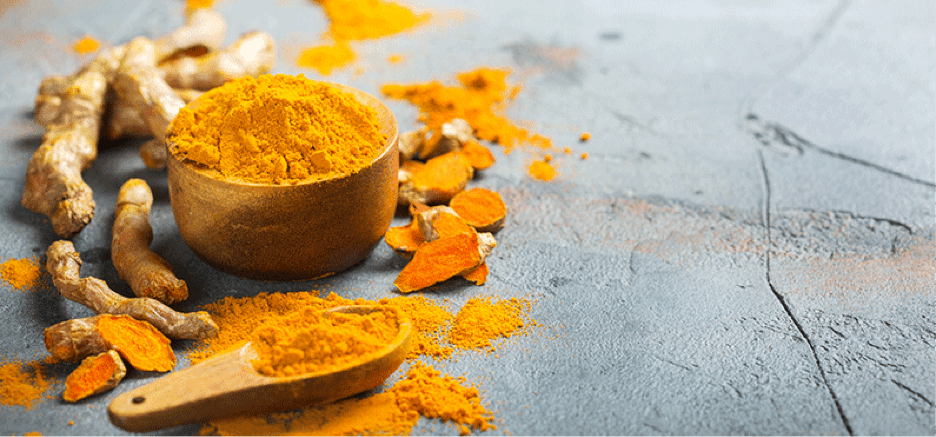
Turmeric
Turmeric and anti-inflammatory properties go hand in hand. The anti-inflammatory properties of turmeric come from the fact that curcumin ( a component of turmeric) has the potential to block molecules that play a role in increasing inflammation. Specifically, curcumin inhibits transcription factor NF-kB, which is associated with promoting acute inflammatory conditions. Since curcumin has the potential to disrupt harmful processes in the body, it’s very beneficial for immunity.
How to use: Turmeric is a spice that can be added to nearly any recipe. Fresh turmeric root can be made into a juice shot or a warm tea. But note that you should consume turmeric with black pepper because it research shows that the piperine in black pepper increases the absorption of curcumin by 2,000 percent.
-
Elderberries
Elderberries, specifically black elderberry extract, has been shown to be helpful against the flu virus because it contains antiviral properties. Researchers found it to be effective against 10 different influenza strains, and to reduce the flu symptoms in three to four days. These tiny dark berries are not only beneficial because of the antiviral properties they contain, but also because they naturally stimulate the immune response to fight against pathogens.
How to use: Consume elderberries in the form of elderberry syrup or elderberry extract. You can buy the berries dried and make the syrup yourself, or find it in the immunity section at your local health food store.
Additional Ways to Boost Your Immune System
With the nine immunity-boosting foods listed above, you can protect your immune system in a lot of ways. But there are ways besides food to boost your immune system and provide your body with the health benefits it needs.
- Sleep: You can feel how your body reacts when you don’t get enough sleep at night. You’re tired, irritable, and it even seems that your brain slows down doesn’t it? So if that’s how you feel on a physical level, imagine what’s happening physiologically inside your body. Sleep is important for regenerating the body. Think of it as your body’s way of recharging itself. Getting good quality and plenty of sleep each night is helpful for the body as a whole—including the immune system.
- Minimize stress:Stress creates inflammation and inflammation is at the root of many diseases. It’s as simple as that! Find ways to relax each day and focus on what brings you joy. Thoughts are powerful!
- Sweat: The skin is the body’s largest organ. And detoxification is how the body eliminates toxins. So if you think about how to eliminate the most toxins, it would only make sense to do it through the skin right? Sweating is essential for the body so get moving or get in a sauna as often as you can!
There are so many ways to help the immune system besides relying on pharmaceutical drugs or over-the-counter medications . The key with the immune system is to keep it strong before you get sick. Preventive measures are the best way to keep the body healthy. There are many foods that naturally keep the immune system strong, as well as lifestyle habits you can build that will also benefit the immune system. Your health is in your hands!
Chickpeas with dates, turmeric, cinnamon and almonds
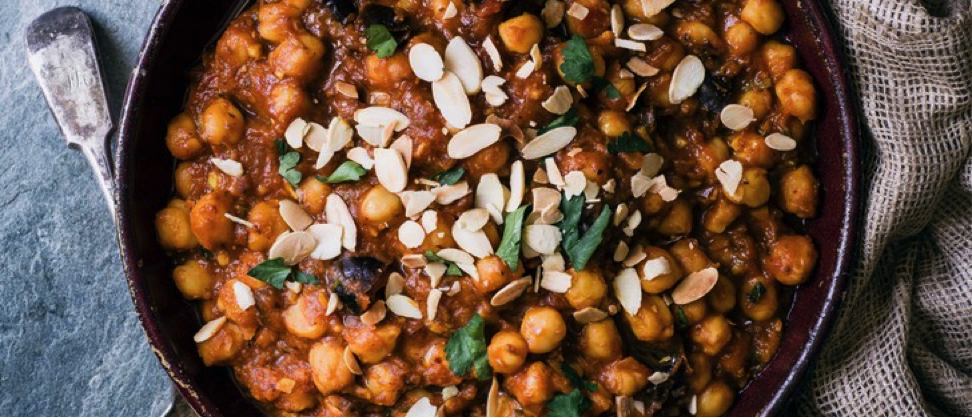
- plum tomatoes 400g tin
- pitted dates 100g, halved
- olive oil 2 tbsp, plus extra to serve
- garlic 4 cloves, finely chopped
- ginger finely grated to make 1 tbsp
- coriander a small bunch, stalks and leaves separated and roughly chopped
- ground cumin 1 tsp
- ground coriander 1 tsp
- ground turmeric 1 tsp
- cinnamon stick 1
- lemon ½, juiced, plus 2 strips of the zest with pith removed
- large chickpeas 660g jar, rinsed and drained (or use 2 x 400g tins)
- flaked almonds 40g, toasted
- orange 1 small, cut into wedges to serve
- couscous to serve
Method
- STEP 1
Heat the slow cooker to high or low, depending on desired cooking time.
- STEP 2
Put ½ the tomatoes and ½ the dates into a blender. Whizz to a purée, then tip into the slow cooker with the remaining tomatoes.
- STEP 3
Add the oil, garlic, ginger, coriander stalks, spices, the lemon zest and 100ml water to the slow cooker. Season and cook for 1-2 hours on high or 4-6 hours on low until the sauce is thick and rich-tasting.
- STEP 4
Stir in the chickpeas and the remaining dates, and cook for 30 minutes more to warm through. Add the lemon juice and check the seasoning once again, adding more if necessary. Remove the lemon zest.
- STEP 5
Serve the chickpeas with a drizzle more olive oil, the toasted almonds and chopped coriander, with the orange wedges and couscous on the side.
 Healing through Art