
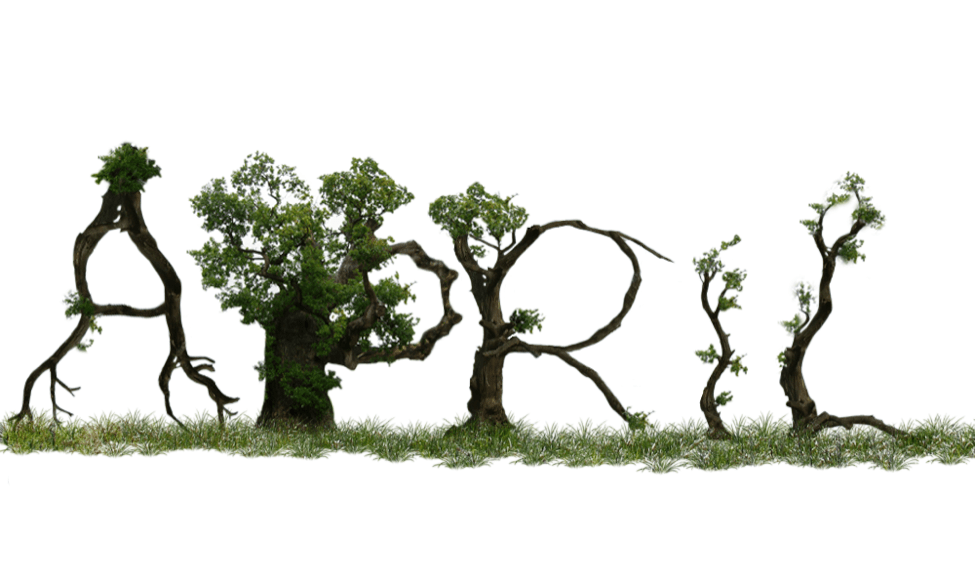
It’s April and we can see spring in its complete beauty!
This spring was unusually rainy, but we can appreciate the rain as a part of the intertwining cycle of opposites that makes our world go round–wet and dry, dark and light, cold and warm, each giving way to the other in equal measure. This dynamic of yin and yang governs all aspects of life.
In our personal lives, there is also a time for resting and a time for growth, a time to allow and receive, and a time to blossom forth with abandon in full color. As the rain comes down, we might surrender to its wisdom, visualizing it cleansing our minds and hearts, washing away the remains of winter, preparing us to come clean into the second half of spring, ready to start a new chapter.
Please enjoy the three articles below!

Beyond Reacting
Remembering to Pause
by Madisyn Taylor
Remembering to pause and take a breath before we react, can shift the energy of the outcome.
We have all had the experience of reacting in a way that was less than ideal upon hearing bad news, or being unfairly criticized, or being told something we did not want to hear. This makes sense because when our emotions are triggered, they tend to take center stage, inhibiting our ability to pause before we speak. We may feel compelled to release the tension by expressing ourselves in some way, whether it’s yelling back at the person yelling at us, or rushing to deliver words of comfort to a friend in trouble. However, there is much to be said for teaching ourselves to remember to pause and take a deep breath before we respond to the shocks and insults that can come our way in life.
For one thing, our initial response is not always what’s best for us, or for the other people involved. Reacting to childish rage with childish rage will only escalate the negativity in a situation, further ensnaring us in an undesirable dynamic. Similarly, when we react defensively, or simply thoughtlessly, we often end up feeling regret over our words or actions. In the end, we save ourselves a lot of pain when we take a deep breath and really tune in to ourselves, and the other person, before we respond. This doesn’t necessarily mean we don’t say anything, although in some cases, that may be the best option.
Some situations require a fairly immediate response, but even just a moment of grounding ourselves before we do so can help enormously. The next time you find yourself wanting to react, try to pause, and in that pause, take a deep breath. Feel your feet on the floor, the air on your skin, and listen for a response to arise within you, rather than just going with the first thing that pops into your head. You may find that in that moment, there is the potential to move beyond reaction and into the more subtle and creative realm of response, where something new can happen.
10 Ways to Renew Yourself Spiritually
When you feel like you’ve been skimming the surface of life, it is likely a sign you need to reboot. Feeling like you’re stuck in a rut can put a damper on even the most blessed life; however, spiritual stagnation can also give you the motivation you need to refresh yourself and recommit to a journey of profound inner growth.
Has Your Spiritual Practice Plateaued?
For ages, human beings have longed to know their true nature. Your spirituality can be defined as your relationship to your truest Self and the Universal God-consciousness that unites all beings. Spirituality is a lifelong pursuit, and depending on your season of life, it might be time to step back and fall back in love with how you connect to God and achieve a renewed spirit. Even longtime spiritual practices get tired, as it’s common to reach a plateau and to yearn for something more.
Just like repeating the same exercises at the gym day after day would eventually reach its limit of effectiveness, it is important that your spiritual life feel exciting, challenging, and supportive to the person you are today. And once you have renewed yourself spiritually, it can feel as if you have taken a fresh breath of clean air after living in a windowless room.
Time to Refresh
The first step to energizing yourself on a soul level is to make a decision to do so. If you wanted to, say, get a massage, you would have to make the effort to get yourself to the spa, not just hope that a massage therapist would show up in your path, begging you to receive some bodywork. No, you would carve out the time, make an appointment, and get yourself to that massage table. Similarly, just hoping you feel a new sense of inspiration in your personal practice is not going to render results. Committing to your intention, preferably in writing, and being willing to put in the effort is the only way to achieve your desires. Let that be your starting point, and the rest will unfold as it is meant to.
If you want to reboot your system on a deeper level:
- Choose to embark on a journey of spiritual renewal.
- Schedule time for yourself and commit to it. Remind yourself that you don’t “find” time, and you don’t even make it. You identify it, put borders around it, and make it sacred.
- Leave space for the magic.
Once you have decided your soul longs for a fresh start, choose your approach by engaging in one or more of the following suggestions to bring the twinkle back into your eyes.
- Go on a Retreat
One of the most effective ways to recharge your batteries is to depart from your everyday routine and go on a retreat. There are retreats anywhere and everywhere your heart desires, from two-night getaways to month-long pilgrimages to native lands. While going away may seem like an indulgence, seeing your trip as an act of self-care can yield tremendous results for you and the people who care about you. Creating intentional distance between you and the hamster wheel of life can illuminate a pathway that is simpler, more peaceful, and more in touch with your heart.
Traveling and meeting new people from all walks of life also breathes new life into your practices. Spiritual retreats (whether it is with people you know or a group strangers) attract people who are also seeking depth and growth in their lives, and connecting with others is one of the markers of the happiest people in the world.
- Be of Service
Giving of yourself can be a deeply spiritual act of abundance, so consider volunteering your time to enhance the lives of those in need. Giving money is wonderful, but is almost too easy to have a deep spiritual effect on its own. Share your time, your attention, and your skills with a person or group of people who allow you to show up as your brightest self. You could commit to spending time in a rehab facility, a local women’s center, or an animal shelter, for example. Serving others develops compassion and gratitude, not to mention benefits those who need it the most. Never underestimate the power of generosity as a way to connect to God.
- Immerse Yourself in Nature
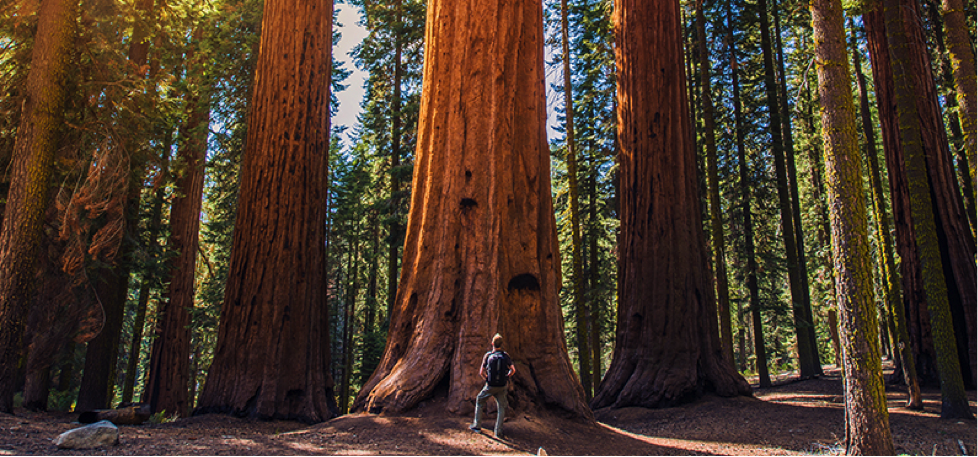
Think of a time when you felt the most expansive, limitless, and at peace. Chances are you were in nature when you felt that way. Being outside offers perspective in a way few other activities can. Contemplating a rose, breathing in the fresh air, or receiving the grounded energy of a mighty oak tree can transform your life if you let it. Swim in the ocean, get your hands dirty in your garden, and hike in the mountains. Feel the sun on your face and the wind in your hair. Commit to getting outside every single day and see what you feel. When you get in touch with nature, you find your own nature, hiding in plain view.
- Start a New Morning Ritual
How you start your day sets the tone for your entire mental and emotional life. If you don’t have a morning practice, create one! Waking before sunrise and spending the first hour of your day meditating, praying, or otherwise communing with God is one of the easiest ways to feel a profound shift in your spiritual life.
If your practice has gotten rote or feels boring, you’re likely burnt out on your rituals and are spinning your wheels. Try something new for the next month, like doing guided meditations, reading a book by candlelight as the sun comes up, or doing sun salutations facing the rising sun. And if you aren’t what you would call a “morning person,” consider that 20 fewer minutes of sleep probably won’t make a huge impact on your overall well-being, but 20 minutes spent in spiritual pursuit every morning most certainly will.
- Observe a Sabbath
Dedicating an hour every morning to your spiritual practices is an incredible way to start your day, but what about taking an entire day to recharge for your week? Try taking a Sabbath—one day a week where you unplug from technology, get outdoors, dig in to your most inspired book, and spend time with the people you care about. Try not scheduling anything on this day; keep it sacred for activities of the highest quality. Don’t feel like you can carve out an entire day each week? Start with one day a month and see how you feel.
- Read a Spiritual Text
Sometimes it is comforting to remember that you don’t have to figure it all out on your own. Dedicate yourself to a primary text in line with your beliefs like the Bible, the Bhagavad Gita, or A Course in Miracles. This can be a text that has always had deep significance to you or a text you’ve heard of but never actually read. Take your time with it; read with a pen in hand. There are also study groups, meetups, and online forums that you can join to immerse yourself in community and receive some guidance. Read the texts that have withstood the test of time and have had meaning for so many people; chances are they will help you, too.
- Find a Teacher/Mentor
Oftentimes when you feel like the teachings have lost their power, what you really want is a teacher to lead the way. Mentors can take many forms—a yoga teacher who inspires you, a public figure or teacher whose message resonates with you, or a guru from whom you receive instructions on living a spiritual life. Your teacher not only points to the path, but models living on this plane, in accordance with the values you hold most dear.
While you want to be sure not to mistake the teacher for the teaching itself, having someone to guide you can be transformative in how you learn, study, and grow. Imagine trying to figure out math on your own. And yet so many people haven’t dedicated time to spend with a teacher to figure out this thing called life. Open yourself up and, as they say, the teacher will appear.
- Eat a Clean Diet and Refrain from Drinking Alcohol
All judgment aside, it is challenging to feel the clarity of Divine communication if your body is in a state of disease or lack of good health. With your doctor’s blessing, try doing a cleanse or intermittent fast to purify your system and recommit to your mystical pursuits. At the very least, you might take a month (or more) of eliminating alcohol, meat, or sugar from your diet as a gesture toward elevating your vibration and brightening your energetic body. If your body is indeed a temple, taking care of your physical and energetic systems will undoubtedly bring you closer to the object of your prayers.
- Take a New Class
A simple thing you can do to refresh your spirit is to take a new class that will move your body and stir your heart. Yoga classes are everywhere—online and in person. Try a meditation class or course, surround yourself with other like-minded people, and let yourself be led by a teacher one hour at a time. Dance your body as a moving prayer and feel the profound effects of primal movement. Tai chi, Qi Gong, yoga flow, and ancestral dance classes can all draw you closer to your innermost essence. Sometimes showing up is the hardest part, but being willing to try something new may be all it takes to feel a jolt of recognition to the depth of spiritual health you seek.
- Journal Your Gratitude
Write, write, and write some more. If you’re not sure what to write, start with daily gratitude. Gratitude is not only a practice, but a way of life, and the gateway to spiritual depth. A spiritually mature person recognizes that gratitude can be found in every situation. And while thinking grateful thoughts is a great place to start, writing down your gratitude can make all the difference.
Already writing down three things a day you are grateful for? Take it to the next level by trying some more advanced gratitude practices, like going for breadth, depth, and specificity of your emotions. Sometimes life feels dull because you take for granted all that you have. Training your mind to search for and focus on the good creates a different way of engaging with the world. As simple as it may seem, putting your life in perspective by appreciating what you have can resuscitate your relationship to your higher power.
Don’t feel bad if your spiritual life has taken the back seat. The only way to feel the rush of falling in love with your practice again is to feel separated from it from a while. By telling yourself (and the Universe within and around you) that you long for a deeper connection to your essence, you open yourself to the myriad ways God will bend over backwards to show you who you really are.

Uncovering the Paleo Diet: What You Need to Know
By Sue Van Raes
The paleo diet, often referred to as the caveman diet or hunter-gatherer diet, is based on the premise that genetically you are almost identical to your stone-age ancestors. The paleo diet plan is set up accordingly: if your caveman ancestors did not eat it, then neither should you, hence the name paleo diet—short for paleolithic diet. This popular primal eating style has influenced how many people fill their plates these days as well as brought forth an array of scientific study and health conversation along with some hesitation and contradiction.
While the premise for the paleo diet plan is still controversial (how much do we differ from our stone-age ancestors?), this hunter-gatherer type of eating has gained many fans.
Here are the nuts and bolts of paleo eating, along with some facts and myths to help you uncover what you need to know about the paleo diet plan.
What Is the Paleo Diet?
Based on the primal eating habits of your stone-age ancestors, the paleo diet strives to mimic a pre-industrialized revolution approach to eating. Pre-industrialization refers to the time (dating back many centuries, preceding 1750) before there were many machines and tools to help with the mass of tasks people and civilizations face today. This directly affected how food was grown, harvested, and eaten.
This is evident in the paleo diet food list where you notice the absence of grains, legumes, commercial dairy products, and refined sugars, all of which became more commonly grown, harvested, and eaten as technology has grown and evolved.
Paleo followers avoid:
- Processed sugar
- Grains
- Legumes
- Commercial dairy
Paleo followers eat:
- Vegetables
- Fruits
- Unprocessed meats
- Fish
- Poultry
- Eggs
- Nuts
- Seeds
Why Paleo?
There are some major shifts in how you eat today in comparison to your more primal lineage. Research shows that many of today’s common foods include a hefty dose of refined flour products and massive amounts of refined sugar in the form of on-the-go type meals such as fast-food burgers and pizza. Studies also show that many of these modern refined foods are associated with the most prevalent health issues, such as obesity, diabetes, and heart disease.
The essentials of the paleo diet plan are healthy, whole, pure, and fresh. While there are only a handful of short-term studies that address many of the benefits of the paleo diet, the results trend toward more health, energy, and vitality than what many modern-day foods provide.
- Anti-inflammatory
You have likely heard of the epidemic where chronic (ongoing) inflammation is linked to an array of health disorders. From GERD (gastroesphageal reflux disorder) to arthritis and psoriasis to heart disease, inflammation is said to be linked to many of today’s most common health conditions.
Notably, inflammation plays a large role in your body’s health. Using diet to manage inflammation is a powerful and worthwhile endeavor. While there are many factors to consider when incorporating an anti-inflammatory diet, there are a few consistent strategies to note. With the onset of highly refined sugars and carbohydrates in the typical American diet, there is a link between blood sugar and inflammation. If your blood sugar and/or insulin levels are chronically high, a series of biochemical reactions directly lead your body to inflammation.
The paleo diet plan—low in sugar and completely void of refined sugars and flours (along with other highly refined foods)—has been shown to lower chronic inflammation. One study looked at a group of 70 post-menopausal women eating the paleo diet plan for 24 months. While the study looked only at a specific population, it concluded that there was a direct relationship between the paleo diet and a significant decrease in chronic inflammation.
Eating the paleo diet may be an effective way to lower chronic inflammation.
- Weight Loss
According to the Centers for Disease Control and Prevention (CDC), obesity affected more than 93.3 million adults in the United States in 2015-2016. Obesity is linked to numerous health conditions, including type 2 diabetes, hypertension, osteoarthritis, and infertility. While diet is not the only contributing factor, diet is said to be a primary piece of the puzzle.
The paleo diet plan includes a consistent strategy for taking in high-quality whole foods, unprocessed proteins, and high levels of antioxidants and phytonutrients (cellular protective compounds found in plant-based foods), while avoiding many of the culprits associated with weight gain and chronic obesity. One study showed a significant decrease in mean weight, body mass index, waist circumference, and systolic blood pressure in a group of healthy people who ate a paleo diet over a three-week period.
- Cardiovascular Health
Did you know a paleo diet plan can be good for your heart? It is a myth that the primary cause for heart disease comes from eating too much fat; one cause of heart disease has been shown to be due to an over-consumption of refined carbohydrates and sugar. Consequently, the paleo diet plan can be a noteworthy approach to a healthy heart.
The paleo diet is often considered a meat-heavy diet but in actuality, there is a hefty focus on vegetables and fruit along with the high quality “clean” animal protein such as wild-caught fish, grass-fed meat, and organic cage-free poultry.
One small study showed a significant decrease in several cardiovascular risk factors in patients with type 2 diabetes after eating the paleo diet plan for a three-month period.
- Autoimmune Disease
Affecting more than 50 million Americans, autoimmune disease refers to a variety of conditions in which the immune system mistakenly attacks organs, tissues, cells, or glands, creating inflammation (and various other symptoms) in the body.
While the paleo diet plan has a direct impact on inflammation, a modified approach to the paleo diet, known as the autoimmune paleo diet (AIP), is known to have a substantial effect on both the inflammation as well as relief of symptoms related to autoimmune disease such as pain or a weakened gut lining (a symptom often linked to autoimmune disease) while also resetting the immune system.
The AIP modifies the paleo diet with the elimination of nightshades, eggs, coffee, alcohol, nuts, and seeds. The results of one study suggest that the AIP diet may help to diminish autoimmune symptoms and inflammation in patients with IBD (irritable bowel disorder), a common autoimmune disorder.
Why Not Paleo?
While the purity and wholeness of the paleo diet plan is a wonderful element to include in your eating, there are a few common arguments against following the paleo diet plan. Here are some controversies to consider.
- No Long-Term Studies
While a few short-term studies on the paleo diet have proven to be informative and insightful, more long-term research is needed. As with any research-based scientific study, the short-term effects of diet and lifestyle have the possibility of changing drastically with time and duration. This may or may not have been evident within the stone-age era.
Assuming that the stone-age diet ensured health and longevity for your stone-age ancestors is an assumption that needs further inquiry. One study showed that there were some common health challenges during the stone-age. Pigbel, caused by eating meat contaminated by the spores of Clostridium perfringens type C, grossly enlarged thyroids, and advanced tumors (both benign and malignant) to name a few.
Many of these noted health issues could be related to the diet and lifestyle of the Paleolithic time, just as many of today’s more common health issues are related to modern-day diet and lifestyle. Long-term studies are needed to reveal how following the paleo diet eating plan affects the health and longevity for modern-day people.
- Missing Nutrients from Grains and Legumes
When reviewing the foods on the paleo diet plan, you have likely noticed the absence of foods, such as grains and legumes (aka beans). While your stone-age ancestors may not have eaten grains and legumes, there are health benefits to including them in your diet.
Whole grains—the entire grain in its whole form—are known for their high fiber content and immense levels of micronutrients. And studies show a correlation between the consumption of whole grains and a lower risk of cardiovascular disease and cancer.
Studies also show that legumes have a multitude of nutrients, protein, B vitamins, and essential minerals such as iron, copper, magnesium, and zinc. Legumes have a low glycemic index—incurring little impact on your blood sugar—and have been linked to the prevention of type 2 diabetes, hypertension, and obesity.
Deeper investigation into the long-term elimination of these two food groups is needed and could inform if the paleo diet food list causes you to be low on essential nutrients and vitamins.
- Meat Heavy
While the paleo diet plan has many variations, it is much harder to stick to it if you are a vegetarian or vegan. With limited options for protein—primarily nuts and seeds—there seem to be few options for those who are opting out of animal protein or products.
Furthermore, because of the heavy focus on lean proteins (in varying proportions), many believe that the paleo diet trend (depending on where the meat is sourced) could be hard on the environment. Studies show that the meat industry (specifically factory-farmed meat) has a negative environmental impact, especially with greenhouse gas emissions.
- One-Way Approach
You are unique. You come with a unique metabolism and genetic diversity. You may exert a lot of energy in your daily life, or you may be more sedentary. Your sleep quality and length, lifestyle, prominent emotions, and thoughts are unique to you. This is often referred to as your bio-individuality. Your bio-individuality encompasses the many variables leading to your own set of metabolic needs, food cravings, and health challenges.
Choosing an eating style based on a one-size-fits-all approach doesn’t make sense when you evaluate your eating with all of these elements under consideration. The paleo diet, along with many other eating styles, does not incorporate your bio-individuality specifically when you review the restrictions within the paleo diet food list. The paleo diet list of food also does not address macronutrient ratios, frequency of meals, or how your paleolithic ancestors ate according to the season, availability of certain foods, or times of ration and scarcity.
As with most things in life, exercise caution when it comes to a one-way approach to eating. The best barometer for health and vitality is learning to listen to your body and observing how you feel when you eat according to any particular approach.
Making small changes in your food choices to match the needs of your body, mind, and soul is a process that involves patience and practice. If you decide to make a change, consider taking small effective steps while employing simplicity and consistency. If you choose to try the paleo diet, add in some of the essentials that will lead you toward a diet higher in whole, fresh, simple meals and build your way toward the full experience, keeping aware of how you feel each step of the way, so your process is wise and well-informed.
 Healing through Art