Clean-Eating Recipes to Reset Your Body

  1. Golden Bell Pepper Soup

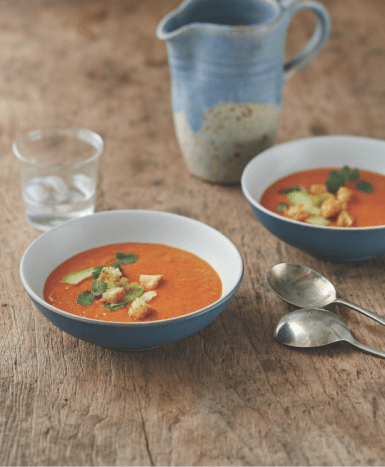
When I contracted C. difficile colitis, I could barely digest anything. This recipe helped keep me alive the year that I lived eating out of a blender and food processor because I couldn’t consume whole foods. I was in love with the creaminess of sweet potatoes and enjoyed pureeing them in a food processor for a snack. Soon I realized I could add vegetable broth and red, orange, or yellow bell peppers to create a naturally sweet soup that was full of antioxidants and fiber.
1

Ingredients

¼ cup extra-virgin olive oil
½ small onion, diced
2 medium carrots, peeled and diced
1 celery stalk, diced
Sea salt and freshly ground black pepper, to taste
8 yellow, red and/or orange bell peppers, chopped
1 large sweet potato, peeled and chopped
4 cups low-sodium vegetable broth
3 teaspoon finely chopped fresh marjoram
1 recipe gluten-free herbed croutons, for garnish
Sliced avocado, for garnish (optional)
Finely chopped fresh cilantro, for garnish (optional)
Sriracha sauce, for garnish (optional)

Directions

  1. In a large pot, heat the oil over medium heat.
    2. Add the onion, carrot, celery, and a pinch of salt and black pepper. Cook until the vegetables are tender, about 4 minutes.
    3. Add the bell peppers and cook until soft, about 6 minutes.
    4. Add the sweet potatoes and broth. Season with salt and black pepper, cover the pot, and bring to a boil.
    5. Lower the heat and add the marjoram. Simmer until the vegetables are tender, about 20 minutes.
    6. Let the soup cool slightly, and then, in batches, transfer to a blender and puree until smooth. If needed, thin the soup with water.
    7. Adjust the seasoning with salt and black pepper if necessary. Return the soup to the pot to keep warm until serving. Serve garnished with the herbed croutons and, if desired, the avocado and cilantro on top and Sriracha sauce on the side.

Yield

Makes 6 to 8 servings

2. Sunrise Nori Wraps with Spicy Tahini Drizzle

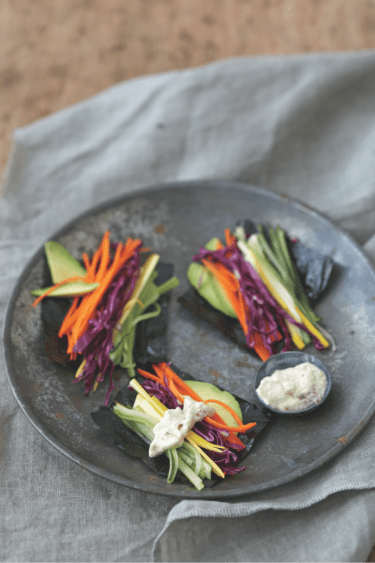
When I had no energy to cook, I ate a lot of simple dips and spreads made from nuts and seeds, which you will see throughout my book. When tahini entered my life, I fell in love with the savory and creamy consistency that could be added to any dip, spread, salad, dessert and, in this case, wraps. This easy recipe is full of healthy fats and other nutrients, like protein and calcium found in tahini, which is made from sesame seeds. Also, for many years, I couldn’t digest heavy foods. This dish got me back to eating raw vegetables after way too long not being able to digest them.
2


Ingredients

4 nori seaweed sheets
¼ small head red cabbage, very thinly sliced (use a food processor, if possible)
1 large carrot, peeled and julienned
1 small yellow summer squash, julienned
1 small cucumber, julienned
1 large ripe avocado, pitted, peeled, and sliced

Spicy Tahini Drizzle

2 tablespoons freshly squeezed lemon juice
1 ¼ tablespoons chickpea miso paste
1 tablespoon raw tahini
2 medjool dates, pitted
1 garlic clove, minced
¼ teaspoon crushed red pepper flakes
Water, as needed to thin the drizzle

Directions

  1. Place the nori sheets on a flat surface.
    2. Divide the cabbage, carrot, squash, cucumber, and avocado among the sheets.
    3. To make the tahini, combine all of the ingredients except the water in a blender. Blend, adding water 1 teaspoon at a time as you go until the mixture becomes a thin sauce.
    4. Top each pile of vegetables with a heaping tablespoon of the Spicy Tahini Drizzle, then roll up the nori sheets into a tube shape.

Yield

Makes 4 servings

3. Basil and Mint Squash Noodles

I love making this one for my clients to help get them off inflammatory white pasta. It’s also a great introduction to the joy of simplistic flavor. Mint and basil really helped me cut sugar from my life. I used to be addicted to flavored drinks and thought that I couldn’t live without them. Now I’ve trained my taste buds to love lemon and water with fresh herbs. Once you start to identify chemicals and sugars in certain foods and detox them from your life, you can begin to train our palate to really taste and savor the flavors of real food. I added chopped raw walnuts for an extra anti-inflammatory boost and to bulk up this recipe to take it from a side to a main dish.

3

Ingredients

3 large yellow summer squash, cut into thin strands with a vegetable peeler or spiral slicer (spiralizer) or julienned
1 large celery stalk, thinly sliced
1 tablespoon finely chopped fresh basil
2 teaspoons extra-virgin olive oil
2 teaspoons freshly squeezed lemon juice
1 teaspoon finely chopped fresh mint
1⁄2 teaspoon freshly grated lemon zest
1⁄4 teaspoon ground cumin
Pinch crushed red pepper flakes
Sea salt and freshly ground black pepper, to taste

Directions

In a large bowl, combine all the ingredients, toss to coat, and serve.

Yield

Makes 2 servings


4. Magical Peach Arugula Salad

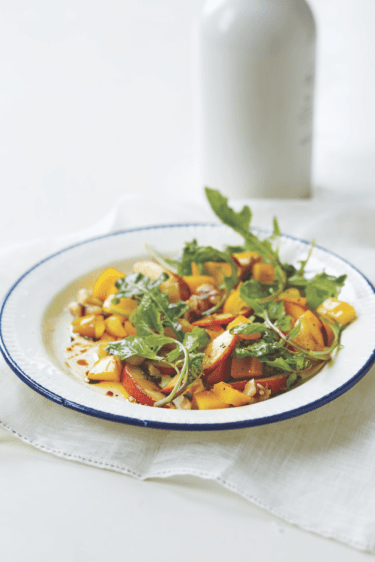
Experimenting in my kitchen with fruits and vegetables makes my heart sing. I can whip up a salad and an amazing dressing in under 10 minutes—and I often do. For this dish, I wanted to create a beautiful lunch or summer side salad that serves a big group. I also wanted to show people that you can entertain guests while eating healthy, anti-inflammatory, whole foods that are nourishing.
4

Ingredients

10 cups arugula
5 medium ripe peaches, pitted and diced
2 yellow or orange bell peppers, diced
1/3 cup finely chopped raw walnuts
2 tablespoons extra-virgin olive oil
2 tablespoons balsamic vinegar
1 tablespoon freshly squeezed lemon juice
¼ teaspoon freshly grated lemon zest
¼ teaspoon sea salt
¼ teaspoon freshly ground black pepper

Directions

  1. In a large bowl, combine the arugula, peaches, bell peppers, and walnuts.
    2. In a small bowl, whisk together the oil, vinegar, lemon juice, lemon zest, salt, and pepper.
    3. Drizzle the dressing over the arugula mixture, toss, and serve.

Yield

Makes 6 to 8 servings


Photos by Lauren Volo

By Cristina Goyanes

SEPTEMBER 2018

ART HEALS.jpg 1Our mission of “Healing the Public through Art” begins with a FREE “Dance to Relax” class.


The City of Oxnard pays for its residents to come and experience Relaxation trough Art.

“Dance to Relax” is a program approaching relaxation from various angles: Active Relaxation in the form of Yoga and Dancing and Passive Relaxation as PMR (Progressive Muscle Relaxation) and Meditation. These four activities combine to provide a great physical workout in addition to relaxation for both body and mind. The class will take place at: “Hot Yoga Haven” on Saturday, September 29th at 11am.

Address: 4310 Tradewinds Dr #600, Oxnard, CA 93035; Phone: (805) 394-8966


Programs like “Dance to Relax” help us build a healthier and more compassionate community benefiting all of us!


All posts for the month of September will highlight the importance of

“Drinking Enough Water” and how essential is this for our health and well-being.

Please enjoy the three articles below.

Namaste!


Why a Dehydrated Person Might Not Get Thirsty?

NOT THIRSTY

Though we know to drink water when our bodies signal thirst, we often become imbalanced when that mechanism shuts down. Learn how to sense your own hydration level with these tips.

How can a chronically dehydrated person not be thirsty? It doesn’t make sense. True, it doesn’t make sense, but there is a reason.

First, let’s define what exactly dehydration is. It’s all about the cells. Our cells need water in order for our bodies to function, and that water needs to be continuously replaced. In much the same way that our bodies absorb water then excrete waste in the form of urine, our cells absorb fresh water and excrete waste fluid, and that waste is then disposed through various means, including urination, sweating and even breathing. Moist breath anyone?

When those cells don’t get the fresh water they need, we’re dehydrated, and the body lets us know it needs water through the thirst mechanism. However, that thirst mechanism has been hampered in many of us. Basically, we’ve lost it because we’ve misplaced the gift of metabolic balance in our bodies. The human body is a motion machine. Through our sedentary lifestyles, we’ve reduced so much of our motion that we’ve compromised our alignment and altered our cellular energy, and one result is a hindered thirst function. (Your body’s alignment plays a surprising role in digestion, too.

So if we’re not thirsty, how do we know we’re dehydrated? Well, the body has other ways of telling us. For instance, our urine picks up a pronounced odor and a dark, yellow color. Or the skin gets drier and requires more lotion. Or we experience energy swings and, believe it or not, insomnia. Researchers are beginning to observe that there is possibly a hydration component to insomnia (which may seem counter-intuitive to those of us over fifty who have to keep getting up to go to the bathroom through the night, but more on that in another article). Another indicator in women is that their hair becomes brittle and harder to manage.

These are subtle indications, but the indicator can become obvious, painfully obvious, when the dehydrated person participates in strenuous physical activity because she will inevitably experience a cramp. Muscle activity produces lactic acid which permeates the cells, and when there’s not enough water to flush out that lactic acid, the cells simply retain it, and it hurts. We see this result often with athletes late in a game, but the truth is they were essentially dehydrated before the game ever started. It just took heightened mobility and activity to generate the painful results of heightened dehydration.

So how do we solve this problem? Some experts say to drink more water, but that usually doesn’t work because it quickly grows uncomfortable. Since the cells have shut off that thirst mechanism, they’re tenaciously retaining the old fluid, so the water that enters the body just sits in the stomach rather than being absorbed by the cells throughout the body.

Here’s a plan I’ve found successful with clients throughout the years to restore that automatic thirst response. Get one of those small, Dixie paper cups, or a shot glass. Fill that cup up with water and drink three to five shots in quick succession, one right after the other. Wait 30 minutes then do that again. Do that in the morning and in the evening, and by the second day, you’ll probably start noticing your mouth getting dry more frequently throughout the day. Do that routine for a week, and your thirst mechanism should be in full functioning order.

On a quick side note regarding thirst and dehydration, those brilliantly-marketed sports drinks are not the answer. They are full of sugar and are a disaster for our bodies, especially among our children.

Everybody’s need for water is different based upon what they eat and what they do throughout the day. For instance, the day laborer needs more water than the office worker, obviously, and the airline pilots and stewards, because of the altitude of their occupations, need more water than the bus drivers. But no matter what you eat or what you do or how much of it you do, your body will tell you how much water it needs once you get that thirst mechanism back into proper functioning form.

By Pete Egoscue

4 Beautiful Infused Waters for Refreshment on Hot Days

lemon juice
Photo by rawpixel.com on Pexels.com

Upgrade your H2O with these four flavorful water recipes, and create your own thirst-quenching infusions using bright, fresh, and nutritious ingredients.

Something about enjoying a cup of chilled water from a pitcher filled with vibrant fruits and veggies signals your brain to take a mini vacation, allowing your body to let go of any tension it might have been holding onto from the day’s stressors. You don’t need to book a pricey massage to enjoy this spa staple. These flavored water alternatives are incredibly easy to make at home, using ingredients that are likely already in your fruit bowl or produce drawer.

All you need to get started is a container that holds at least a gallon of water, equivalent to eight (8-ounce) glasses. If you have a large decanter that holds more, simply double the recipe. Because you’ll be immersing fruits, vegetables, and herbs in water that you’ll later be drinking, it’s vital to clean them thoroughly with running water beforehand. It generally takes two hours or more to infuse the water with flavor. Waters can be kept in the refrigerator for up to three days. Softer fruit, such as strawberries, break down more quickly and may only last for two days. Stick with fruit that is ripe, but not overripe, and herbs that are fresh and free from any bruising. I prefer filtered water for infusions, but it’s not necessary.

There are so many amazing combinations of fruit, vegetables, and herbs to make these refreshing infused waters. Aim to include at least one item that’s bright and colorful to make the drink more visually alluring. Here are some of my favorite fresh foods to mix and match—you can’t go wrong with any combination! Keep a pitcher on hand in the warmer months to stay fully hydrated and serve guests. On the hottest days, it will be so nice to open the fridge to find a spa-ahhh waiting inside.

Herbs: Rosemary, mint, lemongrass, tarragon, thyme, basil, cilantro, parsley

Fruits: Lemon, lime, grapefruit, orange, strawberries, raspberries, blackberries, pineapple, star fruit and any type of melon

Vegetables: cucumber, celery, fenne

  1. Lemongrass Pineapple Mint Water

Ingredients

2 lemongrass stalks
1 cup fresh pineapple, sliced into 1-inch pieces (1/4-inch thick)
1 cup fresh sprigs of mint, woody ends trimmed

Directions

Remove outer leaves of the lemongrass stalk and discard. Split the stalk down the center with a sharp knife and cut into 3-inch long pieces. Place into pitcher, then top with the pineapple and mint. Fill pitcher to the top with cold water and place in the refrigerator. Allow to infuse for two hours or more.

Yield

Makes 8 cups

2. Tarragon Strawberry Water 

Ingredients

1 cup sliced fresh strawberries
1 cup tarragon sprigs, woody ends trimmed
Directions
Place the strawberries into pitcher, then top with the tarragon. Fill pitcher to the top with cold water and place in the refrigerator. Allow to infuse for two hours or more.
Yield
Makes 8 cups

3.Cucumber Mint Water

Ingredients

1 cup sliced seedless cucumber
1 cup fresh mint leaves

Directions

Place the cucumber slices into pitcher, then top with the mint. Fill pitcher to the top with cold water and place in the refrigerator. Allow to infuse for two hours or more.

Yield

Makes 8 cups

4. Lemon Rosemary Water

Ingredients

2 lemons
1 cup rosemary sprigs

Directions

Roll lemons on counter to release juice. Slice into wheels, discarding ends, and place the lemon wheels into pitcher, then top with the rosemary. Fill pitcher to the top with cold water and place in the refrigerator. Allow to infuse for two hours or more.

Yield

Makes 8 cups

by:

Frances Largeman-Roth


Photo by Pineapple Supply Co. on Pexels.com

WATER – is incredibly important for our well- being!

Are You Drinking Enough Water?water

Water has a deep and rich history in Vedic tradition, the basis of both Ayurveda and yoga. In fact, there are more than 100 words and synonyms for water in Vedic texts. When it comes to spiritual rituals, water was always the medium. It was used to carry intention, bind spiritual wishes, and as a vehicle for blessings in ancient practices. Rivers were admired and highly regarded for their mother-like nourishment to life. The flowing and connecting property of water is what helped sustain life.

Considering water’s spiritual significance, it’s not surprising that Ayurveda sees water as extremely important to our overall health. There are three essential things that support life itself: breath, food, and water.

Why You Need Water

Ayurveda suggests there’s a separate system that carries fluids in the body (known as udaka vaha srota). Its main control mechanism is under the upper palate, near where the major endocrine regulating hypothalamus and pituitary glands are located. There are several diseases and health issues that are thought to come from the imbalance in this channel or system, including diabetes, fluid retention, and swelling, like edema, and excessive thirst, to name a few. If someone doesn’t drink enough liquids, or consumes the wrong kinds (like too much alcohol), then damage to these fluid-carrying channels can occur.

Physiologically speaking, Ayurveda says that everything in the body has to move. Fluid is constantly flowing throughout the body. Water also supports two fluid tissues in the body: blood and lymph. If fluid is deficient, both blood and lymph lose their functionality, which causes a whole host of health problems. Lastly, the two waste products our bodies produce, sweat and urine, depend on fluid as well. In short, to sustain life, maintain tissues, and eliminate waste, water is invaluable.

When to Drink Water

Ayurveda recommends a series of morning rituals that should be completed before starting your day. It’s said that if you want to live 100 years, you should complete these rituals each day, without fail. One of them is drinking water—eight palmfuls to be exact. This measure is unique to each person and the size of his/her hand, and is done mainly to improve digestion and cleanse the body.

It’s also advised to keep the amount of water needed in a metal vessel. The type of metal you use depends on your body type. Ideally, you use copper for kapha (water), silver for vata (wind), and then gold for pitta (fire). Many people choose copper regardless of their dosha because it helps remove bacteria from the water.

For the rest of the day, drink water when you’re thirsty and based on the season. In the summer, you might need to drink more, and in the winter, you can drink less, but you should never force yourself to throw back bottles and bottles just because you feel like you should be consuming a certain amount.

There are also some specific recommendations about when to drink water in relation to eating food. Ayurveda says that if you want to lose weight, you should drink water before you eat. About 30 minutes before meals, you should drink a quantity of water that quenches your thirst. The reasoning behind this is simple: the more water you drink, the less hungry you will feel.

If you want to maintain your weight, you should sip water along with eating your food. This will help to mix the acid in your stomach with the food properly, and satisfies the volume of your appetite, because it takes a little space in between.

If you want to gain weight, you should drink water after you eat. This way, there’s more room for food in your body, and you won’t give away precious real estate to libations.

How to Drink Water

Drinking water, in general, is considered to be health-promotive in Ayurveda, although it’s very specific about what type of water to drink. Rain-harvested water is best for everyday drinking. The rationale behind this is that it hasn’t been mixed with other elements of the earth, so it doesn’t aggravate any of the doshas in a person’s body, and can easily reach and hydrate all the tissues in the body because it’s so pure.

Right now, most Ayurveda practitioners don’t drink rainwater because it’s a logistically difficult practice to implement. But I’m sure, in the future, there will be an industry for harvested rainwater bottled for people to drink.

When it comes to water itself, research has shown that water from different sources has different qualities. Water from the rivers that flow from the Himalayas to the east has different qualities from the waters that flow to the west. Well water, stream water, and rainwater all have different properties and qualities. Spring water is different from pond water. This is important because certain types of water can aggravate various health issues, and some types of water are harder or easier to digest. Generally, I’d recommend spring or mineral water because it’s the closest in quality to rainwater.

It’s common practice to treat the water you drink, since most people can’t drink rainwater. This can be done by boiling the water to reduce its volume by about half. You let it cool off, and drink it while it’s still warm.

Ideally, Ayurveda says you should never drink cold wawaterter. Summer is the only time when you can drink cold or room temperature water—but never ice cold. Why? Warmer water is thought to have metabolism-boosting benefits in Ayurveda, as well as health-promotive effects on the gut and digestive systems, and may help to prevent gas and bloating.

Bottom line: Drink warm or room temperature water first thing in the morning when you wake up, and continue sipping on it for the rest of the day whenever you feel thirsty in order to maintain your overall health.

By Dr. Jayagopal Parla


The Journey Begins

Thanks for joining me!

“Good company in a journey makes the way seem shorter.” — Izaak Walton


This blog will be for people who would like to adopt a Mindful Way of Living.

Here you will explore a vast variety of healing practices (physical and spiritual) as well as healthy eating recipes. Anything that will bring you to a better, more mindful and healthy existence is included.

Together, let’s explore this new path to elevated physical, emotional and spiritual health!

From your host:

Sevina Altanova

Certified Reiki Master, Personal Trainer &

Yoga / Meditation Teacher


DANCE TO RELAX / STRESS MANAGEMENT


post