

Dear reader, our blog was on hiatus for around six months due to some exiting personal changes in my life. But now since the New Year has come, I am fully committed to continuing communication with you and exchanging mindful information. COVID is still here, so more than ever we need to support each other physically and spiritually!
Let hope and pray that 2021 will be better for all of us and for the world, that we will take better care for Mother Earth and for ourselves as well.
Namaste!
Sevina
Releasing 2020
by Roger Gabriel

Before we dive fully into the New Year, let’s do a simple exercise to start releasing whatever we don’t need to carry any more. Let’s see if we can clean the slate and make space for the many wonderful and exciting things that await us. You can do this exercise with your eyes open or closed.
- Think back over last year. Pick an event or situation that was troubling for you.
- What emotions are arising in you? Name them.
- Where are you feeling the emotion in your body? Maybe some tightness or discomfort in your chest? Emotions always show up in the body. This is the stress forming. Be aware of your body and breathe into the sensation.
- Now, take responsibility for these emotions. They are your emotions. No matter what happened, what anyone else or you did, you choose to feel the way you do. Because you chose to feel it, you can choose to release it and open the door to happier emotions. Allow your breath to soften it, to release the emotion.
- If you wish, you can increase the speed and force of your exhale. Blow the emotion out.
You can repeat this exercise as often as necessary, anytime last year’s painful emotions surface. In time, they will become less frequent. Remember: What’s broken can be mended, what hurts can be healed, and no matter how dark it’s been, the sun is going to rise again. Anytime you feel you’ve released something from the past, reward yourself. Do something fun to celebrate.
Gratitude for 2020
And no matter how dark 2020 was, I’m sure there were times of happiness, moments when the sun broke through the clouds.
- Take a few moments and reflect back over the year. Try not to get stuck with any of the challenges. Look for the things you’re grateful for. They could be things you experienced personally or the people you never met who worked selflessly all year.
- Now take one or two of those things and bring them into your heart. Feel the warmth of gratitude in your heart.
- Send a silent “Thank you” to whoever made that feeling possible.
Whenever the memories of the challenges arise, replace them with those moments of gratitude.
Welcoming the New Year
Now that you’ve cleared some space, what do you want to fill it with? How do you want the new year to unfold? What new opportunities do you want to explore?
What’s important here is to not go back to the same old stuff. From a karmic perspective, the collective consciousness and the collective ways of doing things are what created the turbulence of 2020. However you want to look at it, 2020 was a huge karmic clear out for the human race. The worst thing you can do is to now recreate that karma all over again by going back to the same habits and conditioning. The Vedas tell us that the gateways of hell are anger, lust, and greed. These gates have been open for too long, it’s not surprising what escaped. Now it’s time to closed them.
2021 brings us a wonderful opportunity to create the world you want to live in and the life you want to lead. Be bold with your desires—wimpy desires create wimpy lives. What you put your attention on grows so focus on what you want, rather than what you don’t want. Any fears and doubts will take you back into the past so believe in yourself. You are infinite possibilities. Let’s put this into practice with another exercise. This is best done with your eyes closed or you can keep them open.
- Let’s look into the future. How do you want 2021 to unfold? For yourself, friends and family, and the world as a whole?
- Imagine yourself six months from now. How do you want things to like look for your life and for the world?
- Imagine it’s this time next year. You’re looking back over 2021. How do you want the year to have been? How do you see yourself physically, mentally, and spiritually?
- Now bring your awareness into your heart area. The heart knows the path of love, whereas the ego is where you get lost in doubts and confusion. Silently ask the following questions and then listen to the answers from your heart.
- What are my desires for my home, finances, and personal possessions?
- What do I want for my family and loved ones?
- How do I want my mind and body to be?
- How do I want my spiritual journey to unfold?
- How do I want my community and the world to be?
- Being attached to the outcome of a desire limits it and blocks the possibility of something even more magnificent. Imagine you’re releasing all those desires into the silence of infinite organizing power and letting the universe deliver the perfect gifts.
- Write down your desires. You can group them like we just did or as one list. Read them before your meditations and before you sleep at night, then let them go. Allow the faint impression of them to be carried within and planted, like a seed, in the most fertile field of your consciousness.
The start of a new year is your opportunity to rise higher than ever before. In your essence, you are the totality of the universe. You are equal to everyone. Remain unaffected by what anyone says, and nothing can harm you unless you allow it.
The head of the Parmarth Niketan Ashram in Rishikesh, Swami Chidanand Saraswati tells us, “Our purpose is to live up to our full, divine potential as conscious, holy beings. So, let us pledge to always remember what our purpose is—to live lives of purity, peace, selflessness, integrity, and love—and let us never allow anyone to divert us from that goal.”
There may still be challenges in 2021, but nothing you can’t handle. Be bold with your desires, anything is possible. Always strive for the best, you deserve it. And know, we will be here supporting you.
Wishing you a safe, happy, healthy, and peaceful year. Namaste.
8 Yoga Poses to Help You Manage Stress
by Adam Brady
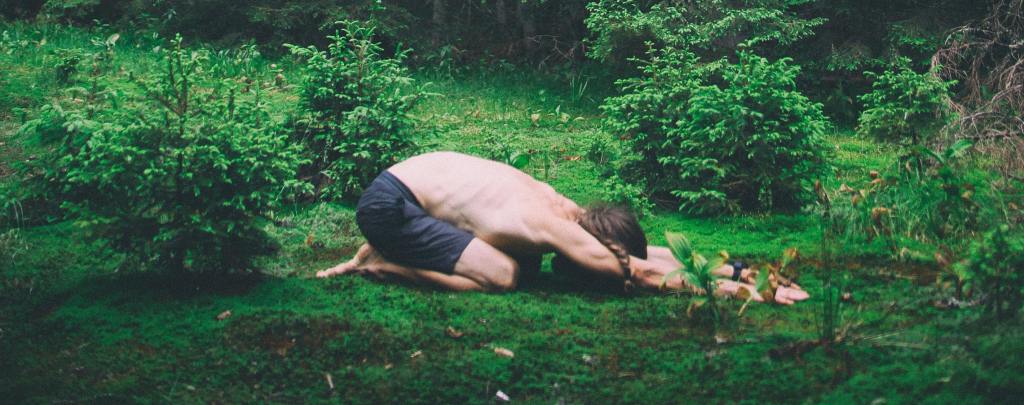
No matter who you are, where you live, or what type of work you do, chances are good that stress is a regular part of your life. Stress takes the form of anything that prevents the fulfillment of a desire, or how you respond when your needs are not being met.
Stress can put a strain on your health, emotions, relationships, and overall well-being. Finding strategies to manage or mitigate its damaging effects can be a vital component to a healthy, happy life.
In addition to meditation, hatha yoga poses provide a powerful strategy to control and down-regulate the fight-or-flight response brought on by stressful life conditions. By its very nature, yoga (as a physical exercise) is soothing on both the body and mind.
Practicing yoga can help alleviate stress by:
- Activating the parasympathetic nervous system (the opposite of the fight-or-flight response)
- Supporting the elimination of toxins from the body
- Releasing muscular tension and rigidity
- Releasing energy blockages
- Deepening breathing
- Stimulating circulation
- Drawing attention inward
Several yoga poses are especially effective for managing stress and can provide real-time relief during challenging situations. Try one of these eight poses next time you’re feeling stressed or overwhelmed.
1. Happy Baby Pose
The Happy Baby pose is a wonderful pose for calming the mind and relieving fatigue and stress. It also provides a comforting stretch to the lower back and spine, while creating space in the inner thighs.
How to do it:
• Lie on your back and, as you exhale, draw your knees in toward your chest.
• Inhale and, with your hands on your knees, comfortably lower them out to the sides.
• Reach up to grasp the outsides of your feet or toes with your hands. (If you have limited flexibility, hold on to a strap or belt looped over the sole of each foot.)
• Try to keep your ankles over your knees and press your feet up into your hands or the strap.
• Lightly rock yourself from side to side as you breathe deeply for five to seven breaths, embodying the pristine innocence and security of a baby in its crib.
2. Legs Against the Wall Pose
A very relaxing pose, Legs Against the Wall gives the body a much-needed rest, calming the nervous system, aiding in circulation, calming the mind, and taking pressure off the spine and neck as the body sinks into the floor.
How to do it:
• Position your body with knees close to your chest next to a bare wall that’s free of any potential obstacles. (Use a folded blanket or towel placed beneath your hips for comfort and support.)
• Exhale and, in one smooth movement, roll onto your back as you swing your legs up against the wall. (Your distance from the wall will depend on your height and what feels comfortable for you. Experiment with finding the ideal distance for your body.)
• Keep your legs straight and relatively firm as you sink your shoulders and back into the floor.
• Draw your head and neck away from your shoulders, and extend your arms out to the sides, palms facing up.
• Remain in the pose between five and 10 minutes, breathing in a gentle and relaxed manner.
• When coming out of the pose, bend your knees as you easily roll to your side and off your support.
3. Bridge Pose
Bridge pose is helpful for calming the brain and alleviating stress and tension. It reduces anxiety while stimulating the thyroid, lungs, and abdominal organs.
How to do it:
• Lie on the floor with your knees up and the soles of your feet near your buttocks. (If needed, place a thickly folded towel or blanket beneath your shoulders to protect your neck.)
• As you exhale, press your feet down into the floor or mat as you raise your hips up toward the sky. Engage your thighs and actively press your shoulders down into the mat.
• Clasp your hands below your hips and “walk” your shoulder blades under you so your arms are extended.
• Feel the opening of your chest and keep your chin tucked in and downward, avoiding turning your head to the side.
• Take five to seven long slow breaths before exhaling and gently rolling back down to the mat, coming down one vertebra at a time.
4. Seated Forward Bend
Seated Forward Bend folds the body over itself, creating a feeling of retreating from the over activity of the world. It lengthens the back while calming the mind and aiding in digestion.
How to do it:
• Sit with both legs together and straight out in front of you, toes pointing upward as if they were up against a wall.
• Inhale and extend your arms straight up overhead, lengthening from the hips and through the spine.
• As you exhale, fold your upper body down from the hips toward your legs, reaching with your hands toward your feet.
• Allow your hands to rest wherever they can comfortably reach.
• Relax your shoulders down and away from your ears and soften your elbows. Withdraw your senses and let your awareness soften into the pose.
• Relax and breathe for five to seven breaths.
5. Cow-Cat Pose
Cow-Cat pose is a gentle up and down flowing posture that brings flexibility to the entire spine. It stretches and lengthens the back, torso, and neck, and is a wonderful and easy movement that establishes a steady breathing rhythm and calms the nervous system.
Here’s how to do it:
• Come down on all fours into a neutral, table-top position. (Be sure to align the hands below the shoulders and knees directly beneath the hips.)
• Looking straight ahead, inhale and slowly extend through your spine as you look up and forward, softly arching through the back and neck. (Take care to expand through your chest and lower your shoulders down and back.)
• Move into cat pose by reversing the movement as you exhale and bring your chin towards your chest while gently hunching and rounding your back.
• Repeat this sequence for seven to 10 cycles, softly flowing with your breath.
6. Child’s Pose
Child’s pose is a deeply restorative pose that can be very relaxing for the neck and back. It can also help reduce stress, anxiety, and mental tension.
Here’s how to do it:
• Start in an all-fours position.
• Exhaling, sink your hips back toward your heels and reach your arms out along the floor in front of you.
• Lower your hips only as far as your body will comfortably allow.
• Reach through your arms, extending into your shoulders as you bring your forehead to the floor between your hands. (As an alternative position, you may choose to stack your hands or make soft fists to rest your head.)
• Relax completely and allow any bodily tension to release.
• Remain in the pose, breathing easily for any length of time between 30 seconds and several minutes.
Note: Child’s pose is an inversion that places the head below the heart. Avoid this pose if you have high blood pressure or eye problems.
7. Easy Pose
A soothing seated pose for cultivating deep calm and groundedness, Easy pose also helps align and straighten the back, while lightly stretching the ankles and knees. It allows the hips to open and strengthens the muscles of the spine.
Here’s how to do it:
• Sit comfortably with your legs crossed on the floor. (You can lightly fold one foot on the floor tucked in front of the other. If you need additional support, sit on a folded towel or blanket.)
• Press your sitting bones down into the floor.
• Elongate your spine and sit up tall as you relax and roll your shoulders downward to open your chest.
• Feel the crown of your head lifting up toward the sky and close your eyes as you breathe deeply and steadily for as long as comfortable. (If you sit in Easy pose for a prolonged period of time, be sure to alternate the cross of your legs for balance.)
8. Corpse Pose
Corpse pose, or relaxation pose, is arguably the most restorative yoga pose in existence. Typically practiced at the end of a yoga class, this pose is powerfully beneficial for stress and anxiety relief. It helps you experience deep peace as your mind-body integrates the subtle changes in physiology from practicing various poses.
Here’s how to do it:
• Comfortably make your way to the floor and lie on your back.
• Extend your legs straight along the floor. (If your back is uncomfortable with your legs straight, draw your knees up and place the soles of your feet on the floor with your knees softly touching.)
• Extend your arms down at your sides, palms facing up.
• Make any adjustments you need to feel comfortable—wiggle your hips, roll your head from side to side, or position your shoulder blades slightly closer to each other.
• Close your eyes and breathe naturally and effortlessly.
• Relax your face and jaw and let go of any remaining tension in your neck or spine.
• Drift into the stillness for five to 15 minutes.
Used singularly or together in sequence, these poses can go a long way in helping you manage the debilitating effects of regular stress on your system. Give them a try and experience the ways yoga can help you maintain a state of calm and centered balance in times of stress.
10 Rules for an Ayurvedic Diet
by Erin Easterly
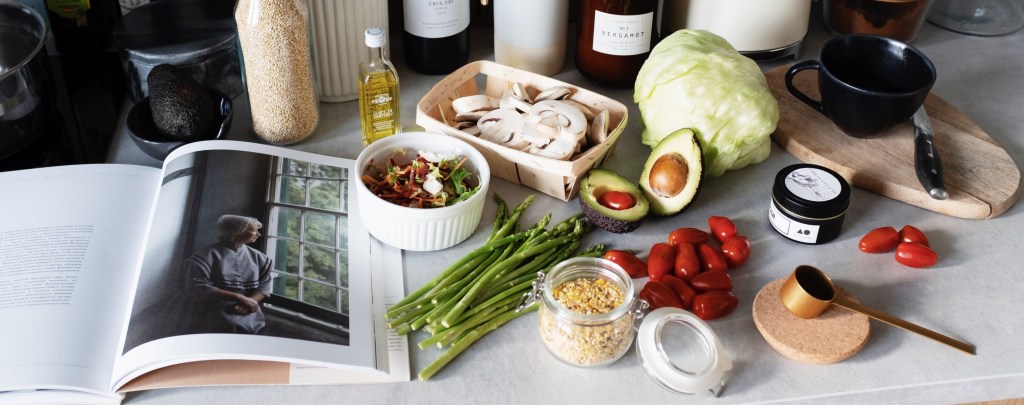
Ayurveda has long used diet as a principal means of creating health within the body and mind. Hundreds of years before Hippocrates instructed, “Let food be thy medicine,” Ayurveda defined principles for making that advice practical. Food selection, meal timing, and state of awareness during meals either increases ojas(vitality) or ama (toxicity). The following 10 rules will serve as a guide for tapping into the ancient wisdom of Ayurveda and using it to create health, vitality, and energy through food.
1. Select Foods for Your Dosha Type
Ayurveda maintains that each person has a unique mind-body constitution, known as a dosha. One’s current doshic imbalance, known as vikruiti, is a combination of two elements that are heightened within the physiology. By eating foods that decrease the heightened elements, harmony can be restored with the body. In general, the following Ayurvedic principles can be applied to selecting and preparing foods for the three doshas:
- The Vata dosha (air and space elements) is by nature cool, dry, light, and rough. Eating foods that counteract those characteristics creates balance. Persons with excess Vata energy will restore balance through foods that are warm (in terms of both temperature and spice), hydrating (such as soups and stews), full of healthy fats (like olive oil, ghee, organic cream, and avocados), and grounding (think dense, healthy comfort foods).
- The Pitta dosha (fire and water elements) tends toward hot, oily, light, and sharp qualities. Therefore, eating foods that are cool (especially in terms of internal cooling such as is seen with peppermint, cucumber, cilantro, and parsley), astringent (beans, legumes, pomegranate, and green tea), substantial, and mild will minimize the aggravation of the Pitta.
- The Kapha dosha (earth and water elements) expresses as heavy, cool, oily, and smooth qualities. Eating foods that are light, warm, dry (like beans and popcorn) and rough (think “roughage” such as vegetables) will have Kaphaback in balance in no time.
Discover your dosha type here.
2. Eliminate Snacks
According to Ayurvedic principles, there are three stages of digestion that must be completed after a meal. In the first hour after a meal, the Kapha energies are dominant. The body may feel full, heavy, and sedate. Two to four hours after a meal the elements of Pitta govern digestion. During this time, hydrochloric acid increases, internal heat rises, and the meal is transformed into sustenance for the body. Four to five hours after a meal the Vata energies rise. It is during this time that lightness and space return and appetite increases.
Interruption of the digestive cycle with more food leads to incomplete digestion. Over time, incomplete digestion results in the accumulation of ama or toxins, which may present as a plethora of mild to moderate symptoms. For this reason, Ayurveda recommends three meals each day, with no snacks in between to maintain digestion and keep your stomach stress-free.
3. Eat Until Satisfied, Not Full
Imagine that your stomach is a gas gauge with numbers from one to ten. On that gauge, the number one is completely empty and ten is overly full. You want to eat when you get to a two and stop when you get to a seven. Eating before you get to a two puts you at risk of interrupting the digestive cycle. Eating past a seven diverts an enormous amount of energy from important physiological tasks.
Aside from the obvious consequence of weight gain, overeating increases free radical production in the body, which in turn speeds the aging process. By setting down the fork when you are satisfied, but not stuffed, you avoid overeating and the body receives the nourishment that it needs without the added burden of digesting, and oftentimes storing, unnecessary calories.
4. Consume Whole, Fresh Foods
Prana—not food itself, but your life force—nourishes the body at the most fundamental level and is responsible for the creation of health, vitality, and energy. The various elements of food, such as the vitamin, mineral, and phytonutrient contents are merely reflections of the energetic, or pranic, imprint.
According to the Ayurveda diet, the best way to increase ojas, the supplier of life force in the body, is to increase prana. Foods with abundant prana come straight from the Earth. Their prana has been derived through the mingling of sunshine, water, and earth energies. The moment food is picked, its prana begins slowly diminishing. Therefore, eating foods that are as fresh as possible will increase prana more readily than eating the same foods further from their harvest time. Local community support agriculture and farmer’s markets are invaluable resources for finding fresh foods with high life force.
5. Include All Six Tastes at Every Meal
Ayurveda recognizes six tastes, each of which communicates a unique combination of energy and information to the physiology. By incorporating each of the six tastes into every meal, the body receives a bio-diverse energetic palate. This energetic palate supplies the body’s cells with instructions specific to one of the taste categories. In general, the six tastes inform the body with the following cellular information:
- Sweet: Grounding, strengthening, nourishing
- Sour: Cleansing, purifying
- Salty: Balancing, regulating
- Bitter: Detoxifying, mineralizing
- Astringent: Anti-inflammatory, cooling
- Pungent: Warming, stimulating
Try to include a small amount of each taste into every meal. It may be only a pinch of salt, a squeeze of lemon, or a slice of pepper but as long as the taste is present, the energetic puzzle will be complete.
6. Reduce Ice Cold Foods and Beverages
The inner fire, known as agni, is the digestive power of the physical and energetic body. Agni is similar to a blazing campfire. Ideally functioning, it is hot, bright, and able to digest food, thoughts, emotions, and experiences. To stoke one’s inner fire, it is necessary to avoid dimming agni’s intensity with ice-cold foods and beverages. The agni of all doshas can become depleted if a steady stream of cold food or drinks is consumed. Vata and Kapha doshas, in particular, should lean toward warm foods and teas, while Pitta doshas may enjoy cool (but not frozen) beverages and foods. In this way, the digestive power will remain strong.
7. Eliminate Distractions While Eating
How many times have you read a book, watched TV, checked emails, or returned phone calls while eating? If you’re like most people, the answer is, “Quite a few.” The Ayurveda diet suggests that mealtime is an opportunity to connect with the inherent energy and information of the food you consume. See the colors, taste the flavors, and bring awareness to the sunshine, soil, and earth that have collaborated to create the bundles of energy of food.
If eating with deep awareness is new to you, begin by taking just one meal a day in silence and focusing on each of your senses for a few minutes at a time.
8. Stop Eating Three Hours Before Bedtime
During sleep, the body repairs, heals, and restores while the mind digests thoughts, emotions, and experiences from the day. If the body’s energy is diverted into physical digestion, the physical healing and mental digestive processes are halted. For this reason, Ayurveda medicine recommends that the last meal of the day be relatively light and completed three hours before bed to avoid this imbalance. In this way, the body’s prana is free to do its rest and repair work at the deepest levels during sleep.
9. Favor Herbal Teas Between Meals
Tea is not just a palate-pleasing beverage, it is also a powerful healer that can aid in restoring health, vitality, and joy. To avoid diluting agni, beverages, including teas, should be minimally consumed with meals (no more than 1/2 cup). However, between meals, teas can be enjoyed liberally and act as herbal remedies. Drinking tea between meals pumps the body full of “liquid medicine,” curbs snack cravings, facilities detoxification, and stokes the digestive fire.
Vata doshas will find grounding and calmness in warm, spicy teas such as cinnamon, ginger, and cloves. Pittas, who can take their tea either hot or cool, will find cooling herbs such as peppermint, coriander, and rose to be balancing. Kaphaswill increase energy, digestion, and optimism with licorice, black pepper, and cardamom.
10. Eat Your Largest Meal of the Day at Lunchtime
Agni is strongest when the sun is highest. By consuming the largest meal of the day at noon, the body is able to use its powerful inner fire to breakdown and assimilate nutrients with less energetic output than at other times of the day. The noon meal is the best time of the day to integrate heavier or difficult-to-digest foods. This is also the most ideal time for a splurge food (think an icy drink or sugary treat). By eating the largest meal at midday, the body remains well supplied with energy throughout the afternoon hours, thus helping to alleviate the “afternoon energy slump.”
Each of these ancient Ayurvedic rules will help you remain healthy not only by virtue of the food you are eating but how you eat it. And don’t forget to take your time to enjoy your meals and be grateful for the foods you eat along the way.
 Healing through Art