

Hello everyone, it is June already and many of you are feeling isolated or trapped by the Covid-19 pandemic, so let’s talk about how you feel.
As a living, breathing, feeling human being, you are bound to experience challenging times like this. But the trick is remembering that while this feeling is real, this experience is only temporary, and soon you’ll be in a new season of life with new challenges to face. Reality has a transient nature. Reality is a perspective. It is changeable. Reality lives in your mind and Truth lives in your heart.
Namaste!
How Mental Healing Can Still Flourish in the Midst of COVID-19
By Breanna Pereira, NASM-Certified Personal Trainer and NASM-Certified Nutrition Coach
A story of self-discovery, acceptance, and self-compassion in the midst of COVID-19.

How fitting that the anniversary of the acceptance of my depression would fall around Mental Health Awareness Month. Last year, I had paid no attention to it; this year, I am excited to pay homage to it. However, like most celebrations over the past couple of months, this will be spent with the looming effects of the global pandemic COVID-19. It’s hard to believe that it has almost been a year since I’ve had one of the most pivotal conversations of my young adult life—and it started with one simple question from a coworker:
“How are you really doing?”
This led me to admit to something I had been resisting for almost 10 years: I have depression and I need professional help in order to overcome it. I had mastered the art of masking my mental distress, but I eventually learned that masking is not a cure. It was a painful combination of fear, shame, and resistance.
As a health fitness specialist in the San Francisco/Bay Area, I am supposed to be the hype (wo)man. The one who motivates others to want to make changes to increase their quality of life, but that goes far beyond a number on a scale. It also entails the social, emotional, and spiritual aspects of life. I realized that if I wanted to be authentic in my career, it was going to require me to step outside of myself and seek help. In order to celebrate change, and to encourage it in others, I needed to embrace it wholeheartedly in my own life first.
I remember sitting in the waiting room of my therapist’s office and filling out the initial assessment forms.
Circle what applies to you.
Circling depression is what made it all real.
Overcoming the Stigmas Around Mental Health
Depression is something that I’ve known has always lived inside of me, but I was too afraid to say it out loud. I was afraid of the stigma that comes with the words: depression, anxiety, and therapy.
After a handful of sessions, my therapist helped me realize that those stigmas would only become a reality if I chose to breathe life into them. I have to constantly remind myself that I am on a journey of self-discovery, understanding, and self-compassion.
As a “recovering perfectionist and an aspiring ‘good-enoughist’” (thank you, Brené Brown), this has been an incredibly difficult year for me. Taking the time to chip away these walls I have built and become comfortable with openness and transparency is one of the scariest things I have ever done, but knowing that I have been able to overcome each fall by embracing and learning from each situation were signs of growth.
That growth has been tested daily since the start of this pandemic. Not only have I had to call on existing tools to preserve the progress that I’ve made, but I have also been pushed to develop new tools to help overcome the challenges that have risen over the past seven weeks. The biggest question that needed to be addressed: What if I can’t handle this anymore? Will that mean that all the progress I’ve made over the past year will have been for nothing?
In an attempt to calm my anxious mind, I have been able to uncover one of the most important tools: reflection. Now is the time to reflect on just how far I’ve come and to start actively developing a routine that utilizes each of the tools I have learned over the past year. While everyone is different and deals with their journeys of self-discovery and mental health differently, these are some tools that have helped me when I’ve recognized it’s time for action.
1. Read

By reading an hour before bed, I am able to give my mind an opportunity to escape our crazy pandemic reality and to start exploring new techniques to facilitate growth. These are some books that have helped to provide that for me:
- Dare to Leadby Brené Brown
- A Woman Is No Manby Etaf Rum
- Gods of Jade and Shadowby Silvia Moreno-Garcia
- Daring Greatlyby Brené Brown (currently reading)
2. Journal
I found a journal that has “BLOOM” written across the cover. For me, this serves as a reminder that the “blooming” process takes time, and that the environment I create will determine whether I will wilt or bloom. I don’t journal every day because a strict regimen in regard to self-expression creates a toxic perfectionist monster in my mind. Instead, I use this tool when I need a place to vent, to remind myself that I am strong, but that I don’t need to have everything figured out right now.
3. Exercise
Today, not only is fitness my career, but it has also become a physical representation of growth and success. I have a personal trainer. He and the rest of the Red Dot Fitness community have helped me uncover strength that I didn’t realize I had. By having a place where I can be surrounded by inspiring and passionate individuals, I always walked out of there feeling renewed.
During these weeks of quarantine, they have still been able to provide this sense of revival for me through live workouts and personal training sessions. They have been able to provide a sense of community even during this time of social distancing.
4. Meditate
In the past, I had tried to implement meditation into my routine, but it never worked because my approach to meditation was all wrong. The idea of being and remaining present is difficult for a naturally anxious perfectionist like me, but the guided meditations from Headspace have taught me that it is natural for the mind to go off track. Actively navigating my thoughts and emotions, when times get hard, is something I never thought I had the strength to do.
Every tool in my toolbox may seem quite simple, but what makes them highly effective is that I’ve discovered how and why they give me strength. I’ve allowed myself to gain a better sense of self-compassion, a working understanding of the importance of communication, and the power that arises when you take the time to slow down and breathe—and it’s hard to believe that it all started with one simple question of how am I really doing?
Recognizing your mental state, and then healing, doesn’t happen overnight; it is an ever-growing process. I hope that by sharing in my story you might allow others some room to breathe and practice being kind to yourself–especially during these trying times. While I may be celebrating one year of healing this month, practicing and respecting your mental health is a lifelong commitment, and I will forever be walking that journey alongside you.
Explore the Reiki Precepts for a Flourishing Mind
By Parita Shah, Reiki Practitioner and Energy Healer
Dr. Usui’s Reiki philosophy is simple and realistic, and includes the Precepts, or kotodamas, which invoke the energy of words. Here’s why the Precepts are relevant today and how you can bring them into your life.
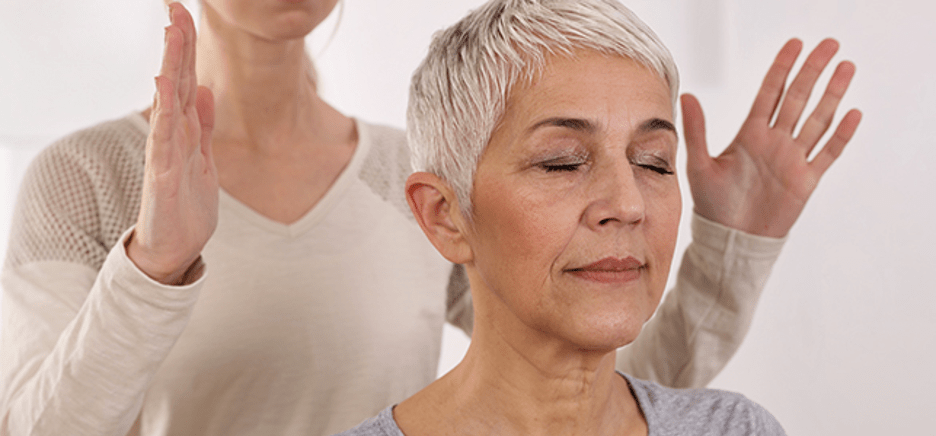
Dr. Usui founded the system of Reiki in 1922, after seeking to share mind and body wellness. The system is founded on five foundational premises:
- Hands-on-healing
- Meditation
- Attunements
- Mantras and symbols
- Practicing mindfulness through the Reiki Precepts
Although Reiki is often known as the magical channeling of energy through hands, it is seldomly known for its practical philosophy. The Precepts of Reiki are kotodamas, or sacred words that carry energy. It is said that by repeating the Precepts, you not only create intentions, but you invoke the spirit of those words.
The Precepts of Reiki
The following are the Precepts of Reiki.
- Just for today, I will not worry.
- Just for today, I will not be angry.
- Just for today, I will be grateful.
- Just for today, I will do my work honestly.
- Just for today, I will be kind to every living thing.
Whether you practice Reiki or not, the Precepts offer simple teachings that can guide your day. By reciting them in meditation, or contemplating their meaning, you can ground the mind, align with higher frequencies, and live with more meaning.
Here are some ways in which the Precepts can transform your mind away from anxiety, boredom, or worry.
Helps You Stay Present
The phrase “Just for today” reminds you to take each challenge one day, or even one moment, at a time. It suggests that you release the guilt, fear, and anger around the past and future so that you can truly experience what is right in front of you. Staying in the moment allows you to fully process life as it’s happening. You also begin to reap the gratitude, fulfillment, and joy of today, without wishing for better.
Anchors the Mind
The Precepts give your mind a framework to work with. It creates boundaries that guide you in managing your projections. As you recite the Precepts, they remind you of the ways in which you are blocking your own peace. They help you take inventory of the thoughts and feelings that weigh you down so that you begin to release them. The Precepts don’t place harsh expectations of forever transcending your worries, anger, and fear, but rather suggest that you momentarily restore the mind. This makes the Precepts approachable and pragmatic for the 21st century.
Experience Transcendence
The Reiki Principles, also known as gokai, help you shift from lower vibrational emotions, which cause stagnation and disease, to higher vibrational emotions. They remind you of the choice you have in releasing the old. You are not bound to the emotions that you experience but rather can shift your lens. While contemplating how things can be better, you can also be grateful. While acknowledging the hurts of the past, you may also choose to release the worry and anger.
Live with Intentionality
You create guiding posts for your beliefs, feelings, and actions as you recite the Precepts. They steer your day and the way you interact with the world. As you engage with Reiki philosophy, you commit yourself to live from a balanced mind and heart. Although you may not always be free of worry and anger, and hold compassion, diligence, and gratitude, you may notice that you are living with more purpose.
How to Bring the Reiki Precepts into Everyday
The purpose of the Precepts is not to invalidate the feelings that you’re experiencing, nor is it to bypass the challenges that are arising for you. Their purpose is to help you experience peace in the midst of chaos.
Here are some ways to bring the Reiki Precepts into your self-care routine:
- Check-In with Your Mind and Heart Several Times throughout the Day
Ask yourself, “Am I in the present moment? How am I feeling?” It’s important to remain nonjudgmental and compassionate with yourself as you practice this exercise. There is no right or wrong way of feeling. The goal is not to always feel positive but rather to become aware of what you’re feeling.
- Start the Day by Reciting the Reiki Precepts
You may print the Reiki Precepts, and repeat them in English or Japanese. Allow yourself to feel the vibration of the words. Notice if they impact your breath, or body in any way. You may feel your breath deepen, muscles and joints relax, or heart soften.
- Contemplate the Meaning of One Precept at a Time
For example, you may take one week to seek the meaning of “Just for today, I will do my work honestly.” Ask yourself, “How can I be more diligent? Am I speaking my truth? Do I live in my authenticity? What areas of my life need transparency?”
When working with any philosophy, it’s essential that you develop your own meaning and relationship with what’s passed down to you. This will make engaging with the Precepts more personable.
- Make Your Actions Mirror Your New Beliefs
You can make your practice tangible by gifting a compliment or putting away work when the ego tells you that you have more to accomplish. Endless actions throughout the day can demonstrate compassion, gratitude, surrender, forgiveness, and honesty.
You may have an authentic and vulnerable conversation that you’ve been putting off. You may give your body the attention and love that it needs by taking a nap. Allow your actions to mirror the new beliefs that you’re establishing.
When the Precepts are practiced daily, in both seemingly significant and insignificant ways, you build your ability to release anger and worry. Your ability to exercise gratitude, authenticity, and kindness will strengthen as you check in with your mind and heart, recite the Precepts, contemplate their meaning, and let them influence your patterns. Dr. Usui’s Reiki philosophy is simple and realistic enough to direct your mindset and behavior.
A Soak and Massage Ritual to Calm the Mind, Body, and Spirit
By Jessa Blades, Celebrity makeup artist, Herbalist, and Wellness expert
In times of stress and unknown, don’t underestimate the transformative power of a soak and self-massage. Try this self-care practice to connect back to nature and create inner calm.
As a natural beauty and wellness expert working mostly with clients in New York City, I knew before the coronavirus (COVID-19) hit that my clients were already living with a high level of stress. Now, in the midst of this new experience, with confusion and uncertainty all around us, we are collectively experiencing a new and unprecedented level of stress.
While all of this is true, it is also a time for you to take care of yourself in profound ways. And just as importantly, the reality is that this is not the time to run out and order everything to make it the “perfect” experience, with the perfect products or tools; it is a time to use what you have, get creative, and, above all else, find ways to nurture yourself.
Connect to Nature
When caring for ourselves, both the natural world and our own senses, offer ways to feel supported. Despite being inside every day, in many ways, there are signs of how connected you are with nature. In my own life, my mother reports how clean the air is now in Philadelphia.
Connecting to nature may feel like a stretch since you are technically inside, but you can reach toward the elements (and engage with your senses) as a first step. For this ritual, you are going to focus on the element of water and the sense of touch. Water therapy has been used for a long time due to its transformative power to heal the body and mind, help move blood and lymph, support digestion, calm muscles, improve sleep, and relax the nervous system. You can add massage and working with warm oil and marma points to help your body naturally heal, relieve body and mind tension, improve circulation, and help restore a deeper quality of sleep.
This self-care practice is broken down into five steps: identifying your vessel, collecting goodies for your vessel, soaking, preparing your oil, and finally doing the massage. Yes, you can just do the soak or massage only, but it is recommended you do both to enjoy the full power and relaxation of the process in its entirety. Be sure to get all of the steps ready before you begin to soak. You can boil the water after your soak, but have it ready to go before you get in the water.
1. Identify Your Vessel
Identify where you will be soaking. It can be a bathtub, a big bowl that fits your feet, a big pot, or two small bowls/Tupperware—one for each foot.
Any choice of soaking vessel is right (don’t judge it!), and some of you might need to do this while you are working from home or homeschooling, so just know that putting a pasta pot under the kitchen table and soaking your feet is perfect.
2. Collect Your Goodies
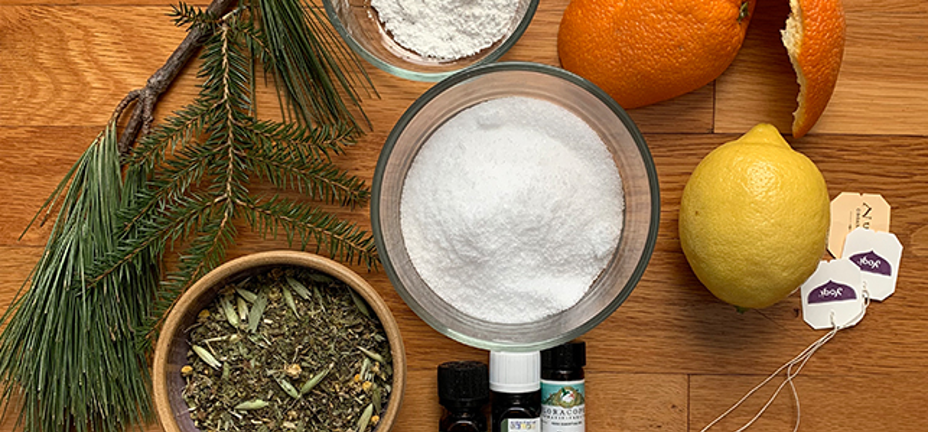
Next up, collect the goodies you will add to the water. Supplies might be limited now, so here are some ideas to inspire a more nourishing and special soak experience. And please know that even if all you have is just one tea bag to add to your bath, that is just right.
- Essential oils
- Crystals
- Flowers or foraged pine needles from a walk outside
- Epsom salt and baking soda (2 cups of Epsom salt and 1 cup baking soda in a bath, or 1 cup Epsom sale and 1/2 cup baking soda in a pot)
- 1-2 cups of milk, fresh or powdered
- 10-12 drops of calming essential oils (be sure not to add them directly into your tub; add the oils to some milkor to your Epsom salts or a bit of olive oil, before you add to your bath—this is so you don’t irritate or burn your skin)
- Orange or lemon peels
- 2-5 tea bags (e.g., lavender, chamomile, kava; just have sleepytime tea? Throw it in!)
3. Soak
There is no wrong way to soak. You can get in the tub or the pot and do a breathing meditation, listen to music, watch tv, eat your dinner—just get in the water, add your goodies, and try to stay submerged for at least 20 minutes. When you are done, pat yourself dry, and then go and boil some water.
4. Prepare the Oil
Depending on what you have in the pantry, take a half cup of one of the following:
- Coconut oil
- Olive oil
- Jojoba oil
- Sesame oil
- An already medicated massage oil
Once you select your oil, do the following:
- Put the oil in a metal bowl or cup.
- Take your boiled water and add it to another bowl.
- Add the metal bowl to rest in the boiled water bowl. You are trying to warm the oil slowly instead of burning it by directly heating it on the stovetop.
- Grab an old towel or rag (in case you spill or need to wipe your hands) and a pair of cozy socks.
5. Massage
For the massage that will follow the soak, you are going to focus on a warm oil massage for the feet (self-abhyanga), an easy-to-reach part of the body that is full of marma points—the vital points where the force of life (Prana) lives. Maybe you are familiar with reflexology or marma points, or you just have feet and know that it feels good to massage them.
Two points that you are going to focus on are Talahridaya Marma and Kshipra Marma. Talahridaya Marma is located in the middle of the sole of the foot and in a straight line drawn from the root (or the crease) of the middle toe. Kshipra Marma is located between the second and the big toe.
To start the foot massage, do the following:
- Start by coating your hands in the warm oil and massaging the right foot, followed by the left foot.
- Massage theTalahridaya Marma and the Kshipra Marma points with gentle massage strokes, then hold each point for 20 to 60 seconds.
- Follow by massaging each of your toes including the joints, starting with the big toe and ending with the baby toe.
- Now go over the whole foot, and don’t forget the heel.
- Once you are done with both feet, put on your cozy socks. Take a deep breath and remind your body that it can relax. Now you are done, feeling more grounded and nourished than before.
Whether you have an amazing bathtub or just a pasta pot, this is a practice that you can start today. Remember, the power of soaking and touch cannot be underestimated.
 Healing through Art