

Hi everyone! The spring is coming, which always means a new beginning! Let’s commit to keeping ourselves in the best physical, emotional and spiritual state. There is a famous Vedic Verse:
“It is our responsibility to the rest of the mankind to be healthy. We are ripples in the ocean of consciousness; and when we are sick even a little, we distract the cosmic harmony.”
Let’s keep ourselves healthy- the articles below may help us to do it.
Namaste!
8 Healthy Ways to Lose Weight
By Sue Van Raes, Functional nutritionist and Food Psychology Specialist

If you want to lose weight, there are some tried-and-true strategies that will help you do so. They range from improving food choices (more protein!) to celebrating your successes.
If you are like many people, you want to start off the new year with clear goals for yourself. While there are many types of goals to consider as you begin a brand-new year, weight loss is one that many people choose to focus on.
There are many healthy ways to lose weight in the New Year. Some of them are easier, healthier, or quicker than others. Here is the dilemma: There is ample scientific evidence that fad diets don’t work. In fact, studies show that restricting your food can even create more binge-type behaviors. Take note: most fad diets rely primarily on temporary and often drastic changes in your eating patterns rather than on creating sustainable and loving habits around your health, body, and bathroom scale.
This year, instead of restricting calories, eliminating food groups, or going on the latest fad diet, try an approach that is sustainable, healthy, and scientifically sound. Keep reading and learn some fundamentals of healthy and sustainable weight loss that include, but also go beyond, what is on your plate.
- Replace Leftover Holiday Goodies with Healthy Options
You may have woken up on New Year’s Day gung-ho with a new diet plan—only to open the pantry to find leftover holiday cookies, candy, alcoholic beverages, and other indulgent snacks you recently served to your family and guests.
While you may think you are strong enough to stay on track in the face of your leftover holiday goodies, what you may not realize is that human willpower can be inconsistent. Your willpower changes based on a few key ingredients, including stress, sleep quality, and blood sugar.
Rather than leaving your New Year’s weight goals up to an inconsistent aspect of the human psychology, try doing a little kitchen cleanse to eliminate the temptations that can derail your healthy eating plan.
Try this:
- Go through your cupboards and refrigerator and get rid of any refined and processed foods such as refined carbohydrates, fast food, sugary treats, and classic junk food, which have been shownto lead to weight gain.
- Restock your kitchen with fresh, whole foods that ensure you are set up for success.
- Shop the perimeter of the store where most whole foods, healthy produce, and higher quality ingredients are found.
- If you are craving comfort food, try substituting more healthy ingredients for less healthy ones—such as using a natural sweetener (honey, maple syrup, or stevia) instead of refined white sugar.
- Boost Your Protein Intake
There is an important food group to get to know to support healthy weight loss: healthy protein. One study found that healthy, overweight participants who ate a high-protein diet (25 percent protein) lost substantially more weight than the participants who ate a high-carbohydrate diet with only 12 percent protein.
Healthy proteins to explore include plant-based proteins, such as legumes, nuts, hemp seeds, and chia seeds. Healthy proteins can also include free-range, grass-fed, or wild proteins such as meats, fish, eggs, and organic dairy products.
Adding more protein to your plate has many benefits, including healthy weight loss and maintenance, longevity,(when the protein source is plant-based), increased satiety, and muscle growth and preservation.
Try this:
- Make sure that your plate includes at least 25 percent protein at each meal.
- Choose healthy, unprocessed proteins whenever possible.
- Upgrade Your Carbohydrates
Do you know the difference between a refined carbohydrate and a whole carbohydrate? Refined carbohydrates are processed and have added ingredients (such as sugar and additives), whereas whole carbohydrates are unprocessed and come in the form of a whole food, such as fruits, whole grains, and starchy vegetables. Refined carbohydrates are digested by the body very quickly and are associated with obesity, weight gain, and metabolic syndrome. One study of overweight and obese men found that eating refined carbohydrates triggered food cravings many hours after consumption.
Researchers have also found that when adults ate carbohydrates in their whole form, they reported feeling greater satiation and fewer food cravings. Eating high-quality whole carbohydrates—such as brown rice, sweet potato, steel-cut oats, quinoa, or a tart apple—may help you reduce your cravings and achieve long-term, sustainable weight loss.
Try this:
- Choose whole carbohydrates—whole grains, low-glycemic fruits, and starchy vegetables—for your carbohydrates at each meal.
- Track your cravings and notice how they change depending on what you eat. A reduction in your cravings can helpyou make progress toward healthy weight loss.
- Move Your Body Daily
There are many types of movement and many exercise plans that can help you lose weight. Exploring options that span choices such as Zumba, outdoor hikes, and spin class, to yoga, Pilates, and weight training will support you in finding something enjoyable and effective.
When you choose a movement that you enjoy, you will be more likely to find yourself looking forward to it. Studies show that successful weight loss works best when you are consistent with moving your body as well as combining your regular movement with healthy eating.
Try this:
- Love your movement: For greater inspiration and improved weight management, explore and find forms of exercise you love. For example, one study showedthat pleasurable movement improved weight loss for overweight women.
- Schedule it: Creating consistency with your exercise routine will help you expedite your weight loss journey, as well as maintain your weight loss. A recent studyfound that participants who had lost 30 pounds or more and maintained that weight loss for over a year relied on physical activity to prevent weight regain.
- Manage Your Stress
Cortisol is your primary stress hormone. When you are in a state of chronic stress, which translates into chronically high cortisol levels, cortisol triggers the body to hold on to body weight.
While life will always present stressful moments and challenging times, you can control how you respond to stress, and this has a big impact on the damage the stress can do (including halting weight loss).
Creating healthy stress management strategies will support you in feeling better while also promoting healthy weight loss.
Try this:
- Practice meditation regularly: Meditationhas been shown to relax the nervous system and diminish symptoms of stress. Take a few minutes and find a regular time each day (such as first thing in the morning or right before bed) when you can practice meditation.
- Practice self-care: Practicing daily self-care has been shownto quell feelings of stress and increase the overall quality of life.
- Journal: Sort out some of your stressful feelings through journaling. Emotion-focused journalingcan help you mitigate stress and increase well-being.
- Practice Forming Habits
To reach your long-term health and weight-loss goals, you need to create supportive, healthy eating habits. One of the leading researchers in the field of habit formation, James Clear, recommends that you commit to making small, incremental changes rather than trying to create a new habit or get rid of an old habit all at once. Instead of relying on willpower, which can be irregular and inconsistent, you can make small, easy changes that, over time, will lead to impressive results.
Forming habits can be effective in many areas of your life that relate to weight loss, such as eating, exercising, meditation, sleep routines, and your support systems and strategies.
Try this:
- Consider picking one very small healthy weight-loss strategy and practice making it a daily habit.
- Set a reasonable time frame to work within (such as 60 days) to anchor your new behavior with time, consistency, and practice.
- Learn Mindful Eating
Mindfulness is defined as the ability to experience real-time thoughts, sensations, experiences, and emotions without judgment. Mindfulness has also been shown to have positive effects on health and well-being in many areas of daily living.
Mindful eating—paying attention to your food, eating consciously, moment by moment—is a well-known practice to support individuals in savoring the eating experience while also staying present during mealtime.
Try this:
- Practice breathing: Try focusing on your breathing. Slow, deep breathsactivate the parasympathetic (calming) branch of your nervous system and support healthy digestion. Breathing before you take each bite also allows you to slow down and be conscious and more mindful of your hunger and fullness cues.
- Practice gratitude: Gratitudehelps you focus on the goodness in your life. If eating is confusing, stressful, or even anxiety-ridden, practicing gratitude can shift your perspective and enhance your eating experience, helping you to appreciate the blessings of food and well-being.
- Celebrate Your Successes
Often, you may find yourself ignoring your little successes and focusing on the gargantuan goal that may require some time and patience. When working toward your long-term health and weight goals, try celebrating the little successes and victories along your way, marking your progress to fuel your hope and inspiration.
Try this:
- Acknowledge your progress as you go. Tracking changes and celebrating your successes (big and small) will continue to inspire your health and healing.
- Share and celebrate your success with others in your life. Sharing the successes you are having with others can boost your mood and inspire you to stay focused on fulfilling your intentions for your health and well-being.
As you can see, there are many aspects of your health to consider including in your New Year’s weight loss plan. The synergy of each of these strategies creates stepping-stones to your success.
How to Stand Up for Your Beliefs Without Confrontation

Standing up for your beliefs in a skillful, conscious, and non-confrontational manner can make all the difference in helping your perspective be heard in a firm, yet compassionate way. Here’s how.
Your core values are a fundamental quality of your personality and sense of who you are. They define the concepts and principles that shape your being and influence your choices throughout the course of your life. Most of the time these values work quietly behind the scenes as they subtly influence your thoughts, speech, and actions. However, on occasion you may find the need to stand up for your beliefs and hold firm to what you believe to be right and true. Doing so in a skillful, conscious, and non-confrontational manner can make all the difference in helping your perspective be heard in a firm, yet compassionate way.
Consider the following suggestions whenever you feel the need to hold firm to your beliefs in the face of opposition:
Know What You Believe and Stand For
While this may sound like an obvious first step, it is one that can be easily overlooked. Dedicate some quality time to prioritize your fundamental beliefs. Write them down in order of importance so you can clearly see what matters most in your life. This is also a perfect opportunity to connect with your higher self through meditation. By tapping into the deeper level of your soul regularly, you can more easily access the most profound qualities and values you wish to embody.
Consciously Choose Your Battles
It’s important to recognize that not all situations require you to defend your beliefs tooth and nail. As the great military general Sun Tzu once said, “If a battle can’t be won, don’t fight it.” When circumstances arise that may challenge your beliefs, consciously consider if it ranks high enough on your list of values to take a stand for or if it’s not worth the time and energy involved in trying to convince another. Remember the well-known adage: A man convinced against his will is of the same opinion still.
Take Action or Say Something
Once the conscious choice is made to stand up for your beliefs, commit to taking action. Take a deep breath, muster your courage, and speak up; take a stand and point out that a line has been crossed. This is not a time for neutrality—your beliefs aren’t much good if you’re unwilling to act upon them. Being an agent of change requires that you call forth the fearlessness of your soul to speak through you and hold firm to what you know to be true and right.
Speak with Impeccability
When standing up for your values, it’s vital to be impeccable and skillful in your speech. Assertively hold the line yet strive to be courteous and polite while defending your point of view. Understand there is a difference between criticizing another’s beliefs and attacking them as a person. Try to take the higher road and utilize what Buddhists call Right Speech: abstaining from lying, divisive and abusive speech, or idle chatter. Essentially, you should speak only words that do no harm, especially when defending your beliefs.
Remain Objective and Avoid Emotional Reactivity
When boundaries of beliefs are threatened, it becomes very easy for the situation to escalate emotionally. In such situations, it is key to remain objective and maintain a clear head. Try to see the issue from a removed, third-party perspective. Avoid taking things too seriously or personally and work to remember that your true identity is the ever-present witnessing awareness that doesn’t judge or evaluate; it simply observes. Harness that stillness to project a calm, confident energy as you stand up for what you believe in.
Compassionately Respect Other People’s Perspectives as Valid for Them
While you may not agree with their perspective, those who challenge your values have beliefs of their own, which from their perspective are completely appropriate. The experiences of your life have shaped your choices and beliefs, and the course of another’s evolution is just as sacred and valid as your own. Oscar Wilde is keen to remind us that, “Every saint has a past, and every sinner has a future.” Their soul has chosen a life with its own set of unique challenges and opportunities, and you are not qualified to judge those choices. The best you can do is to compassionately work to find the middle ground where you can coexist in harmony.
Let Go of the Outcome
Remember, your objective is to stand up for your beliefs, not necessarily change another person’s beliefs. Sometimes, it may be enough to hold your ground and be a voice for what matters to you. Having done so, you can let go of trying to change others and let the universe handle the outcome. Know that every thought, word, and deed that supports the expansion of peace, harmony, compassion, justice, honesty, truth, and love influences the collective consciousness of the world. Or as Robert F. Kennedy put it:
Few will have the greatness to bend history itself, but each of us can work to change a small portion of events. It is from numberless diverse acts of courage and belief that human history is shaped. Each time a man stands up for an ideal, or acts to improve the lot of others, or strikes out against injustice, he sends forth a tiny ripple of hope, and crossing each other from a million different centers of energy and daring those ripples build a current which can sweep down the mightiest walls of oppression and resistance.
10 Real-Food Snacks to Boost Your Energy
By Lauren Venosta, Clinical Nutritionist & Personal Chef
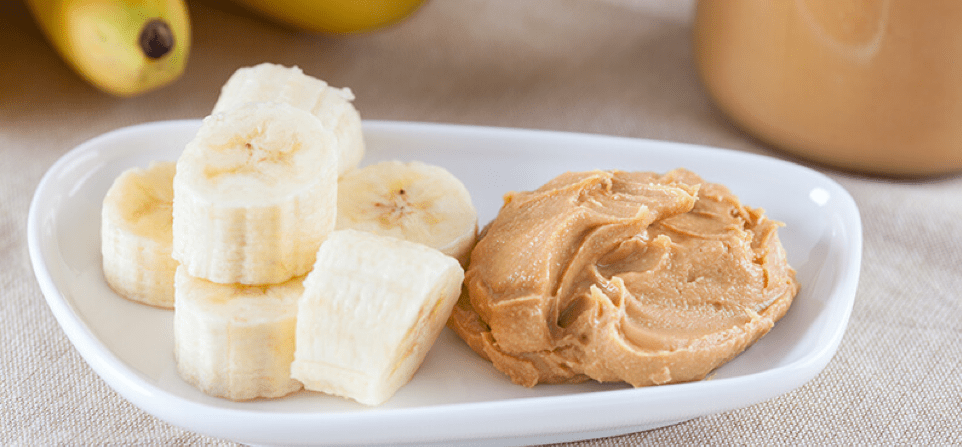
Who doesn’t need more energy? Especially mid-afternoon, after a full day? Avoid the easy grabs from the company kitchen or vending machines and take your own healthy energy-boosting snacks with you. Keep reading for ideas.
Snacking is something most people do every day and oftentimes it’s centered around an event or activity. Going to a movie? Get some goodies. Jumping in the car for a road trip? Pack the snacks. Hungry at the beach? Bust out the refreshments! But snacks aren’t always a good idea because, in the standard American diet, snack foods often aren’t “real” food; they are often overly processed and loaded with sugar. Think about it—chips, crackers, candy bars, granola bars, cookies, trail mixes, cheese products, and protein bars are all processed and typically contain some type of sugar. When you eat these snacks, they don’t provide your body with high amounts of nutrients. And what is the point of snacking to begin with? Energy.
Snacks should provide you with a little energy to last you to the next meal or satisfy a low level of hunger. But processed snacks like chips or cookies don’t provide energy—they drain it. Digestion is an energy-consuming function of the human body. Digestion requires breaking down the food, extracting nutrients, absorbing nutrients, and assimilating those nutrients (for example, making proteins for antibodies) to give your body what it needs.
If you’re snacking for energy, be sure to make your snack nutrient-dense so your body isn’t doing the work of digestion for nothing. Because if you consume a snack that is void of nutrients, such as a processed granola bar, the energy-consuming digestive process is going to be a waste because there are few or no nutrients for your body to absorb. Avoid those empty calories! Choose snacks that are both satisfying and healthy so you can enjoy your snack and increase your energy too.
When you’re looking to consume a snack, focus on these three tips:
- Choose snacks that are as fresh and minimally processed as possible. The less processed your snack is, the more nutrients it will have. Think about choosing a nutrient-dense food (such as an apple) instead of a calorically dense food (such as chips).
- Make the snacks easy to access and consume. If a snack requires a lot of preparation, you’re more likely to grab a granola bar or candy bar for convenience. Package your healthy snacks so that they are easy to grab and go.
- Pick foods you enjoy eating. If you are eating snacks that you don’t like just because they are healthy, it won’t last. Find foods that are healthy and satisfying. There are tons of options for nutrient-dense real-food snacks that you can enjoy.
The following are 10 healthy snacks that will improve your energy and satisfy your taste buds, too. These snacks are minimally processed and loaded with nutrients. They are all easy to consume and won’t leave you feeling depleted.
- Brown Rice Cake with Almond Butter and Cinnamon
This is a great at-home snack that you can make in less than two minutes. You’re getting healthy carbohydrates from the brown rice cake, and healthy fat and protein from the almond butter. The cinnamon is helpful for balancing blood sugar (which means you’re less likely to have an energy crash).
- Celery Sticks with Dates
Celery is a fibrous vegetable that will help keep you full between meals. It’s also water-rich so it will help you stay hydrated. Dates contain healthy carbohydrates, which give the body the necessary glucose for energy. This is an easy snack to take on the go.
- Raw Cashews with Dried Cranberries
This is a simple and healthy take on a trail mix. Cashews provide healthy fat and protein, while dried cranberries give glucose to boost energy. Glucose from a dried fruit is superior to the refined sugar in a candy bar. It’s important to be cautious with sugar; consider the source before consuming it.
- Avocado with Himalayan Pink Salt
Avocados are loaded with healthy fats that the body can use for energy. Adding the pink salt provides the body with a tiny boost of minerals that are often lacking, such as magnesium. This is a good at-home snack that’s quick and easy.
- Banana with Almond Butter
This super simple and delicious combo will satisfy your cravings for sweet and salty foods. Bananas are great for energy, and the almond butter provides healthy fat and protein. It’s creamy and tasty too!
- Hard-Boiled Eggs
Hard-boiled eggs are an easy snack that packs a protein punch. Protein helps promote satiety (aka fullness), and the amino acids that make up proteins promote energy production. Eggs are quick to eat and don’t require much work. You can buy them at the grocery store already hard-boiled or you can follow this simple recipe to make them in the oven.
No-Boil Hard-Boiled Eggs
Ingredients:
1 dozen eggs
Directions:
Preheat your oven to 325 degrees (F).
Place the eggs in a muffin pan to prevent the eggs from rolling around. Put the pan in the oven and set the timer for 30 minutes. After 30 minutes, remove eggs from the oven and place them in a bowl of ice water for 10 minutes. Timing is crucial for these eggs to turn out correctly, so use a timer.
Once you remove the eggs from the ice water, they can be peeled. Tap the eggs gently on a board and roll one at a time to help loosen the shell. Peel the entire shells off and you have easy hard-boiled eggs.
Serves 12
- Roasted Chickpeas
These little crunchy goodies are the perfect healthy snack if you are a fan of chips or crackers. The salty crunch that these roasted chickpeas give you is super satisfying. Chickpeas have both protein and fiber, which will help keep you full and provide energy until your next meal. Try this recipe for Salt-and-Pepper Chickpea Crunchies.
Salt-and-Pepper Chickpea Crunchies
Ingredients:
- 2 cans (15 oz.) chickpeas/garbanzo beans, drained and rinsed
- 3 tablespoons melted coconut oil
- 1 1/2 teaspoon Himalayan pink salt
- 1 teaspoon black pepper
Directions:
Preheat your oven to 400 degrees (F).
Line a baking sheet with parchment paper to prevent sticking and for easy cleanup. Pour your chickpeas onto a blanket of paper towels and then use another paper towel to roll the chickpeas around. This will help loosen any of the skins on the chickpeas. When the skin is removed, they are crispier and crunchier.
Add the chickpeas to a bowl and pour in the melted coconut oil, salt, and pepper. Mix well until they are all coated. Pour out the chickpeas evenly onto your baking sheet and bake for 30–40 minutes until they are crunchy and brown.
You can add additional salt and pepper upon removal from the oven if desired. Let cool completely and store in an airtight container.
Makes 3 cups.
- Bell Pepper Sticks with Guacamole
This snack is great for at home or to grab for on the go. You can slice up your favorite color of bell pepper and dip it into a basic guacamole recipe for a crunchy and satisfying snack. You can often find pre-cut bell pepper sticks and premade guacamole in your grocery store’s produce department. Avocados are loaded with nutrients and are about 79% fiber, so they are a filling snack that will keep your blood sugar stable and provide lasting energy.
- Carrot Sticks with Hummus
Sweet carrot sticks with creamy hummus are simple yet satisfying. Carrots are rich in fiber, antioxidants, and vitamins, including high levels of B vitamins, which help to convert food into energy. Hummus, which typically contains chickpeas, tahini, and garlic or other herbs and spices, provides a steady source of energy and can also help control blood sugar levels. Slice up carrots on your own or buy them pre-cut at the grocery store. You can also buy store-bought hummus or make your own at home. And to switch it up, you can swap out carrots for cucumbers, bell peppers, or celery sticks.
- Fresh Fruit with Nuts or Seeds
Fruit is widely available anywhere and is loaded with nutrients and fiber, both of which sustain energy levels. Nuts are also easy to eat and are abundant in healthy fats and protein, which is a valuable energy source. Think about these combos: apple with almonds, grapes with cashews, blueberries with pecans, blackberries with pumpkin seeds, pineapple with cashews, pear with peanuts—there are so many combos for this snack that you will never get bored.
With all these snack options, there is no need to reach for a bag of chips or a sugary granola bar. You can have fresh, real-food snacks that will give you lasting energy instead of just a temporary sugar high followed by an energy crash. As each new week begins, plan your favorite healthy snacks and prep them for easy grab-and-go, energy-boosting snacking throughout the week.
 Healing through Art