
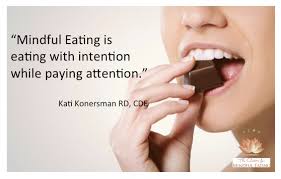
Practice Mind-Body Eating
Mind-body eating is the practice of being aware of the connection between the state of your body and the state of your mind during mealtimes. Digestion, absorption, calorie burning, and all of the digestive functions of the body are affected by your mind, emotions, and lifestyle—one meal at a time. Studies showyour digestive function is directly affected by stress. Consider these mind-body eating practices as you sit down to enjoy your meal.
- Breathe before you bite: One easy way to tap into your mind-body connection is through your breath. Slow, deep breathsrelax the body and mind and activate the parasympathetic (calming) branch of your nervous system. Studies show that when you are in a calmer state of being, such as after practicing yogic breathing, managing IBS and associated symptomsis enhanced. Breathing before you take each bite allows you to listen to your body, feel your hunger and satiation cues, improve your digestion, and stay the witness in your eating experience and best navigate your Thanksgiving meal.
- Chew: Have you ever counted how many times your chew each bite of food? Do you reach for the next bite before you are finished chewing the last? While the average person only chews each bite a few times, the results of a small study of Chinese men suggest that you should be chewing each bite up to 40 timesfor optimal health. Chewing helpsto stimulate the digestive enzymes that begin secreting in your mouth, supporting a healthy and strong digestion as well as increasing satiation, while also encouraging you to slow down and pace yourself through your meal.
- Experience your senses: Your sensesare active in the present. Therefore, observing your senses while eating can assist you in ensuring that you are present in each moment during mealtime. Using your senses as a tool during mealtime not only brings more mindfulness into your eating experience, but it also elevates the pleasure you experience through your senses—your vehicle for pleasure.
Include Gratitude
You have probably heard the saying, “It’s not happy people who are thankful, but thankful people who are happy.” Practicing a state of gratitude has many diverse and positive results that go beyond what you may imagine.
- Improve eating habits: Gratitude is a positive state of mind. Gratitude fills your body with loving thoughts, positive intentions, and reverses judgment and criticism (of self or others). One study showedthat gratitude may be a fruitful avenue for people who wish to become not only happier, but healthier.
- Improve patience: Research showsthat practicing gratitude can increase your internal well of patience and keep you calmer and centered in yourself, helping you to better handle any challenges that may come your way.
- Improve self-care: Gratitude, cultivating a positive mindset and attitude, is the perfect ingredient to boost wellness-based activities and self-care. One studyfound a positive correlation between practicing gratitude and focusing on healthy behaviors such as diet and exercise.
Focusing your intentionon a peaceful and relaxing year is a task work undertaking. Enjoying the good in your life and savoring the pleasures that you have is the perfect way to express your gratitude in 2019.
By Sue Van Raes
 Healing through Art